
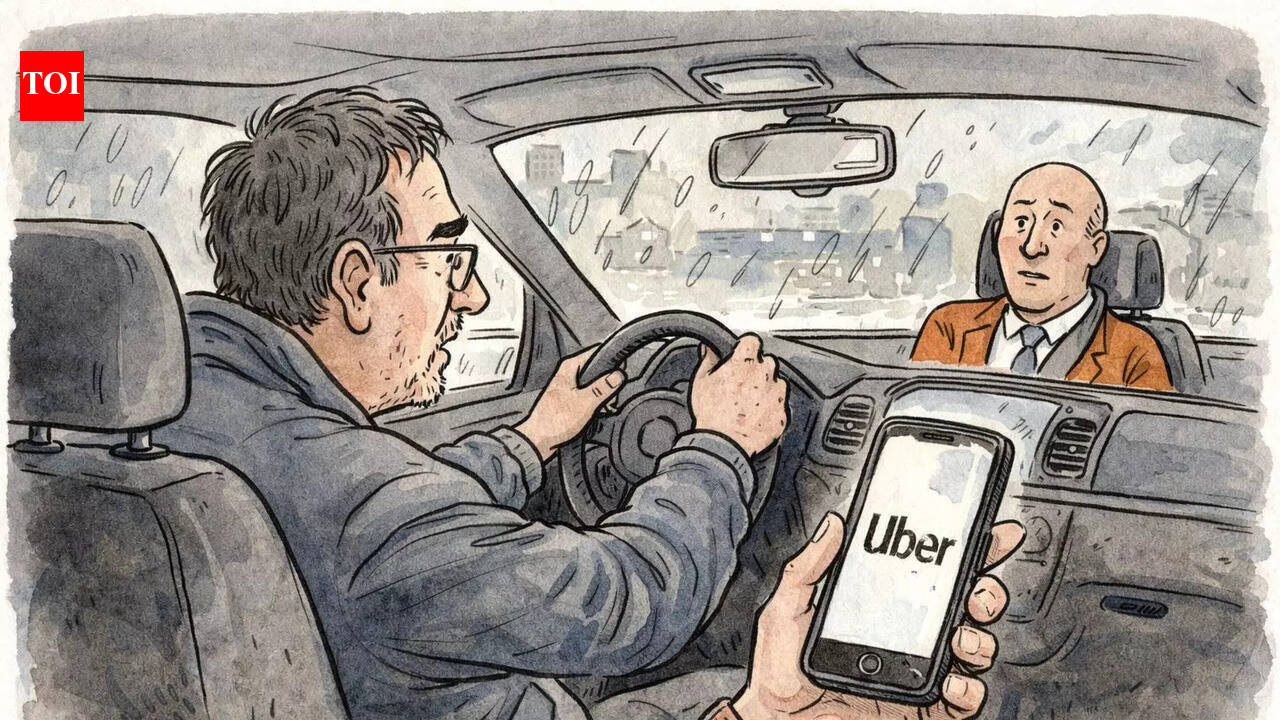

When Steve Scherer began driving an Uber in northern Virginia, he was not trying to rediscover immigration as a subject. He had already spent years reporting on it from Europe.Scherer, a former foreign correspondent and bureau chief, published a first-person essay on his Substack this week describing how working as a ride-hail driver in the US reshaped how he understands immigration, vulnerability and economic insecurity. The essay, titled My journey from foreign correspondent to Uber driver in Trump’s America, chronicles his transition from international journalism to gig work after losing his job and legal footing in Canada.Scherer previously served as Reuters’ Ottawa bureau chief before his position was eliminated in a cost-cutting exercise. Although he owned a home and raised his children in Canada, immigration rules meant he could not remain once his employment ended. He returned to the US in July 2025, his first time living there in nearly 30 years.Unable to find immediate newsroom work, Scherer began driving for Uber. In the essay, he describes his first morning on the job, picking up hotel workers, teachers, hospital staff, mechanics and cleaners, many of them Latino or immigrants, all travelling to work before dawn. One ride earned him less than $7. Over roughly five hours, he made about $100. “I didn’t know the immigration status of any of my clients,” he writes. “But I wondered how misguided and aggressive targeting of the very people who serve us breakfast, teach our children, fix our cars, clean our hotel rooms, and comfort our sick makes America great.”Before this phase of his life, Scherer had covered migration largely as an external observer. He spent years reporting on the Mediterranean crossing from Libya and Tunisia to Italy, embedding with Italian navy vessels and NGO rescue missions. He interviewed migrants rescued from rubber boats and documented detention, abuse and human trafficking.At the time, he writes, he did not fully understand what drives people to take such risks.Driving an Uber altered that perspective.“For the first time in my life, I am no longer observing this precarious world from the outside, notebook in hand,” Scherer writes. “I am inside it, dependent on an algorithm, measuring my worth in five-dollar increments.” He describes seeing his own fragility reflected in his passengers: widows, parents and workers “all one broken transmission or missed paycheck away from something worse.”The essay quickly drew responses from journalists and readers, many of whom said Scherer’s experience resonated with their own.Matthew Tostevin, a fellow journalist, wrote on X: “This is powerfully written Steve. I’m sorry to hear about your plight and hope that this helps bring recognition of skills that should be valued. Wishing the best for you and the family.”Another reader, Bruce Ross, framed the story in the context of upheaval across the media industry. “The refugees from media are all around and it is tough to make a fresh start in the 50s (speaking as a fellow member of the gang),” he wrote. “All the best, and thanks for sharing a difficult story.”Others responded from outside journalism. An Italy-based reader posting under the name milanoArte.net wrote that Scherer’s essay echoed their own family’s experience. “My sister lives in California with her family. She is white, she is an American citizen, she is not in danger. I do not know when I’ll be able to see her again, unless she comes back to Italy. America is a part of my blood and soul, it’s so painful to see what’s going on.”In the essay, Scherer is explicit that he does not equate his circumstances with those of undocumented migrants. He notes that he holds an American passport, is white, and has savings and family support. He writes that he is unlikely to be detained by immigration authorities.However, he says the experience of driving for Uber changed how he understands vulnerability and belonging in the US economy.Scherer also recounts how his family was split across borders after leaving Canada. His wife returned to Italy, where she has healthcare access and legal security. His children initially joined her before later reuniting with him in the US. He sold his home in Canada and rented a basement apartment in Virginia while trying to rebuild his life.Since publication, readers on Substack have highlighted passages describing life governed by app notifications and low fares, with several saying the essay reflected anxieties shared by freelancers and displaced professionals across industries.Scherer continues to live in Virginia and drive for Uber while seeking new professional opportunities. His essay was published on January 21, 2026. Go to Source

