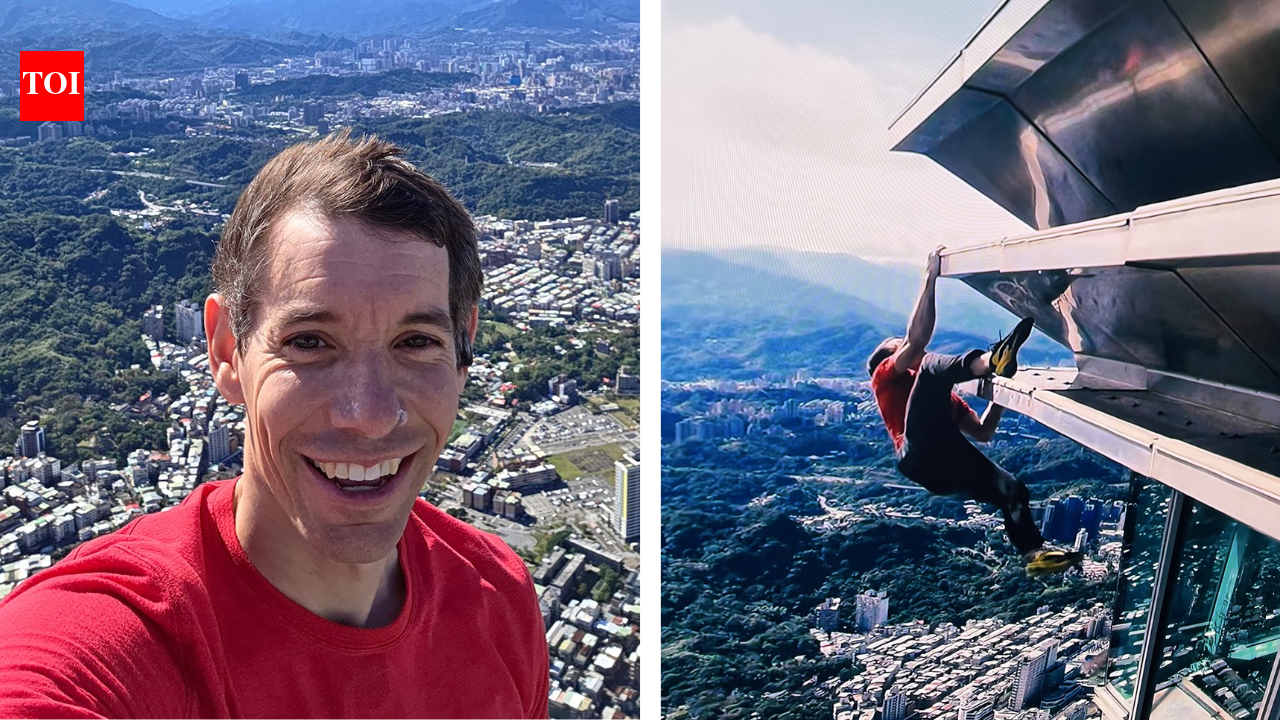

In a breathtaking display of audacity, adventurer Alex Honnold completed a pioneering free solo climb of Taipei 101, soaring 508 meters into the skyline without any safety gear. Fascinatingly, a neurological assessment indicated that his amygdala—the part of the brain responsible for fear—exhibits a significantly muted reaction to alarming stimuli, a stark contrast to the average person’s response.
It is not human to scale the massive Taipei 101, but professional climber Alex Honnold did it without ropes or any safety equipment. And he did it in less than 2 hours. On Sunday, the American completed a free solo ascent of the 508-metre skyscraper in Taipei, becoming the first person to climb the building without safety equipment. The climb was carried out in clear weather and was watched live by crowds below and broadcast internationally on Netflix. For many, the most frequently asked question was: how does Honnold stay calm in situations where a single mistake would mean certain death?Scientists have tried to answer that question before. In 2016, Honnold took part in a neurological study at the Medical University of South Carolina, where researchers used functional MRI scans to examine how his brain responds to fear. And the results came out striking.The study focused on the amygdala, the part of the brain that processes fear and threat. When most people are shown disturbing or frightening images, this region shows strong activity. In Honnold’s case, researchers found that his amygdala showed very little response, even when exposed to images designed to provoke fear or jumpscares. In comparison tests, another control subject’s amygdala reacted vigorously, while Honnold’s remained largely inactive. Doctors involved in the study said that this did not mean Honnold was incapable of fear, and he is still human. Instead, they suggested he may require much stronger stimuli to trigger the same response that others normally go through, or that years of risk exposure had altered how his brain processes danger. Or, in his case, does not process at all. Honnold himself has consistently rejected the idea that he is fearless. In interviews with American media, he has said that fear exists, but that he manages it through preparation and repetition. He rehearses routes many times with ropes before any free solo attempt is considered. He has also said he is more afraid of the uncertainty than the height. The neurological findings about Honnold help explain his career, which was built on extraordinary feats.Beyond that ascent, Honnold has completed numerous major climbs around the world and set speed records.1) Taipei 101 (2026)Height: 508 m2) El Capitan, Freerider (2017)Height: 914 m3) El Capitan, The Nose speed climb (2018)Height: 880 m4) Half Dome, Regular Northwest Face (2016)Height: 610 m5) Moonlight Buttress, Zion (2016)Height: 360 mScientists say the MRI study offers insight, not explanation. Genetics, training, experience and personality all play a role. What is clear is that Honnold’s brain responds to fear differently from most people’s, allowing him to operate calmly in conditions that others could not survive. These tests were obtained and published by the Newsweek and National Geographic.