
Thursday, July 23, 2026
32.4 C
New Delhi

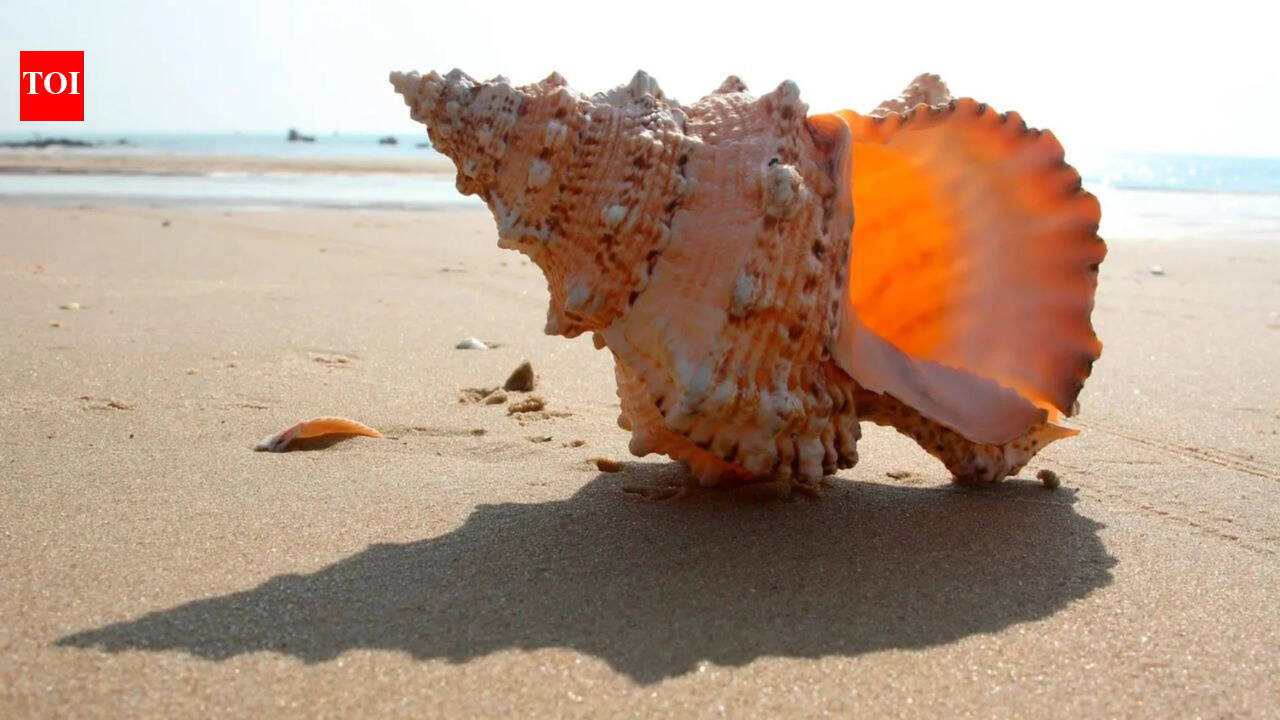
Empty seashells became the ocean’s first ready-made homes 470 million years ago

Empty seashells became the ocean’s first ready-made homes 470 million years ago, helping create an entirely new ecosystem

Empty seashells became new habitats 470 million years ago

An international study led by scientists at the University of Tartu shows that about 470 million years ago, a major ecological change took place in the world’s oceans. For the first time, the hollow interiors of empty mollusc shells began serving as homes for small sea creatures. This marked the start of a brand-new way of living on the seafloor and was a major step toward how ocean ecosystems function today.The study, titled “Colonization of empty shells by cryptic fauna: a global event and important ecological innovation in Ordovician benthic ecosystems,” was published in the journal Scientific Reports. The University of Tartu research team, including Olev Vinn, Oive Tinn, Liisa Lang, and Mare Isakar, examined fossils from different parts of the world to see how animals first moved into these shells.

From empty structures to crowded communities

In today’s oceans, an empty shell rarely stays vacant for long. It is quickly covered by small attached animals like bryozoans and marine worms. However, fossil records show that during the earlier Cambrian Period, more than 500 million years ago, the inside of empty shells remained completely uninhabited. Animals that lived in dark, hidden spaces already existed back then, but they had not yet started living inside shells. That changed during the Middle Ordovician, about 460 million years ago, when the first animals moved into these empty spaces. They started by living inside the large, spacious shells of dead nautiloids, which were ancient cephalopods. Over time, these tiny residents also spread into the smaller inner chambers of snails and clams.By the Late Ordovician, about 450 million years ago, the inside of many shells was densely packed with attached life. These residents were small animals that filtered food particles floating in the water, such as bryozoans, brachiopods, sponges, graptolites, and cornulids, which built tube-shaped shells.

Shell shape affected resident size

Not all empty shells offered the same living conditions. Although the types of animals living inside snail, clam, and cephalopod shells were quite similar, the shape of the shell affected how many animals could live there and how large they grew.Nautiloid shells had wide, open chambers that allowed water to flow through easily. This steady flow brought in fresh oxygen and food while carrying away waste. Because of this, the largest and most varied communities were found inside nautiloid shells.In contrast, the coiled shells of snails had narrow openings, leading to poor water flow. The animals growing inside snail shells stayed mostly smaller, and species that needed a stronger water current to feed were missing entirely.

Why animals moved indoors

Scientists identified several reasons why this new habit began during the Ordovician Period. The adoption of empty shells as homes happened alongside a huge surge in ocean life. During this time, marine species grew more varied, and many more animals started living attached to hard surfaces.Three main factors helped this habit spread: an increase in predators trying to eat these small animals, a quick rise in attached filter-feeders, and the overall growth in shell sizes during the Ordovician.The hollow interior of a shell offered two great benefits. It gave tiny animals a firm surface to attach to, while protecting delicate filter-feeders from predators and rough water currents.The oldest known shell residents were found in the Baltica region, suggesting this lifestyle may have started in those ancient seas. However, researchers note this might also be because fossils from Estonia and the Baltica region have been studied very thoroughly.By the end of the Ordovician Period, similar shell-dwelling communities were living all across the globe, including in Laurentia (present-day North America), southern China, and the Gondwana region. What started as a simple move into an empty shell became a global ecological shift, showing how small changes can help shape the history of life on Earth. Go to Source


Hot this week

Bangladesh plans to plant 250 million trees in five years; conservationists warn the wrong trees could damage entire ecosystems

Representative image Bangladesh is preparing for one of its most ambitious green initiatives yet: a nationwide plan to plant 250 million trees over the next five years. Read More

Pennsylvania families sell 1,700 acres for $586M; couple gets $22M for 89-acre hog farm

Pennsylvania families sell 1,700 acres for $586 million; AI data center boom helps one couple earn over $22 million for their 89-acre hog farm The AI data center boom is changing the fortunes of families across rural America, and one Read More

Can astronauts cry in space?

Representative image generated using AI If Farah Khan ever decided to remake Om Shanti Om in space, she would never be able to recreate the iconic Ek Chutki Sindoor moment. Read More

‘Antisocial elements taking advantage’: Sonam Wangchuk urges protesters to remain peaceful, says ‘only peace is my way’

File photo: Activist Sonam Wangchuk NEW DELHI: Climate activist Sonam Wangchuk on Thursday appealed to supporters to maintain peace during the ongoing protests over the alleged NEET paper leak, saying some “antisocial element Read More

Centre monitoring 2,485 Himalayan glacial lakes; 56 classified as ‘very high risk’

Centre monitoring 2,485 Himalayan glacial lakes; 56 classified as ‘very high risk (Image/AP) NEW DELHI: The Centre on Thursday said it is monitoring 2,485 glacial lakes spread across the Himalayan river basins using remote sen Read More

Topics

Bangladesh plans to plant 250 million trees in five years; conservationists warn the wrong trees could damage entire ecosystems

Representative image Bangladesh is preparing for one of its most ambitious green initiatives yet: a nationwide plan to plant 250 million trees over the next five years. Read More

Pennsylvania families sell 1,700 acres for $586M; couple gets $22M for 89-acre hog farm

Pennsylvania families sell 1,700 acres for $586 million; AI data center boom helps one couple earn over $22 million for their 89-acre hog farm The AI data center boom is changing the fortunes of families across rural America, and one Read More

Can astronauts cry in space?

Representative image generated using AI If Farah Khan ever decided to remake Om Shanti Om in space, she would never be able to recreate the iconic Ek Chutki Sindoor moment. Read More

‘Antisocial elements taking advantage’: Sonam Wangchuk urges protesters to remain peaceful, says ‘only peace is my way’

File photo: Activist Sonam Wangchuk NEW DELHI: Climate activist Sonam Wangchuk on Thursday appealed to supporters to maintain peace during the ongoing protests over the alleged NEET paper leak, saying some “antisocial element Read More

Centre monitoring 2,485 Himalayan glacial lakes; 56 classified as ‘very high risk’

Centre monitoring 2,485 Himalayan glacial lakes; 56 classified as ‘very high risk (Image/AP) NEW DELHI: The Centre on Thursday said it is monitoring 2,485 glacial lakes spread across the Himalayan river basins using remote sen Read More

Milan Fashion Week womenswear: CNMI unveils the provisional calendar; Prada to open, debutant Miguel Vieira to close

Published July 23, 2026 Italy’s governing body for fashion, the National Chamber of Italian Fashion (CNMI), has unveiled the provisional schedule for the upcoming Milan Women’s Fashion Week, which will run from September 22 to 28. Read More

Wife, daughter of Bangladeshi politician drown rescuing child at UK beach

Shelina Rahman and daughter/Image: BBC The wife of a Bangladeshi politician and her teenage daughter drowned after entering the sea to rescue a young child who was swept away by strong currents at an Essex beach. Read More

FBI’s wanted fraudster arrested overseas; Khalid Ahmed Satary was on the run after $547 million Medicare fraud

Khalid Satary at Washington Dulles International Airport after he was extradited to the US. Read More

Related Articles