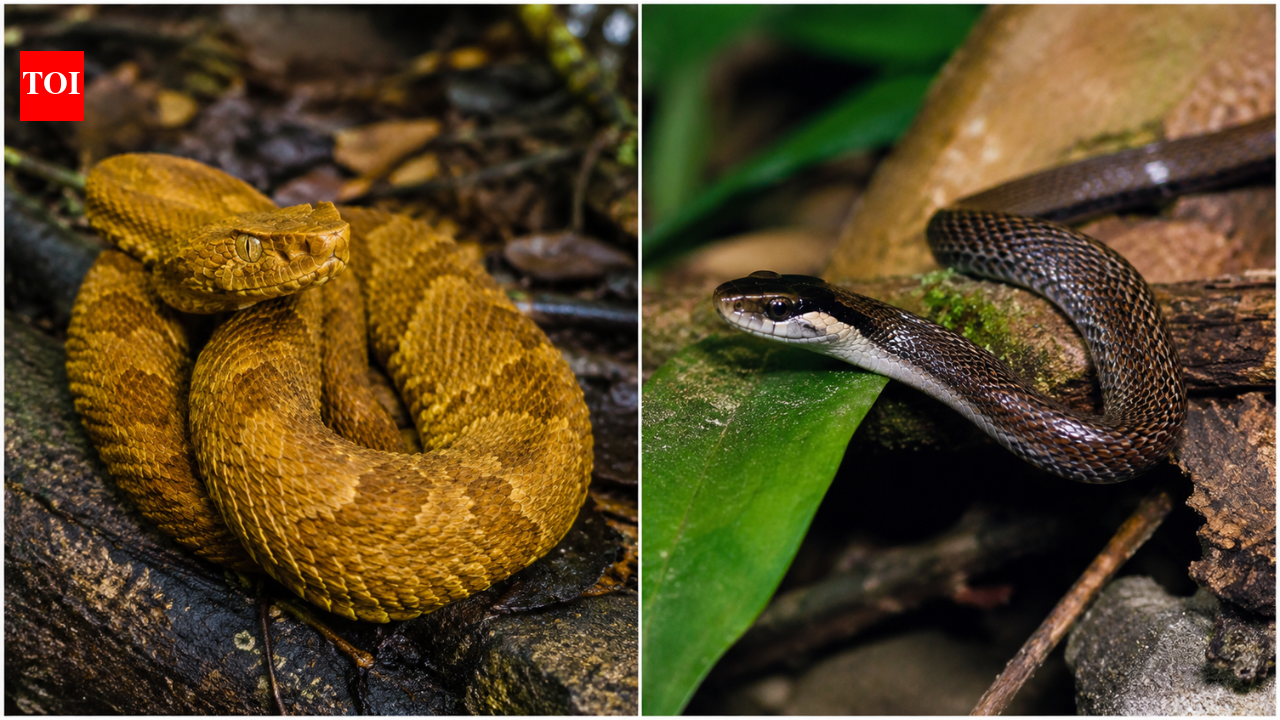

Image: Left/Golden lancehead (Bothrops insularis)/Right/Dipsas albifrons (Sauvage’s snail-eating snake)/AI Generated
About 33 kilometres off the coast of São Paulo lies Ilha da Queimada Grande, better known as Snake Island. Shrouded in myths of deadly encounters and pirate treasure, the island has earned a fearsome reputation as one of the most snake-infested places on Earth. While stories often claim there is “one snake per square metre”, modern estimates suggest the island is home to around 2,000 to 4,000 snakes spread across its 43-hectare landscape. Despite its fearsome reputation, only two snake species are known to inhabit the island: the critically endangered golden lancehead (Bothrops insularis) and the harmless Sauvage’s snail-eating snake (Dipsas albifrons). Nearly all of the island’s snakes are golden lanceheads, a highly specialised species found nowhere else on Earth. According to Smithsonian Magazine, the island’s extraordinary isolation has turned it into a living laboratory of evolution, where one of the world’s rarest venomous snakes has adapted in remarkable ways.
Brazil’s Snake Island has only two snake species, one among the deadliest
1. Golden lancehead (Bothrops insularis)
The undisputed ruler of Snake Island is the golden lancehead, a critically endangered pit viper that exists naturally only on Ilha da Queimada Grande. Around 11,000 years ago, rising sea levels isolated the island from mainland Brazil, trapping the ancestors of these snakes. Over thousands of generations, they evolved into a distinct species with unique adaptations.
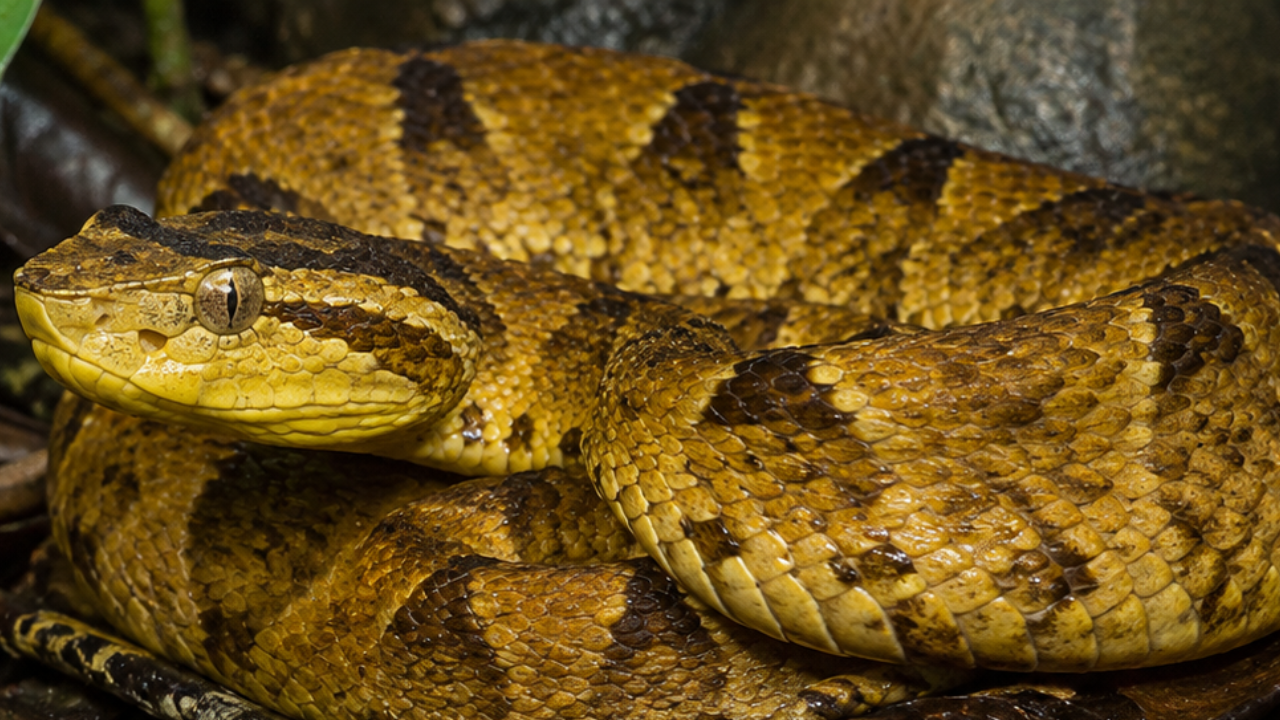
Image: AI Generated
Unlike its mainland relatives, the golden lancehead feeds primarily on migratory birds rather than rodents. Birds can escape after being bitten, so the snake evolved exceptionally fast-acting venom capable of immobilising prey almost immediately. Smithsonian Magazine explains that this evolutionary pressure made the venom several times more potent than that of closely related mainland lanceheads, helping prevent wounded birds from flying away before dying. Despite its deadly reputation, researchers note that the snake is generally not aggressive towards humans. Because public access to the island is prohibited, documented bites are extremely rare. The greater concern today is not human safety, but the snake’s survival, as illegal wildlife trafficking and habitat changes have contributed to declining populations. Discover Wildlife notes that a single illegally collected specimen can command tens of thousands of dollars on the black market, making conservation a major priority.
2. Dipsas albifrons (Sauvage’s snail-eating snake)
Although Snake Island is best known for the golden lancehead, it is not the island’s only snake. The Sauvage’s snail-eating snake (Dipsas albifrons) also inhabits the island. Unlike the lancehead, this species is non-venomous and specialises in feeding on snails and slugs rather than birds or mammals. It is slender, nocturnal and poses no danger to people.
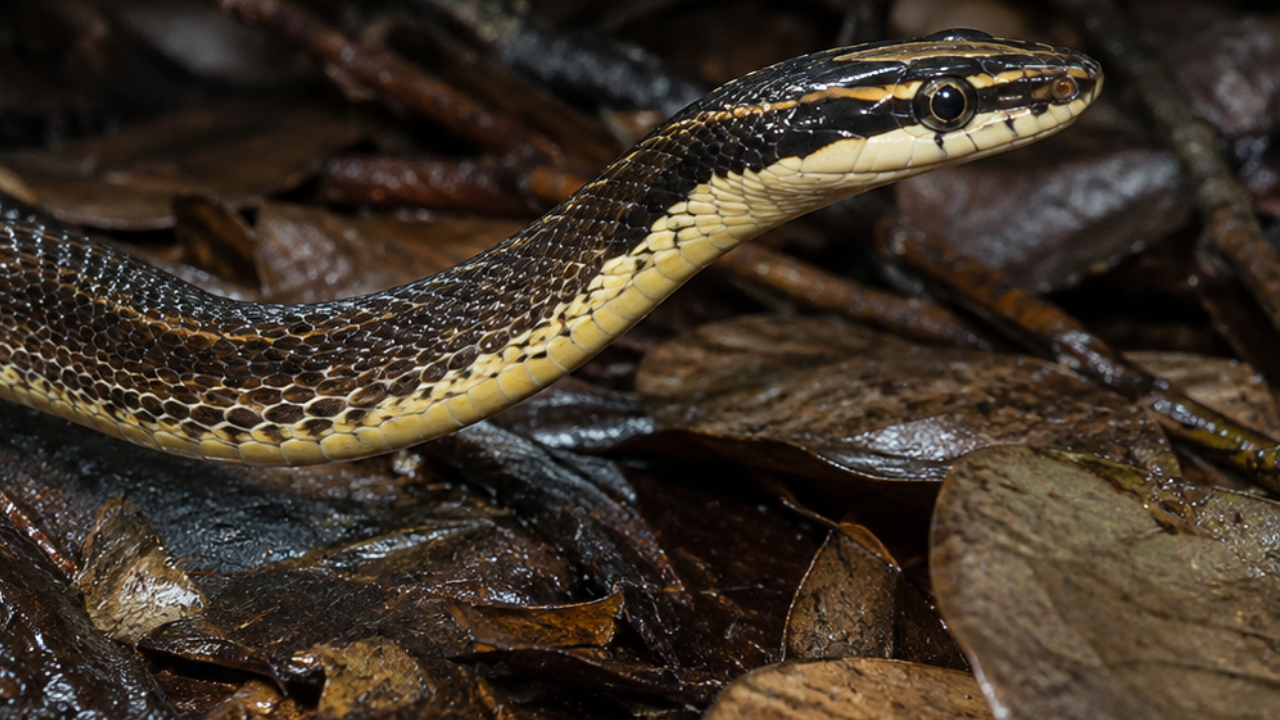
Image: AI Generated
Its presence highlights that Snake Island supports a more complex ecosystem than its fearsome reputation suggests. While the golden lancehead dominates the headlines, the snail-eater occupies an entirely different ecological niche, helping maintain balance within the island’s invertebrate populations.
Why are there so many snakes on the island?
The island’s unusual snake density is the result of isolation and evolution rather than human intervention. With virtually no terrestrial predators and few competing reptiles, the golden lancehead population expanded over thousands of years. However, food remained scarce because there were no native mammals, forcing the snakes to specialise in hunting migratory birds that stop on the island during seasonal journeys. This unique food source shaped both their behaviour and the remarkable potency of their venom.
Why is Snake Island closed to the public?
The Brazilian government strictly controls access to Ilha da Queimada Grande. Only authorised researchers and, occasionally, Brazilian Navy personnel maintaining the automated lighthouse are permitted to visit. While the venomous snakes present obvious risks, the restrictions are equally important for protecting the critically endangered golden lancehead from disturbance and illegal collection.Today, Snake Island remains one of the world’s most remarkable examples of island evolution. Home to just two native snake species, one of them among the planet’s rarest and most specialised vipers, it continues to fascinate scientists studying evolution, venom biology and conservation, while reminding us how isolation can produce extraordinary forms of life. Go to Source