
Artemis II crew’s 10-day trip around Earth and Moon — timeline of Nasa’s historic lunar mission
Nasa’s Artemis II mission ended with a precise splashdown in the Pacific Ocean, capping a nearly 10-day journey that took four astronauts farther from Earth than any humans before. The Orion capsule “Integrity” parachuted into calm waters off California, with all crew members confirmed safe.Travelling a total of 694,392 miles (over 1.1 million km), the mission marked humanity’s first crewed voyage to the Moon’s vicinity since the Apollo era and a critical step toward future lunar landings.
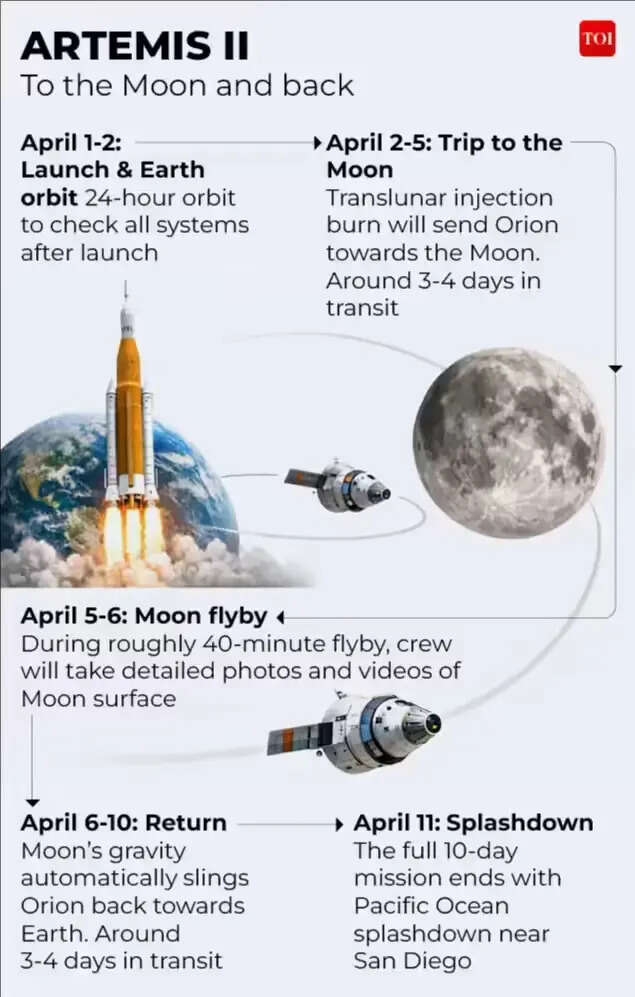
Here is a timeline of the Artemis II mission:
April 1-2: Launch, orbit and critical system validation
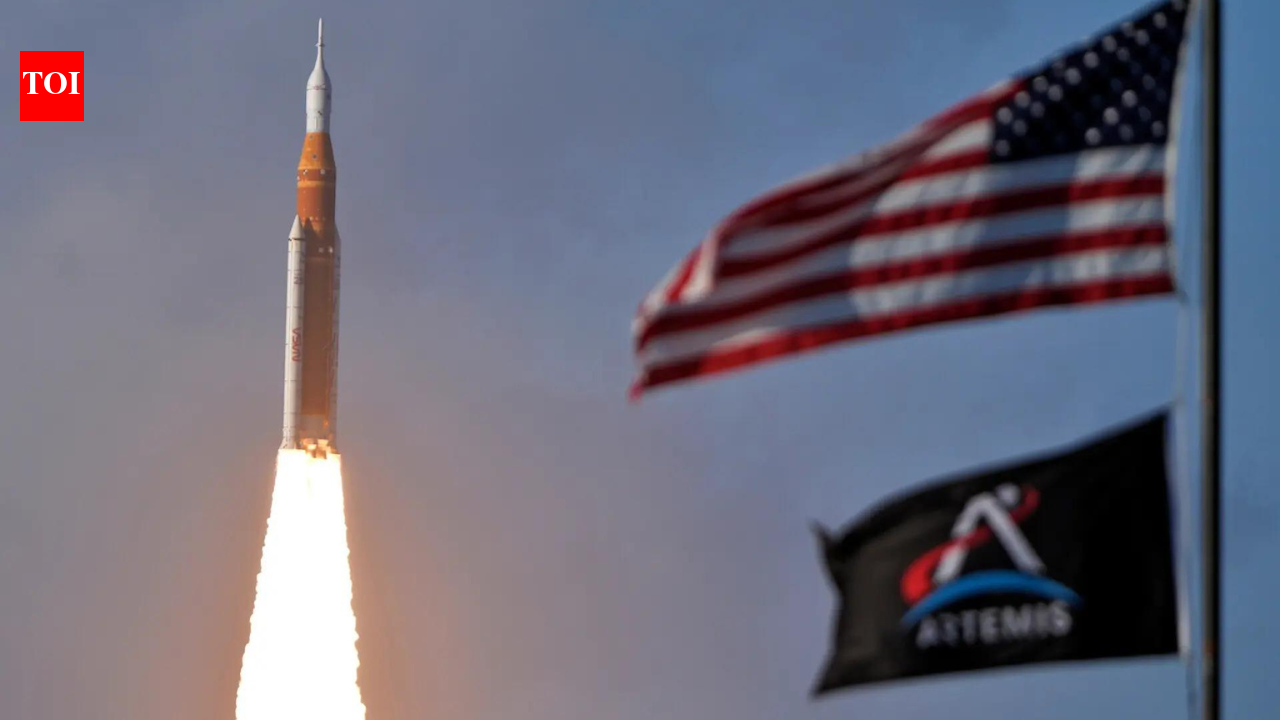
The mission lifted off on April 1 from Kennedy Space Center aboard Nasa’s Space Launch System. After separation, Orion entered Earth orbit, where astronauts conducted extensive checks on life-support systems, propulsion, avionics, and solar arrays.This phase acted as a “shakedown cruise,” ensuring the spacecraft could safely support human life before committing to deep space travel. Engineers also verified the launch abort system and onboard batteries, which are crucial for emergency scenarios.
April 2-5: Translunar injection and deep-space transit
On April 2, Orion performed a powerful translunar injection burn, accelerating to nearly 22,000 mph and setting course for the Moon. Over the next three days, the crew travelled roughly 240,000 miles, crossing the Van Allen radiation belts and entering deep space. Astronauts monitored navigation systems, radiation shielding, and spacecraft autonomy while conducting experiments on the effects of microgravity. The spacecraft operated largely on automated systems, with minimal manual intervention required.
April 5-6: Closest approach and record-breaking lunar flyby
Around April 5, Artemis II reached the Moon, executing a close flyby that brought it within a few thousand miles of the lunar surface. The crew captured high-resolution images and studied the Moon’s terrain, including regions targeted for future missions.Using the Moon’s gravity, Orion performed a slingshot manoeuvre to begin its return journey. During this phase, the mission set a new record, travelling 252,756 miles from Earth—surpassing the Apollo 13 record.The flyby also marked a historic milestone, with the crew including the first woman, first Black astronaut, and first non-American to participate in a lunar mission.
April 6-10: Return journey and re-entry preparations
The return leg lasted another three to four days, during which the crew carried out final system checks and scientific observations. Engineers closely monitored the spacecraft’s heat shield performance data in preparation for re-entry, considered the most dangerous phase of the mission.Orion’s trajectory was carefully adjusted to reduce heat stress, following lessons learned from the Artemis I test flight.
April 11: High-risk re-entry and ‘perfect bull’s-eye’ splashdown
On April 11, Orion re-entered Earth’s atmosphere at speeds of up to 32 times the speed of sound. Temperatures reached nearly 5,000°F as the capsule endured intense friction, briefly losing communication for over six minutes due to ionised plasma, reported Reuters.Contact was restored moments before parachutes deployed, slowing the capsule to about 25 km/h before a precise splashdown. Nasa commentators described it as a “perfect bull’s-eye splashdown.”Recovery teams from Nasa and the US Navy secured the capsule within two hours. Astronauts were lifted via helicopter to the USS John P Murtha for medical checks before their return to Houston.The mission’s success validates key technologies needed for future Artemis missions, including a planned crewed Moon landing, and strengthens Nasa’s broader goal of sending humans to Mars. Go to Source