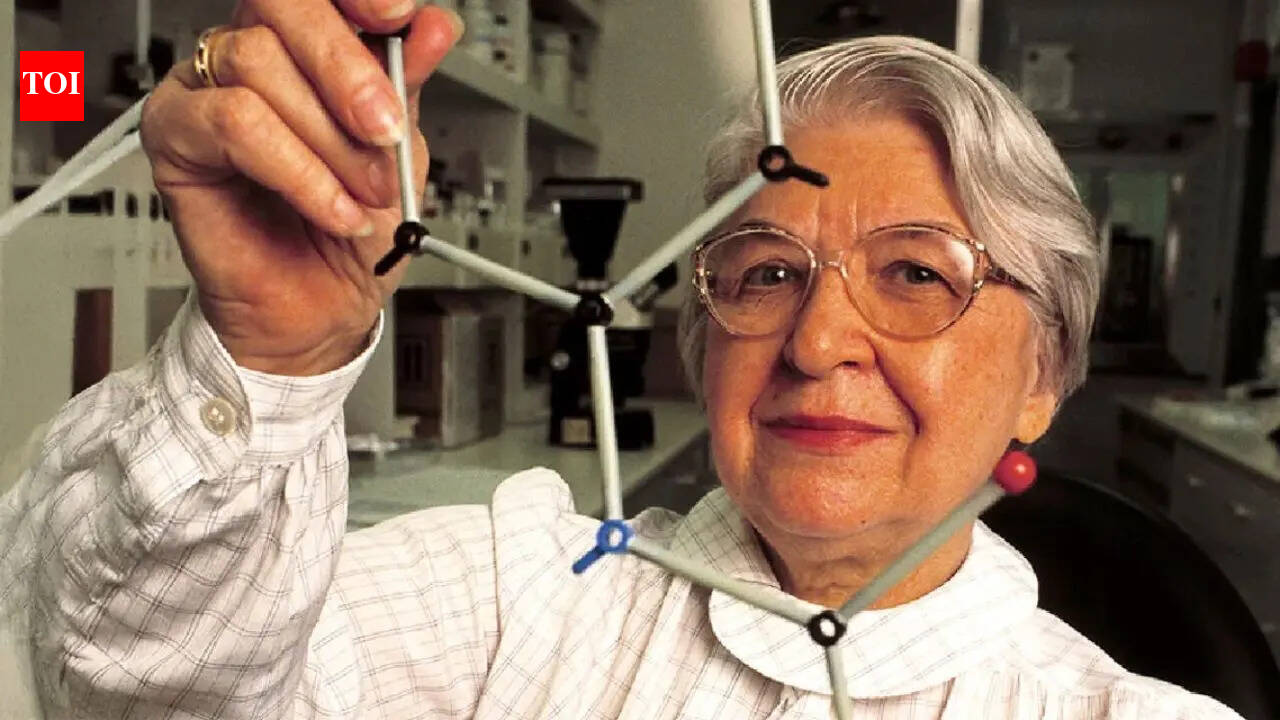

PC: ACS
In the mid-1960s, inside a research laboratory run by DuPont, Stephanie Kwolek was searching for something fairly practical. The company wanted lightweight yet durable fibres that could eventually replace steel in vehicle tyres and reduce fuel consumption. Synthetic materials were already common in industry by then, but the challenge was finding one that could survive heat, stress and repeated strain without becoming too heavy.What emerged from Kwolek’s experiments did not look especially promising at first. The liquid sitting in her lab equipment appeared thin and cloudy, more like a failed mixture than the beginning of a major industrial breakthrough. Yet she hesitated before throwing it away. That hesitation altered the future of protective materials, military equipment, aerospace engineering and countless everyday products that people now rarely think about when they pull on gloves or fasten a helmet.
How an unexpected chemical solution led to a scientific revolution of Kevlar
Scientific breakthroughs are often presented as sudden flashes of inspiration, though Kwolek’s discovery was tied more closely to persistence and instinct developed through years of repetitive laboratory work. The chemistry itself was highly technical, but the critical moment involved judgment. She recognised that the unusual liquid deserved attention rather than dismissal.That part of the story still resonates among chemists because the material did not behave according to expectations. Industrial research environments usually depend on consistency and predictable results. A cloudy solution sitting in laboratory glassware rarely signals success.Kwolek later spoke about how important curiosity was in experimental science, particularly the willingness to investigate results that appear inconvenient or strange. The Kevlar discovery emerged from that mindset as much as from formal theory.
Understanding the science behind high-performance fibres
Much of Kwolek’s work centred on polymers, substances built from extremely long molecular chains. Researchers were attempting to create fibres with greater rigidity and strength, especially for industrial use. Existing synthetic fibres could stretch or weaken under high temperatures. The task was to produce something tougher without making it impossibly heavy.Kwolek focused on aromatic polyamides, materials formed through chemical reactions involving tightly bonded molecular structures. She worked at relatively low temperatures, preparing solutions that could later be spun into fibres. Usually, scientists expected these solutions to appear thick and transparent before processing them further.Instead of becoming syrup-like, the liquid remained unusually fluid and cloudy. Many researchers would have considered it contaminated or unstable. The spinning technicians reportedly hesitated to run it through the equipment because unusual solutions could damage the machinery. Kwolek insisted it should still be tested.The fibres produced from that experiment turned out to possess an exceptional internal structure. The polymer chains aligned themselves in near-parallel formation, creating what scientists describe as liquid crystalline behaviour. That arrangement gave the material unusual stiffness and tensile strength without adding much weight. The result later became known as Kevlar.
From bulletproof vests to aerospace: The expanding uses of Kevlar
Kevlar is often described as being several times stronger than steel by weight, though the comparison depends on how strength is measured. What made the material remarkable was not simply hardness. It combined resistance to heat, cuts and impact while remaining comparatively light. That balance expanded its possible uses almost immediately.Body armour became one of the most recognised applications. Kevlar fibres absorb and distribute the energy from bullets rather than allowing direct penetration, which transformed the design of protective vests for police officers and military personnel. Before that, effective ballistic protection tended to rely on heavier metal-based systems.Its use spread well beyond armour. Aerospace manufacturers adopted it for parts requiring durability without excess mass. Sports equipment companies used it in racquets, skis and helmets. Industrial gloves, fibre-optic cables, tyres and brake pads also incorporated the material in different forms.Many people encounter Kevlar regularly without realising it. It exists quietly inside objects rather than on their surface.
Stephanie Kwolek’s early life: From Pennsylvania childhood to polymer science
Stephanie Kwolek grew up in New Kensington, Pennsylvania, in a household where patience and careful work mattered. Her mother sewed clothing at home and encouraged an early interest in fabrics and design. Her father, meanwhile, spent time outdoors and shared his fascination with the natural world. Those influences did not point neatly toward industrial chemistry, though traces of both later appeared in her career: an understanding of materials from sewing and a habit of close observation from science.She originally imagined a future in medicine. After studying chemistry at Margaret Morrison Carnegie College, she took a position at DuPont partly to earn money before medical school. The plan changed gradually. Laboratory research appealed to her more than she expected, particularly the unpredictable side of polymer science, where small changes in temperature or structure could produce entirely different materials.At the time, few women occupied senior scientific positions in large industrial laboratories. Kwolek entered that environment quietly and stayed there for decades.
The honours, mentorship and legacy of Stephanie Kwolek
For many years, Kwolek worked largely outside public attention despite the enormous commercial value of her research. Inside scientific and industrial circles, however, her reputation steadily grew. She eventually led polymer research at DuPont’s Pioneering Lab and remained with the company until retiring in 1986.Awards followed over time. She was inducted into the National Inventors Hall of Fame in 1994 and later received the National Medal of Technology. Such honours were still relatively uncommon for women scientists from industrial research backgrounds during that period.Colleagues often described her as reserved but deeply committed to mentoring younger researchers. She spent part of her later career encouraging children, especially girls, to consider science as a realistic path rather than a distant profession reserved for others. Go to Source