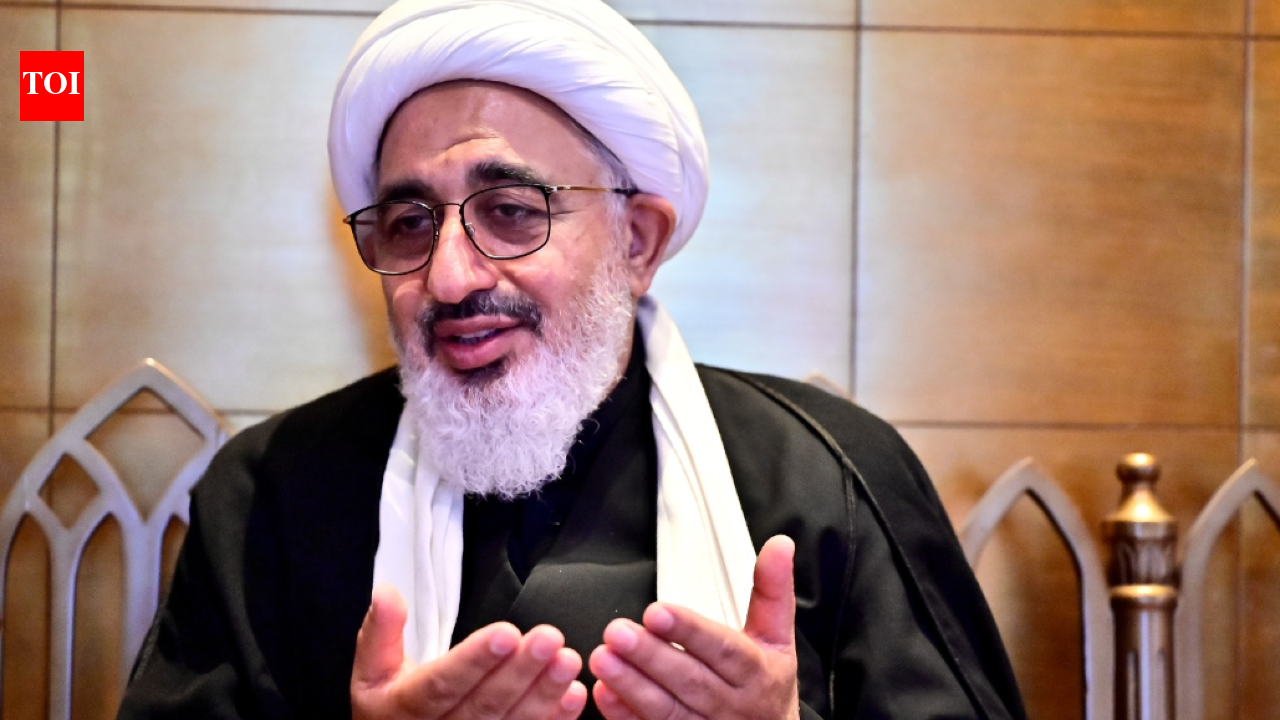

Abdul Majid Hakeem Ilahi (Photo by R Ramesh Shankar)
Amid renewed tensions between Iran and the United States following Tehran’s accusation that Washington violated a recent ceasefire understanding by carrying out strikes on Iranian territory, the prospects for de-escalation remain uncertain. The flare-up has reignited concerns over regional security, the future of nuclear negotiations and stability in the Gulf. In an interview with Jaya Menon, representative in India of Iran’s supreme leader Abdul Majid Hakeem Ilahi, who was in Chennai, accuses the US of breaching its commitments, outlines Tehran’s conditions for sustaining the ceasefire, defends Iran’s nuclear and missile programmes, and calls for a greater role for India in promoting peace in West Asia. Iran has accused the US of violating recent understanding by launching strikes on Iranian territory. Does Tehran now consider the agreement effectively breached?From the beginning of negotiations with the United States, even before Feb 28, we believed America does not honour its agreements or signatures. We knew this but still entered into negotiations. While talks were under way, they attacked us and continued the attacks for 40 days. Iran defended itself in a way they never expected.Their objectives were clear. They believed they could collapse the Iranian govt within three days and even change the map of Iran. President Trump publicly stated that Iran would have a different map after the war. They wanted to divide Iran into several parts. They believed that by killing senior leaders, commanders and officials in the initial attacks, they could bring about regime change. This was a major miscalculation.As the war continued, they realized they could not achieve their goals. Different countries sent delegations and mediators seeking a ceasefire. Iran initially refused because we believed the aggressors should first understand the consequences of their actions. The war cost them heavily in money, military assets and strategic credibility.Iran responded by targeting American military bases in countries such as Qatar, Kuwait, Bahrain and Jordan. We were forced into that response. Iran, however, deliberately avoided civilian targets. If we had wanted to attack neighboring countries, the situation would have been completely different. We targeted military facilities only. The UAE is a small country; even two missiles aimed at a landmark such as the Khalifa Tower could have had devastating consequences. But Iran chose not to do that.Eventually, Iran accepted a ceasefire because we did not want the conflict to harm other countries. We never accepted America’s demand for unconditional surrender. Iran proposed its own framework and the ceasefire was reached. Our position remains that America and Israel ultimately seek control over Iran’s resources and territory. We accepted the ceasefire, but we still do not trust the United States to honor its commitments. Iran responded with attacks on US-linked targets in the Gulf. Is there still a pathway to de-escalation?Iran does not want renewed conflict. More than 4,000 Iranians were killed and over 100,000 houses were damaged. From the beginning, Iran did not want war. The suffering falls on people in Iran and the region, while the United States remains far away from the consequences.War also benefits those who profit from it. Oil prices rose sharply during the conflict, creating economic gains for some countries. Arms manufacturers also benefit. In 2024 alone, huge amounts of weapons were sold to Middle Eastern countries. Weapons are not produced for storage; they are eventually used in conflicts. The arms industry depends on wars, and many powerful interests benefit from that reality. What is the current situation in the Strait of Hormuz?After the agreement between Iran and the United States, Iran announced that the Strait of Hormuz would remain open to all countries. Ships were allowed to pass under established regulations. Problems emerged when America attempted to impose new conditions and seek greater control over the Strait. Iran opposes that approach. We hope the Strait remains open and stable.The US has accused Iran of attacking a cargo vessel in the Strait of Hormuz. Does Tehran reject this allegation?Yes. Iran rejected the allegation. We are courageous enough to acknowledge our actions. We did not carry out that attack. What are the most important provisions of the 14-point memorandum of understanding between the US and Iran?The provisions are broad and general, but all parties must respect and honour them. If the commitments are not implemented, maintaining the ceasefire becomes difficult. Which specific clauses does Iran believe the US has already failed to honour?The first violation concerns the ceasefire itself. One of the key provisions involved stopping attacks on Lebanon. Yet, according to Lebanese authorities, thousands of innocent people have been killed and civilian areas continue to be targeted. Iran views this as a breach of the understanding. Why was Iran’s ballistic missile programme excluded from the agreement?Every country has the right to defend itself. Missiles are among the tools used for national defence. Iran’s missile programme is therefore non-negotiable. We will not negotiate away our ability to defend ourselves.Why does the agreement not address Iran’s links with groups such as Hezbollah?Iran has not supported Hezbollah with weapons. Our support has been spiritual and moral. Hezbollah should not be viewed as a terrorist organization. It emerged when large parts of Lebanon were under Israeli occupation. It was formed by Lebanese youth defending their country. In our view, Hezbollah’s actions have been defensive rather than aggressive.The agreement provides a 60-day window to negotiate a permanent settlement on Iran’s nuclear programme. Are talks progressing?Discussions are continuing. At the same time, there is a contradiction in the American position. President Trump has repeatedly claimed that Iran’s nuclear facilities were destroyed. If that is true, why does the issue continue to be raised?Iran has consistently stated for more than 30 years that it does not seek nuclear weapons. Our religious principles prohibit them. Our leaders have repeatedly said that if Iran wanted nuclear weapons, it had the capability to develop them. We do not want them, do not possess them and do not intend to possess them in the future. Nuclear weapons have no place in Iran’s military doctrine. Does that position remain unchanged?Yes. This is not a political position that changes according to circumstances. It is rooted in religion and therefore remains unchanged. Q: What verification system would Iran accept regarding its nuclear programme?Iran wants to exercise its legitimate right to peaceful nuclear energy for electricity, medicine and scientific purposes. We need reliable guarantees that such rights will be respected.Some countries demand zero uranium enrichment, promising they will supply what Iran needs. Iran cannot simply trust such promises. They could change their position later or impose unreasonable conditions. Therefore, Iran insists on maintaining its rights while remaining open to reasonable arrangements.Q: What timeline does Iran consider realistic for nuclear-related commitments?Iran’s right to peaceful nuclear technology is not negotiable. The level of uranium enrichment, however, can be discussed. We have already stated that we are prepared to reduce enrichment levels for peaceful purposes. What is unacceptable is the demand for no enrichment at all.Q: Pakistan reportedly played a role in facilitating contacts between Washington and Tehran. Did India play any role?India is a major country with good relations both with Iran and the United States. Many Indian commentators and policymakers have argued that India can play a larger role in promoting peace in the region.Iran values its relationship with India, particularly in economic cooperation. Trade has continued, including food imports. Diplomatic engagement has also been positive. Prime Minister of India and Iranian President have maintained contact, and foreign ministers have also communicated. Interactions through forums such as BRICS have strengthened relations. We appreciate India’s constructive approach.How does Iran view India’s role in the emerging post-conflict order in West Asia?Relations between Iran and India go back thousands of years and are rooted in culture, civilization, philosophy, education and trade. Many Iranians settled in India generations ago, and scholars moved between the two countries.Iran wants stronger relations with India. Given India’s growing international influence and role within BRICS, we believe it can contribute significantly to peace and stability in West Asia. India is a powerful and wise country capable of playing a constructive diplomatic role.The MoU is believed to include commitments to unfreeze Iranian assets, ease sanctions and support reconstruction. Is Iran confident these commitments will be fulfilled?These commitments were written into the understanding and accepted by the other side. Confidence is, however, difficult because American positions frequently change. That is why trust remains a challenge. What is the latest casualty figure from the conflict and how is the govt helping affected families?According to Iranian authorities, more than 100,000 houses were damaged, including over 40,000 in Tehran. Hundreds of babies, thousands of children and women, and many civilians were killed. More than 34,000 civilians were injured. Universities, schools, Red Cross facilities and ambulances were also damaged.The govt has provided temporary accommodation, including hotels and alternative housing, while reconstruction continues. Families who lost relatives are receiving assistance and support. Efforts are under way to rebuild homes and restore normal life as quickly as possible. The funeral of Ayatollah Ali Khamenei is scheduled for July 9. How many foreign leaders are expected to attend?Iran has invited many world leaders, and several have indicated that they will participate. India has also been invited. My understanding is that Prime Minister Narendra Modi may send a delegation rather than attend personally. We expect millions of people to participate in ceremonies held across several cities. There is also significant interest among people in Iraq who wish to pay their respects.Will the United States be represented?I do not think so. They killed him. What confidence-building measures can Iran and the US undertake to preserve the ceasefire and negotiations?Much depends on the calculations of the American administration. If they believe they can weaken or change Iran through force, they will try. I believe they will eventually realize that continued war is not a solution and that Iran’s conditions must be taken seriously. At present, neighbouring countries are seeking better relations with Iran. There is an opportunity to open a new chapter based on cooperation rather than confrontation.Why did the situation become aggressive again after the truce?Many countries in the Persian Gulf region face pressure from the United States and often lack the freedom to oppose American policies. American influence in the region is extensive, including military bases and strategic control. This contributes to instability.Will Iran permit enhanced inspections by the International Atomic Energy Agency?Iran wants to benefit from its rights under international agreements. We, however, believe the International Atomic Energy Agency (IAEA) often applies double standards and is influenced by powerful countries.Iran feels it has been subjected to extensive scrutiny while concerns regarding Israel’s nuclear capabilities receive less attention. We want fairness, justice and equal treatment under international rules.Does Iran support a broader Gulf security framework involving countries such as Saudi Arabia, the UAE and India?Yes. Iran seeks stronger relations with India, Saudi Arabia and other countries in the Gulf region. We support new agreements focused on security, stability and peace. Our view is that countries within the region should work together to solve their problems rather than allowing outside powers to create conflicts. Go to Source