
Friday, December 5, 2025
21.1 C
New Delhi

‘US controlled Pakistani nuclear arsenal’: Former CIA agent drops bombshell; reveals Washington expected India would strike after 26/11

'US controlled Pakistani nuclear arsenal': Former CIA agent drops bombshell; reveals Washington expected India would strike after 26/11

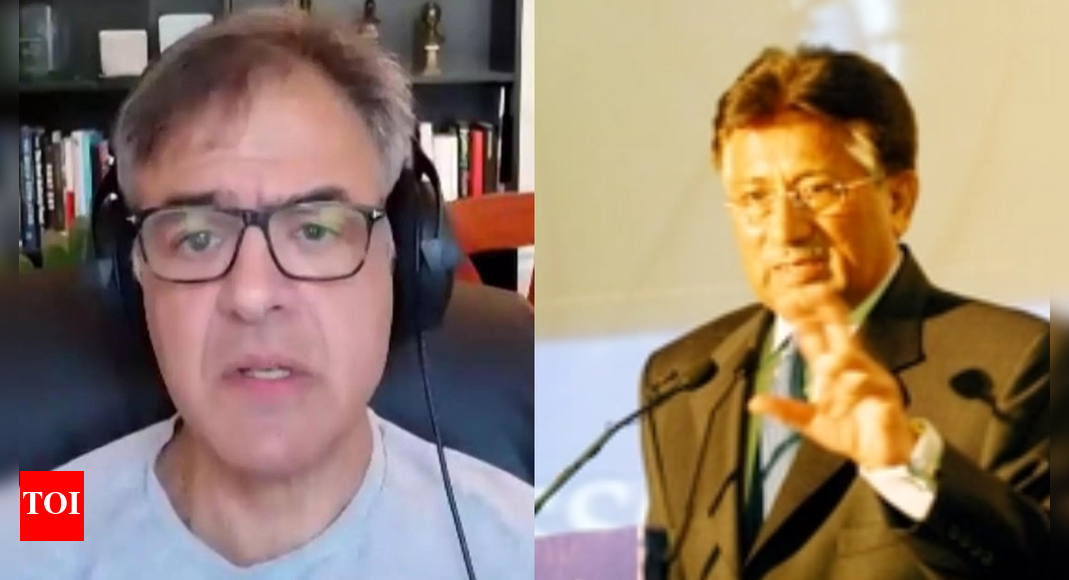
John Kiriakou, Parvez Musharraf

Former CIA officer John Kiriakou has revealed that the United States provided millions of dollars to Pakistan under former President Pervez Musharraf, in effect “purchasing” his cooperation.He also claimed that Musharraf handed over control of Pakistan’s nuclear arsenal to the US. “When I was stationed in Pakistan in 2002, I was told unofficially that the Pentagon controlled the Pakistani nuclear arsenal, that Musharraf had turned control over to the United States because he was afraid of exactly what you just described (nuclear weapons falling into terrorist hands),” Kiriakou told news agency ANI. Kiriakou also revealed that the US refrained from targeting Abdul Qadeer Khan, the architect of Pakistan’s atomic bomb, after “direct intervention” by the Saudi government.”A colleague of mine was dealing with A Q Khan,” Kiriakou said, as quoted by the ANI. “If we had taken the Israeli approach, we would have just killed him. He was easy enough to find. We knew where he lived. We knew how he spent his day. But he also had the support of the Saudi government. And the Saudis came to us and said, ‘Please leave him alone. Please. We like A Q Khan. We’re working with A.Q. Khan. We’re close to the Pakistanis. ..They named Faisalabad after King Faisal. Just leave him alone.”Kiriakou called this diplomatic pressure a major US policy failure, describing it as a “mistake” by Washington. “This was a mistake that the US government made, not confronting A Q Khan head-on,” he said.Khan was born in Bhopal in 1936, moved to Pakistan with his family in 1952 after Partition, and died in Islamabad in 2021 at the age of 85.

‘US expected India to strike back after 2002, 2008 terror attacks’

Kiriakou said the US had expected India to retaliate after the 2001 Parliament attack and 2008 Mumbai terror attacks, but it did not. “At the CIA we called the Indian policy strategic patience. The Indian government would have been perfectly within its rights to respond by striking Pakistan and they didn’t. And I remember at the White House people were saying, wow, the Indians are really exhibiting a very mature foreign policy here. We expected the Indians to, to strike back and they didn’t. And that kept the world from what might have been a nuclear exchange. Right? But India’s gotten to the point where they can’t risk strategic patience being misunderstood as weakness. And so they had to respond,” he said. He added that Musharraf allowed the US to operate freely. “Our relations with the Pakistani government were very, very good. It was General Pervez Musharraf at the time. And look, let’s be honest here. The United States loves working with dictators. Because then you don’t have to worry about public opinion and you don’t have to worry about the media anymore. And so we essentially just purchased Musharraf.”Kiriakou said Musharraf allowed the US to operate freely. “We gave millions and millions and millions of dollars in aid, whether it was military aid or economic development aid. And we would meet with Musharraf regularly, several times a week. And essentially he would let us do whatever we wanted to do. Yes. But Musharraf also had his own people that he needed to deal with,” he said.He added that Musharraf maintained the support of the military while pretending to cooperate with the US on counterterrorism, but continued activities against India. “He had to keep the military happy. And the military didn’t care about Al-Qaeda. They cared about India. And so in order to keep the military happy and keep some of the extremists happy, he had to allow them to continue this dual life of pretending to cooperate with the Americans on counterterrorism while committing terror against India,” Kiriakou said. Go to Source

Hot this week

Cristiano Ronaldo Invests In Perplexity AI & Launches ‘Ronaldo Hub’ For Fans Worldwide

Show Quick Read Key points generated by AI, verified by newsroom Cristiano Ronaldo has invested in Perplexity AI and also signed a global sponsorship deal with the San Francisco-based company. Read More

What Is Google’s New Gemini 3 ‘Deep Think’ Mode? Here’s How You Can Use It

Google has introduced a powerful new AI upgrade called Gemini 3 Deep Think, and it is now available inside the Gemini app for users who have the Google AI Ultra subscription. Read More

Snapchat & FaceTime Now Banned In Russia: Joins Instagram, X & Others On The Blocked List

Show Quick Read Key points generated by AI, verified by newsroom Apple’s FaceTime video calling service and Snapchat have been banned in Russia. The report comes from Bloomberg. Read More

IndiGo crisis: Govt says flights to normalise from midnight; airline apologises to passengers

“It is expected that all flight schedules would stabilise and begin returning to normal midnight tonight and full services and stability should return over the next couple of days. Read More

Modi-Putin joint statement: India to set up pharma factory in Russia, jointly produce fertiliser

As part of the co-production model, India will set up a pharmaceutical factory in Russia and get access to fertilisers that Russia makes, Prime Minister Narendra Modi and Russian President Vladimir Putin said in a joint press briefing. Read More

Topics

Cristiano Ronaldo Invests In Perplexity AI & Launches ‘Ronaldo Hub’ For Fans Worldwide

Show Quick Read Key points generated by AI, verified by newsroom Cristiano Ronaldo has invested in Perplexity AI and also signed a global sponsorship deal with the San Francisco-based company. Read More

What Is Google’s New Gemini 3 ‘Deep Think’ Mode? Here’s How You Can Use It

Google has introduced a powerful new AI upgrade called Gemini 3 Deep Think, and it is now available inside the Gemini app for users who have the Google AI Ultra subscription. Read More

Snapchat & FaceTime Now Banned In Russia: Joins Instagram, X & Others On The Blocked List

Show Quick Read Key points generated by AI, verified by newsroom Apple’s FaceTime video calling service and Snapchat have been banned in Russia. The report comes from Bloomberg. Read More

IndiGo crisis: Govt says flights to normalise from midnight; airline apologises to passengers

“It is expected that all flight schedules would stabilise and begin returning to normal midnight tonight and full services and stability should return over the next couple of days. Read More

Modi-Putin joint statement: India to set up pharma factory in Russia, jointly produce fertiliser

As part of the co-production model, India will set up a pharmaceutical factory in Russia and get access to fertilisers that Russia makes, Prime Minister Narendra Modi and Russian President Vladimir Putin said in a joint press briefing. Read More

Moisturising To Cleansing: Press Reset On Your Scalp Routine This Winter

A winter hair reset isn’t about adding more products – it’s about supporting scalp health. Here are some things to keep in mind during the colder months. Read More

Healthy Hacks: Enjoy Gajar Halwa, Til Laddoos And Other Indian Winter Desserts Without The Guilt

You can enjoy traditional Indian winter desserts guilt-free by making simple ingredient swaps. These tweaks preserve the taste while boosting nutrition. Read More

A flight to Dubai cheaper than Delhi-Mumbai? How domestic flight fares are soaring amid IndiGo meltdown

Amid IndiGo’s massive wave of cancellations and delays, passengers have now run into another problem: sky-high domestic ticket prices on other airlines. Read More

Related Articles