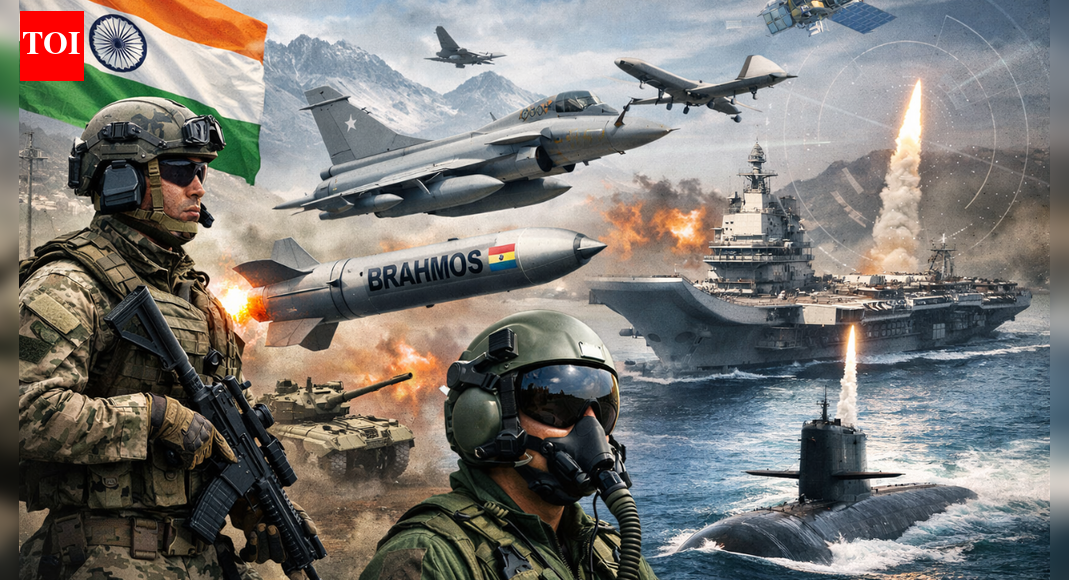


NEW DELHI: India’s military might stood unmistakably on display in 2025. The year was defined by armed forces’s decisive response to the Pahalgam attack through Operation Sindoor – a signal moment that underlined both resolve and capability. Beyond this, 2025 unfolded as a year of preparedness, projection and purpose.From the icy reaches of Alaska to the warm waters off Guam, from desert manoeuvres near the western border to anti-piracy patrols in the Indian Ocean, the armed forces operated with a clarity of intent shaped by experience, threat perception and a steadily expanding strategic vision.
The year began with the government declaring 2025 the “Year of Reforms” for the defence sector, signalling that jointness, indigenisation and technological adaptation would no longer be incremental goals but central pillars of military planning. That intent was backed by numbers. The defence budget rose to Rs 6.81 lakh crore in 2025–26, nearly tripling from a decade earlier, underlining a long-term commitment to readiness across land, air and sea.Operational realities, however, gave urgency to that vision. In May, following the terror attack in Pahalgam, India launched Operation Sindoor, a calibrated military response that brought renewed focus on air defence, precision strike, electronic warfare and the growing role of drones. While details remained closely held, the episode reinforced lessons from recent conflicts: modern warfare is compressed, technology-driven and unforgiving of gaps in surveillance or response time. Those lessons echoed through the rest of the year in exercises, acquisitions and doctrinal conversations.