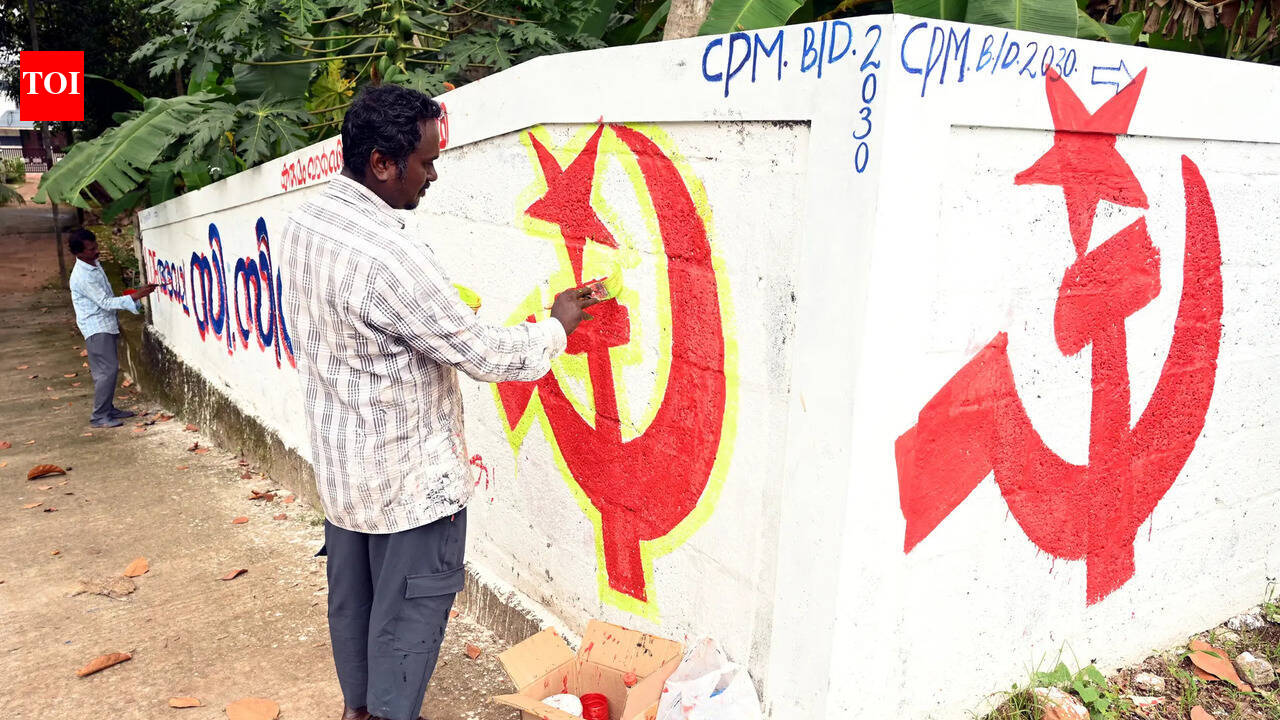

PTI photo
NEW DELHI: Kerala’s 2026 assembly election is set for a closely contested finish, with counting day expected to provide clarity after weeks of intense campaigning and high voter engagement.Counting of votes will begin at 8am on May 4 across all 140 constituencies, with early trends likely to emerge within a few hours. Real-time updates will be available on the Election Commission website, along with live coverage, analysis, and seat tallies on The Times of India.Follow full coverage of elections here Polling for the election was conducted in a single phase, with voter turnout remaining robust and consistent with Kerala’s tradition of high electoral participation.What exit polls predictedExit polls have indicated a closely fought contest between the Left Democratic Front and the United Democratic Front, with only a narrow gap separating the two alliances.According to the poll of polls, the Congress-led UDF is projected to cross the majority mark with around 72 seats in the 140-member assembly, while the LDF is expected to remain close behind with approximately 63 seats. However, projections vary significantly across pollsters. Axis My India has indicated a wider margin in favour of the UDF, projecting 83 seats for the opposition alliance and 55 for the ruling front. In contrast, the PMARQ exit poll has predicted a majority for the LDF with around 75 seats, highlighting the uncertainty around the final outcome. A test of Kerala’s political patternKerala’s electoral history has largely been defined by an alternating pattern between the LDF and UDF. However, the LDF’s consecutive victory in 2021 under Chief Minister Pinarayi Vijayan broke that trend, making the 2026 election a key test of whether the state reverts to its traditional cycle or continues with the incumbent.For the UDF, the election represents an opportunity to return to power by capitalising on anti-incumbency sentiment. For the LDF, it is a chance to consolidate its governance record and retain its position in what remains the Left’s most significant stronghold in the country.Campaign narrativeThe campaign saw a shift in focus over time. Early phases were dominated by issues such as corruption allegations, economic concerns, backdoor appointments, the Sabarimala gold heist controversy, and rehabilitation challenges following the Wayanad landslides. As campaigning intensified, the narrative evolved into sharper political exchanges, including allegations of covert alliances, debates around communal polarisation, and direct attacks between senior leaders.The LDF framed the election as a referendum on the “Pinarayi model”, highlighting welfare expansion, infrastructure development, and administrative centralisation, while promising further expansion of welfare programmes.The UDF, in contrast, advanced a narrative centred on accountability, questioning the efficiency and fiscal sustainability of the government’s policies while seeking to tap into voter fatigue and economic concerns.What to expectWith projections indicating a narrow margin, the final outcome is likely to hinge on closely contested constituencies and late swings in voter preference. As counting begins, Kerala’s verdict will determine not only the next government but also whether its long-standing electoral pattern reasserts itself or undergoes a structural shift. Go to Source