
Monday, August 3, 2026
35.8 C
New Delhi

Just 3,000 left in wild, IUCN classifies Indian wolf as ‘potential distinct species’

Just 3,000 left in wild, IUCN classifies Indian wolf as 'potential distinct species'

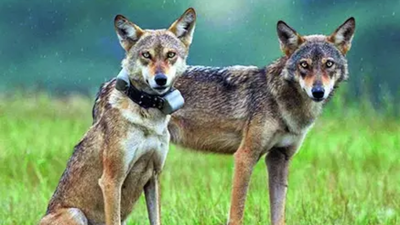
The Indian wolf, commonly known as gray wolf, is found across India and Pakistan

DEHRADUN: In a significant development in animal classification, International Union for Conservation of Nature (IUCN) has for the first time evaluated the Indian wolf (Canis lupus pallipes) separately, suggesting that it may be classified as a distinct species within the Canis genus – a move that could elevate its global conservation priority.According to IUCN’s global panel of canid experts, the Indian wolf population is estimated to be around 3,093 (2,877-3,310) across India and Pakistan, putting it in the “vulnerable” category on the Red List. The canid experts noted that the trend of decline in its population is mainly due to habitat loss and persecution.The Indian wolf represents one of the most ancient wolf lineages globally – having evolved in the subcontinent long before humans arrived. Unlike the tiger, which is found in 11 countries, this wolf’s range is almost entirely restricted to India, with Pakistan having just about 10 to 20 left.”While tiger numbers are stabilising, the Indian wolf’s population continues to decline since it lives largely outside protected areas and is exposed to anthropogenic disturbances and threats. This species urgently needs focused conservation efforts,” said Bilal Habib, senior scientist at the Dehradun-based Wildlife Institute of India (WII). Commonly known as Gray wolf (Canis lupus), the ‘genus’ currently has seven species recognised by the IUCN. Ex-dean at WII, YV Jhala, said, “With the inclusion of the Indian wolf, this will be the eighth recognised species of Canis genus.” The other seven species of Canis genus are Canis lupus (wolf), Canis latrans (coyote), Canis aureus (Golden jackal), Canis simensis (Ethiopian wolf), Canis familiaris (domestic dog), Canis rufus (red wolf) and Canis lupaster (African wolf).The IUCN assessment of Indian wolf reads, “Analysis indicates that only 12.4% of the Indian wolf’s distribution is encompassed within protected areas across India and Pakistan. Most of its population is found outside of designated protected areas, where they are not subject to formal protection or management efforts by governmental bodies. As a result, the majority of the population is directly exposed to anthropogenic disturbances and threats. Given current trends, threats are anticipated to persist and intensify in the coming decade…”On the recent incidents of man-wolf conflicts in UP, Jhala said, “Removing the problematic ones expediently and professionally wins community support, hence it becomes even more important to conserve the species.”


Go to Source

Hot this week

Cats went mad, birds fell from the sky, and a disease caused by poisoned seafood devastated an entire Japanese coastal community

Image(s): Left/Taner Yildirim/Right/Aileen M. Smith/European Environment Agency For decades, the quiet fishing city of Minamata on Japan’s southern coast appeared to be thriving. Read More

The largest moon in the Solar System is bigger than Mercury and hides an ocean beneath its icy surface

Image AI generated When people think about moons, they usually picture small rocky companions circling much larger planets. Ganymede does not fit that picture. Read More

Meet Will Grand, the LSU graduate who turned food waste into 10,000 meals

Although Grand has graduated from LSU, he continues to help organise volunteers every week. Read More

In a first, UK woman undergoes womb surgery to fix baby’s intestines growing outside his body

Maisie Savage/Image: X A baby born with a rare abdominal birth defect is thriving after doctors repaired the condition before birth in what specialists describe as a first-of-its-kind clinical trial. Read More

Topics

Cats went mad, birds fell from the sky, and a disease caused by poisoned seafood devastated an entire Japanese coastal community

Image(s): Left/Taner Yildirim/Right/Aileen M. Smith/European Environment Agency For decades, the quiet fishing city of Minamata on Japan’s southern coast appeared to be thriving. Read More

The largest moon in the Solar System is bigger than Mercury and hides an ocean beneath its icy surface

Image AI generated When people think about moons, they usually picture small rocky companions circling much larger planets. Ganymede does not fit that picture. Read More

Meet Will Grand, the LSU graduate who turned food waste into 10,000 meals

Although Grand has graduated from LSU, he continues to help organise volunteers every week. Read More

In a first, UK woman undergoes womb surgery to fix baby’s intestines growing outside his body

Maisie Savage/Image: X A baby born with a rare abdominal birth defect is thriving after doctors repaired the condition before birth in what specialists describe as a first-of-its-kind clinical trial. Read More

’30-yr-stronghold fell in 30 days’: Prashant Kishor’s jibe at BJP as he eyes historic Bankipur win

Prashant Kishor celebrates as he leads in the Bankipur assembly bypoll NEW DELHI: Jan Suraaj Party founder Prashant Kishor took a swipe at the BJP on Monday as he surged towards a landmark victory in the Bankipur assembly bypoll, s Read More

Pregnancy found growing near kidneys in rare medical case

An extremely rare pregnancy that developed outside the uterus, deep inside the abdomen near the kidneys (Representative image) NEW DELHI: Doctors in Delhi have successfully treated a woman diagnosed with an extremely rare pregnancy Read More

Too Much Phone Use? Here’s How Mobile Addiction Is Making Your Neck Age Faster

Show Quick Read Key points generated by AI, verified by newsroom Prevent with proper screen height, frequent breaks, limited usage. Smartphones have become an inseparable part of daily life. Read More

Related Articles