

Wednesday, May 6, 2026
33.1 C
New Delhi

Isro sees warning in two consecutive PSLV failures

Isro sees warning in two consecutive PSLV failures

.

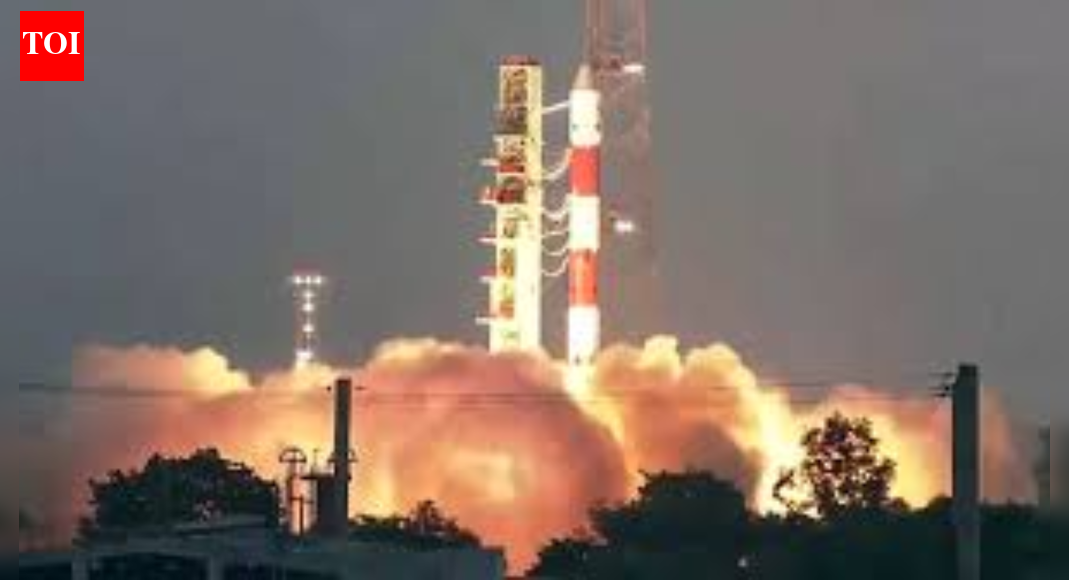
BENGALURU: Any space agency will tell you that every rocket launch comes with anxious moments, no matter what the record is. Yet, India’s Polar Satellite Launch Vehicle (PSLV) failing twice in consecutive attempts won’t be easy for Isro to digest given its workhorse’s record. PSLV has had 64 missions, of which four, including Monday’s PSLV-C62, failed to put the spacecraft in orbit, and one in 1997 placed the payload on a lower orbit than the intended one. When a launcher is seen as proven, scrutiny can soften. But back-to-back failures need to be treated as a structural warning – not bad luck – as they suggest deeper issues, whether with quality control, supply chains, testing protocols, or configuration management. When PSLV-C61 failed last year, it brought down the rocket’s success rate from 95.2% to 93.7%. Now, it has slipped further. Isro told TOI on Monday that the failures have affected the collective morale of the team. “It would have been different if any other launcher failed, but a PSLV failure worries us,” said a scientist. An analysis of setbacks shows that PSLV-C62’s failure could have been caused by unresolved issues from the failed PSLV-C61 on May 18, 2025. In both cases, PS3, or the third stage – a solid motor that provides a high-energy boost after the second stage burnout – suffered a glitch. While Isro has not made the previous failure analysis committee (FAC) report public, TOI has learnt there was a fall in chamber pressure of the motor case. The PSLV-C62 will now be analysed by another FAC. Isro said there was disturbance in the “roll rate” during the final stages of PS3 burning on Monday, and that caused a deviation. Failures before 2025 all point to different glitches. The first setback was on Sept 20, 1993 when PSLV-D1, the rocket’s first mission, failed due to a guidance system error during the separation of PS2 (a liquid stage). Isro launched again on Oct 15, 1994, and thereon PSLV showed no glitch until Sept 29, 1997, when PSLV-C1 mission became a “partial success”. Here, the pressure regulator on PS4 (which uses twin liquid engines) failed, resulting in the satellite being placed in a lower-than-intended orbit. The 1997 glitch has not repeated. The next failure came 20 years later, in Aug 2017, when the PSLV-C39 mission failed. In this case, the problem was with the heat shield, which has since been rectified. After the PSLV-C39 mission, the launch vehicle had 21 successful flights before the failure last year, followed by Monday’s.

Go to Source

Hot this week

India rules out bilateral sports with Pakistan, to continue competing in international events

India has reiterated that it will not engage in bilateral sporting competitions with Pakistan, while continuing to compete against them in international events. Read More

Why do rockets curve after launch instead of going straight? The reason is surprising

PC: Google Gemini Have you ever wondered why rockets eventually tilt themselves after launch? Most people assume a rocket’s goal is to fly as high as possible, but ‘up’ is only the first step. Read More

1.6 million-year-old bones reveal how the first humans really got their meat

For decades, scientists have debated whether the earliest humans survived mainly by hunting animals or scavenging carcasses left behind by predators. Now, a new study of 1. Read More

China discusses Hormuz stalemate with Iran days before Trump meets Xi in Beijing

Ahead of the US-China summit next week, Iranian Foreign Minister Abbas Araghchi held talks with Chinese Foreign Minister Wang Yi today. Read More

Pakistan Says US, Iran Closing In On One-Page Memo To Begin Nuclear Talks, End War

US and Iran near one page memo to end war, talks in final stage, draft includes Iran nuclear pause, possible US sanctions relief and fund release, no final deal yet. Read More

Topics

India rules out bilateral sports with Pakistan, to continue competing in international events

India has reiterated that it will not engage in bilateral sporting competitions with Pakistan, while continuing to compete against them in international events. Read More

Why do rockets curve after launch instead of going straight? The reason is surprising

PC: Google Gemini Have you ever wondered why rockets eventually tilt themselves after launch? Most people assume a rocket’s goal is to fly as high as possible, but ‘up’ is only the first step. Read More

1.6 million-year-old bones reveal how the first humans really got their meat

For decades, scientists have debated whether the earliest humans survived mainly by hunting animals or scavenging carcasses left behind by predators. Now, a new study of 1. Read More

China discusses Hormuz stalemate with Iran days before Trump meets Xi in Beijing

Ahead of the US-China summit next week, Iranian Foreign Minister Abbas Araghchi held talks with Chinese Foreign Minister Wang Yi today. Read More

Pakistan Says US, Iran Closing In On One-Page Memo To Begin Nuclear Talks, End War

US and Iran near one page memo to end war, talks in final stage, draft includes Iran nuclear pause, possible US sanctions relief and fund release, no final deal yet. Read More

Beyond Golgappe And Papdi Chaat: 5 Lip-Smacking Street Food Dishes From Across India

From Litti Chokha to Siddu, these are 5 regional iconic Indian street snacks that will amaze your taste buds Go to Source Author: News18 Read More

From Sculptural Lamb To Couture Desserts: Inside The Met Gala Menu Everyone Is Talking About

The Met Gala 2026, themed ‘Costume Art’, didn’t just inspire what guests wore, it dictated what they ate. Read More

Born In Bihar, This Artist Turned Everyday Indian Objects Into Met Gala Showstoppers

Subodh Gupta, famed for transforming Indian kitchen objects into art, gains global spotlight as Isha Ambani and Ananya Birla showcase his works at the 2026 Met Gala. Read More

Related Articles