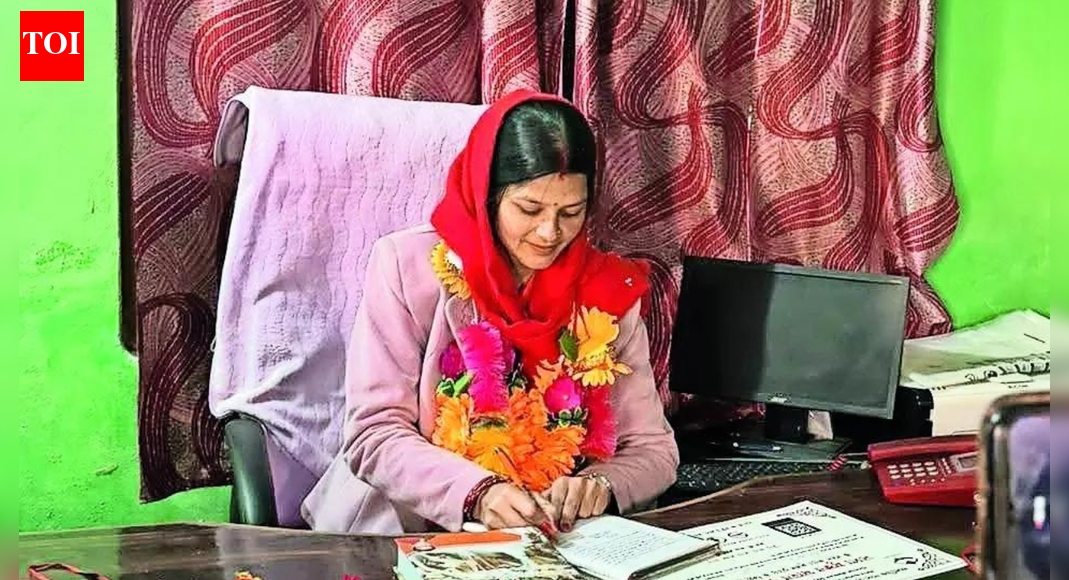

DEHRADUN: In the hills of Uttarakhand, with outmigration that has long hollowed out many of its villages, a political shift is taking root with a new cadre of Gen Z pradhans – many of them women, and barely out of college. Armed with degrees and smartphones, they are stepping into local governance with a determination to rebuild the places they call home.When Uttarakhand’s latest panchayat results came out at the end of July, many young women entered seats long held by older generations as first-timers. Few months in, they are now challenging two long-standing Himalayan realities: migration and patriarchy. And they are doing so while shattering the stereotype of the pradhan-pati (village head’s husband) model that dominates grassroots politics. For these 20-year-somethings, entering the panchayat is not a ticket to fame or wealth, but a conscious choice to “return home”. And the mandate they’ve taken on is ambitious: fixing schools, strengthening healthcare, improving roads, and above all, slowing the steady flow of young people who leave the state in search of opportunity.At 22, Sakshi Rawat could have been working in a lab in Dehradun. Instead, three months after completing her biotechnology degree, she chose to return to her village, Kui, in Pauri Garhwal. Real change starts at your doorstep, says a GenZ pradhan This, even as her friends chased private jobs in cities. “Most youngsters leave their villages after studying,” Sakshi said. “I want them to stay, to build something of their own here.” The decision to contest was entirely her own. Inspired by young grassroots innovators like Pawan Bisht of nearby village Maroda, who returned to the hills to pursue advanced farming, Sakshi believes Uttarakhand’s revival will be youth-led. “Our biggest challenge isn’t geography or funds but mindset. People still think success lies outside the village. Real change will come when results at home become visible,” she said.In Chamoli’s Sarkot village, 21-year-old Priyanka Negi once wanted to be a mathematician. But her father, himself a two-time village head, saw the spark early and began taking her to block meetings. “I was always drawn to numbers,” she said, “but during my graduation, I realised governance is the real math….” Her priorities are clear. “Road connectivity… Fix the roads, and half the problems of rural, hill life resolve themselves.” For 22-year-old Deeksha Mandoli, leadership came early, as did motherhood. Married at 20 and a mother by 21, she is now the pradhan of Gulari village, Chamoli. An English graduate, she believes addiction among youth is an emerging issue. Deeksha rejects the old “pradhan-pati” dynamic with calmness. “People now talk to us directly…” In Chari, a Chamoli village with 250 voters, Kiran Negi has taken the new pradhan charge. Kiran, the youngest pradhan from her block, said “This village is tiny, but problems aren’t. Roads, water… Everything needs work.” The absence of a male figure by her side, has made her decisions more visible, Kiran said, challenging the old idea that ambition lives only in cities. Go to Source