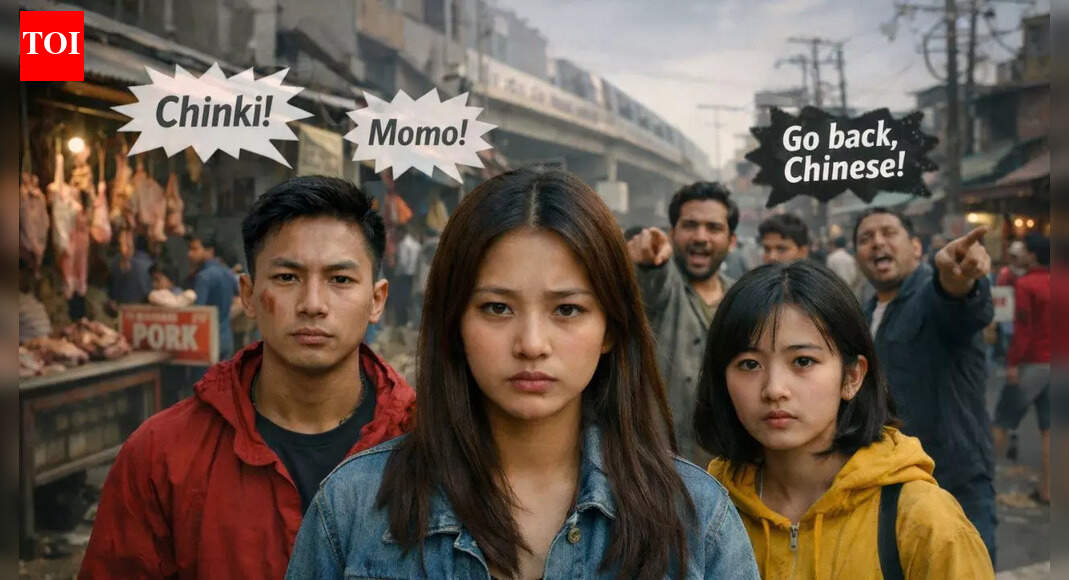


Representative AI image
“You people eat dogs, cats, pigs and all your animals, right?” This was a question Riba says she was repeatedly asked because she hails from the Northeast. Working at a high-profile firm did little to shield her from stereotypes. Friends, colleagues and acquaintances routinely questioned her food habits, appearance and even language.What hurt most, she says, was that many people did not see anything wrong with asking such questions. “It definitely triggered me being questioned every day about what I eat, how I look and where I belong,” she recalls.That casual prejudice, civil rights activists say often escalates into something far more dangerous.These day-to-day casual slurs, which come as no surprise in the lives of people from the Northeast, reveal that even India’s so-called cosmopolitan “melting pots” often fail to be truly inclusive. For many from the region living outside it, these cities remain spaces where identities are questioned and belonging is never fully accepted.
‘Oye Chinese’
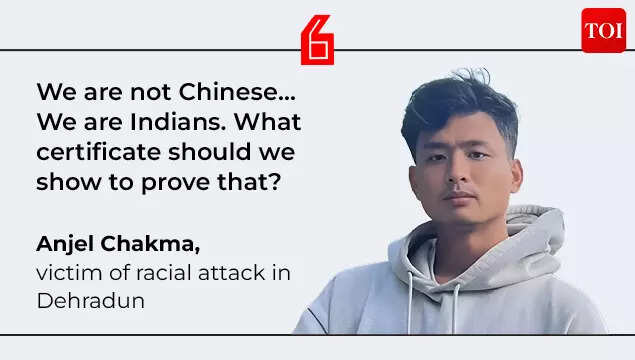
On December 9, what began as a routine visit to a local market in Dehradun ended in fatal violence. Twenty-four-year-old Anjel Chakma from Tripura lost his life.Anjel and his younger brother Michael had been planning a Chandrashila trek scheduled for December 22 and had even ordered new trekking shoes for the trip.The shoes arrived a day after the attack. They were never unpacked.According to Michael and other family members, the brothers were subjected to racial slurs — “Chinki,” “Chinese” and “Momo” during a grocery run in the Selaqui area. One of the men allegedly sneered, “Oye Chinese, have you come to buy pork?”Anjel objected to the abuse and asserted their identity. “We are not Chinese… We are Indians. What certificate should we show to prove that?” he allegedly said.What followed, according to family and friends, was brutal violence.
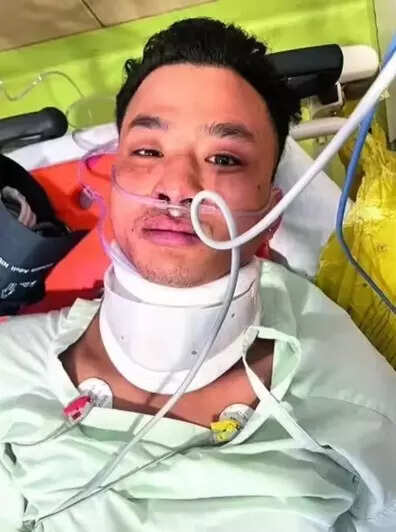
Anjel Chakma
“Soon after Anjel replied, they attacked him and his brother while hurling abuses,” said a friend who stayed at the hospital through the two weeks that followed. “Anjel suffered serious injuries to his neck and spine. Michael is also injured and remains in serious condition.”Dehradun senior superintendent of police Ajai Singh said the comments appeared to target the brothers’ appearance. Police said Anjel was struck with a knife and a metal kada, leaving him critically injured.The case drew national attention after Anjel’s father said his son was attacked despite clearly asserting that he was Indian.
‘I am an Indian’
Similar incidents, activists say, occur with alarming regularity.Arjun Rimo from Arunachal Pradesh recalls a recent incident in Delhi that left him shaken.”On January 8, 2026, in Karol Bagh, New Delhi, while buying meat at a shop, I was mistreated,” he told TOI.”As I chose to leave, I was subjected to racial abuse and called ‘Chinese’. I immediately objected and stated that I am an Indian.”He said a person associated with the shop attacked him first.”I reacted only in self-defence. I punched him, during which he sustained a facial injury. Soon after, two more individuals joined him, and the three of them assaulted me together.”
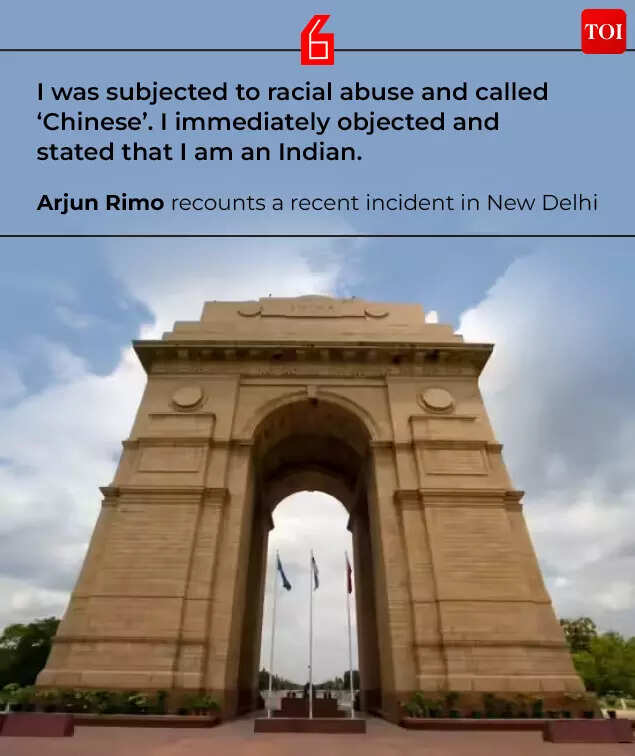
As a crowd of 30 to 35 people gathered, Rimo said he became overwhelmed.”I could no longer protect myself. Fearing serious harm, I sought police assistance,” he said, adding that he personally witnessed the accused being taken into police custody.”This episode,” he said, “highlights a broader, long-standing challenge faced by citizens from India’s North-Eastern region,” who frequently encounter bias and unequal treatment when living or travelling outside their home states, particularly in metropolitan cities.For many, stepping outside the Northeast means confronting suspicion, stereotyping and casual prejudice — not as isolated incidents, but as an everyday reality.
‘Do you even get Maggi there?’
For Sushma Pegu, who works at a high-profile firm in Bengaluru, discrimination followed her into corporate spaces.She recalls being bullied, subjected to racial slurs, and questioned relentlessly about her food habits.”A colleague literally asked me, ‘Do you even get Maggi there? How do you survive with all the non-veg food? I also heard you people eat cats and dogs.’””I took a stand,” she said, adding that the colleague was eventually terminated.But the questioning, she said, often begins the moment she steps into a cab, with drivers routinely asking, “Which country are you from?” prompted solely by her appearance.
Do you even get Maggi there? How do you survive with all the non-veg food? I also heard you people eat cats and dogs.
A colleague asked Sushma, who hails from Assam
Fear during Covid
Roshni recalls how racial prejudice intensified during the Covid-19 outbreak.”During my time at Lakshmibai College,” she said, “a group of students passed a remark about one of my friends, saying, ‘Mujhe toh isko dekh kar dar lag raha hai’ (I feel scared just looking at her).”She said the comment, though made casually, carried a deep sense of exclusion and fear.”I felt shocked, angry and deeply uncomfortable,” she said.”It created a lasting sense of humiliation and helplessness.”
‘My only mistake is that I look like this’
In October 2025, a 27-year-old flight attendant from Meghalaya alleged that she was racially abused twice within an hour in Delhi; first in north Delhi’s Kamla Nagar and later on the metro.Her Instagram video went viral after Union minister Kiren Rijiju reposted it.In the video, the woman said a group of men sitting on a scooter mocked her using racial slurs and laughed. Shaken, she walked into a nearby Tibetan eatery but found herself unable to eat.”I did not feel like eating anything. My brain could not process what had just happened,” she said.”It breaks my heart,” she added. “My only mistake is that I am born in India and I look like this and I don’t look like what people expect Indians to look like.”Having travelled to several countries, she said she had never been made to feel unwelcome abroad.”But today, in my own country, my fellow Indians made me feel like I did not belong.”Addressing the alleged perpetrators, she said, “You didn’t just insult me. You insulted every person who has ever felt ‘othered’ in their own country. India is diverse our faces, our languages and our cultures are all valid. You don’t get to decide who belongs and who doesn’t.”
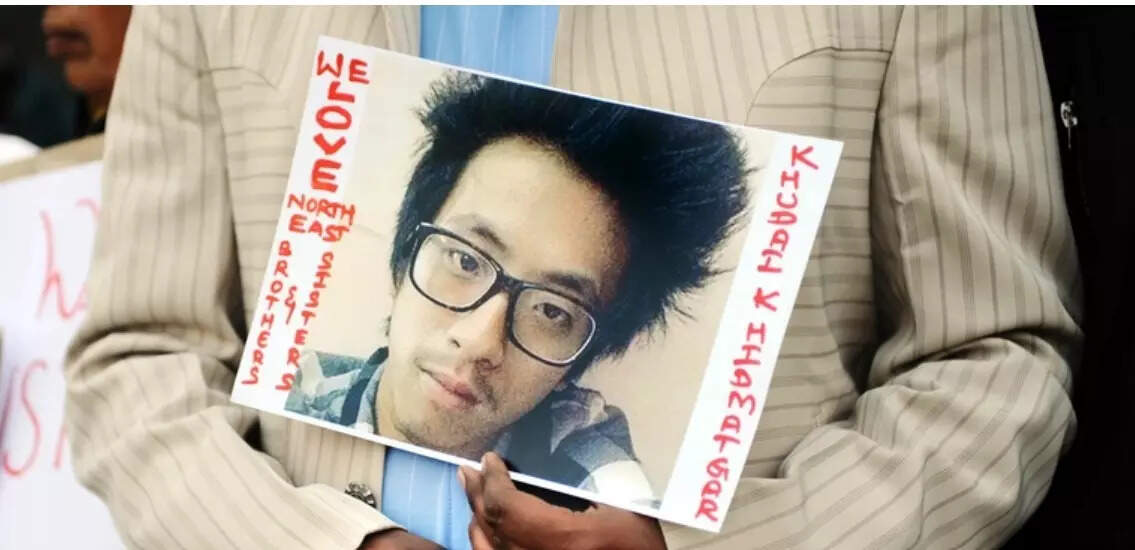
Nido Taniam
India has seen such cases for years
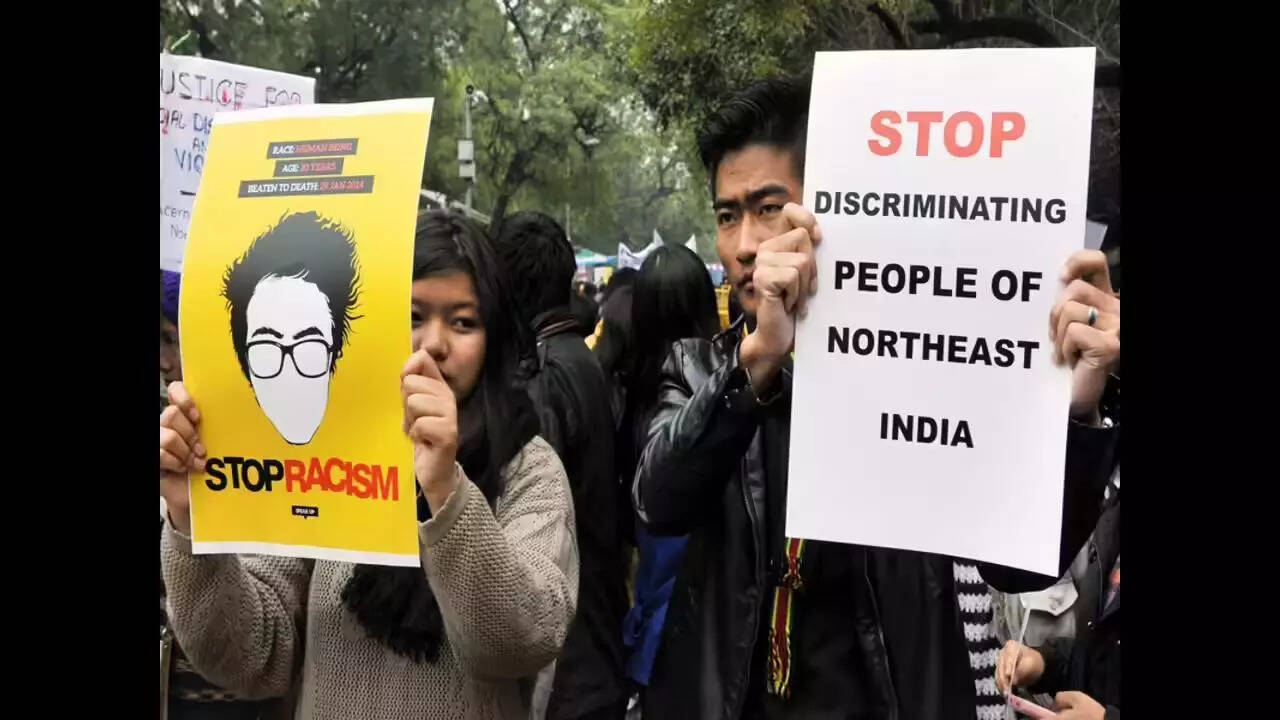
Such incidents are far from isolated.In November 2023, students from the Northeast reported racial and misogynistic abuse near Delhi University’s North Campus. In 2016, two youths from Mizoram were beaten in Bengaluru for not speaking the local language.One of the most chilling cases remains the killing of Nido Taniam in January 2014. The 19-year-old student from Arunachal Pradesh was beaten to death in Delhi’s Lajpat Nagar after shopkeepers mocked his hairstyle.A police investigation report detailed how Nido and his friends had gone to meet another friend when a shopkeeper made derogatory remarks about his appearance.An altercation followed, during which Nido smashed a glass pane. The shopkeeper and his associates allegedly assaulted him while making racist remarks about his caste, race and appearance.Although the immediate dispute was settled after Nido paid compensation, he was later assaulted again by the group and died in his sleep at a friend’s residence.The incident sparked widespread outrage among people from the Northeast living in Delhi, with allegations that the police failed to protect him despite repeated pleas.
A legal vaccum
India is a signatory to the International Convention on the Elimination of All Forms of Racial Discrimination, yet does not have a specific law addressing racial discrimination.Following Nido Taniam’s death, the MP Bezbaruah Committee recommended criminalising racial slurs such as “chinki” and “Chinese”, proposing jail terms of up to five years.While some administrative steps were taken, the proposed amendments to the IPC remain pending.In 2016, the Supreme Court directed the Centre to monitor the implementation of the committee’s recommendations. Activists, however, say enforcement remains inconsistent, with racial abuse often dismissed as a social issue rather than treated as a criminal offence. These incidents show how deeply racial prejudice is woven into everyday life. While stronger laws are necessary, activists argue they are not sufficient on their own.The fight, they say, must begin in schools, through education on diversity, history and discrimination. It must be carried forward by police, institutions, political parties and society at large.Multiculturalism cannot remain a slogan. It must be practised. Go to Source