
NEW DELHI: Bharatiya Janata Party wrapped up the year 2025 by stunning everyone with its electoral performance. In the beginning of the year it swept the Delhi assembly elections and closed the year by receiving an overwhelming mandate in Bihar for the “double engine sarkaar.” BJP also had a smooth run within the organisation where every leader clung to their responsibility and the party had not had to witness any fights, which often erupted in the opposition’s camp.Yet, 2026 presents a new set of challenges for the saffron party which will be a stress test for BJP’s organisational depth, ideological reach and ability to transition from dominance to durability. These new challenges will shape BJP’s trajectory well before the 2029 Lok Sabha contest. What are we looking into
- At the start of the year, BJP will be staring straight into the local body elections in major cities of Maharashtra. These elections may rank lowest in the hierarchy of the democracy, but attach a lot of prestige with it.
- Assembly elections in 4 states – West Bengal, Tamil Nadu, Assam an Kerala – and 1 Union Territory is schedule in 2026.
- Elections of 75 seats in Rajya Sabha.
- Numerous by-polls for assembly seats in various states and vacant seats of Lok Sabha.
A crowded and consequential electoral mapThe upcoming assembly elections are going to be an uneven challenge for BJP. While it will step up its efforts to retain power in Assam, it will also look to expand its scope of dominance in West Bengal, Tamil Nadu, Kerala and Puducherry.Will Ganga flow to Bengal via Bihar?“The river Ganga flows to Bengal via Bihar. And the victory in Bihar, like the river, has paved the way for our victory in Bengal,” Prime Minister Narendra Modi had said after NDA received a overwhelming victory in Bihar assembly results. PM Modi’s remarks translated BJP’s long-time dream to bring in its government in West Bengal. This dream now seems achievable as BJP has made remarkable inroads in the state in a decade. From just 2 Lok Sabha seats and a 17% vote share, BJP managed to win 18 Lok Sabha seats in 2019 and 77 seats in 2021 assembly polls.Moreover, it took over the opposition space from CPM and Congress in the state and emerged as the principal challenger to chief minister Mamata Banerjee.”We had 36% vote share in the 2021 assembly polls and we will win the 2026 polls with two-thirds majority. I know that the next election will be fought on the issue of stopping infiltration and driving the infiltrators out,” home minister Amit Shah said while addressing a rally in West Bengal.

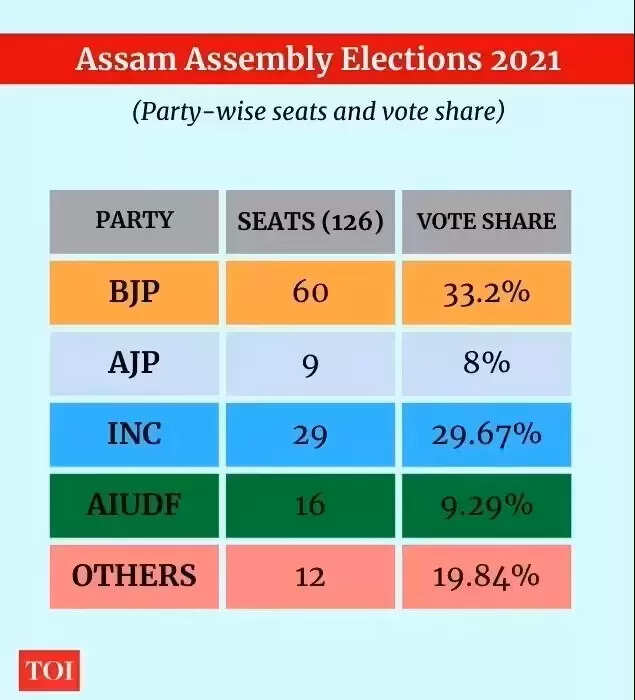
He further added that Congress and CPM had been reduced to zero and his party had emerged as the principal opposition force in the state.However, BJP’s climb to the chief minister’s post is not easy as it may seem.First and foremost, big question hangs over party’s leadership in the state. BJP had to choose between the stalwarts — Dilip Ghose, Suvendu Adhikari and Sukanta Majumdar.On Wednesday, Shah reportedly held a separate meeting with Ghosh, alongside another former state president Sukanta Majumdar, incumbent Samik Bhattacharya, and the state’s leader of the opposition, Suvendu Adhikari, indicating bridging of gaps between the party’s old guns and the newer ones.”I can’t say much, but you will see an active Dilip Ghosh in the 2026 polls. I was called to listen to my experiences and opinions,” Ghosh told reporters while leaving the venue.The move seems to be BJP’s efforts keep Ghose in confidence after he drew party’s ire following his meeting with CM Mamata, which he termed “personal”.Moreover, Muslims constitute nearly 27 percent of the population in Bengal, which TMC claims to be its voter base. The opposition for BJP in this voter group seems to have grown even more after thousands of names were deleted from the electoral list following Election Commission’s ongoing special intensive revision.Now, to tackle these challenges, BJP must balance its Hindutva pitch with local economic and welfare issues without losing its core base. For this, the party has tasked senior leaders with long-term deployment in the state, while Bhupender Yadav has been made in-charge to revive booth-level machinery.BJP’s momentum stalled in the 2024 Lok Sabha elections after it managed to win only 12 out of 40 seats. In 2021 assembly election, it won 77 seats while TMC swept the poll by winning 213 seats.Assam: Power, fatigue and fault linesIn 2021, chief minister Himanta Biswa Sarma delivered a a decisive mandate. BJP-led alliance winning 75 seats in 126-member-assembly.Five years on, the Assam government is facing many problems including signs of anti-incumbency.Welfare schemes remain popular, but there are signs of fatigue. Ethnic tensions in Bodoland and surrounding regions continue to simmer, while opposition parties are sharpening attacks on corruption and governance style. Currently, BJP also seems to have over-reliance on one face, leaving the party exposed to identity flare-ups and local resentment.
Meanwhile, in the run up to the elections, flurry of top BJP leaders are visiting Assam to rake up the issue of “Bangladeshi infiltrators” and alleged land encroachment by Bengali-origin Muslims in its poll campaign.Apart from PM Modi and Shah, the BJP’s newly appointed national working president, Nitin Nabin, along with other senior party leaders, visited Assam in December to attend events and address rallies.Last month, after a series of strategic meetings, the state BJP said the sssembly elections would “fundamentally be a contest between the indigenous Assamese populace and the Miya Muslim community of East Bengal (Bangladeshi)-origin”, asserting that “the future, security and civilisational continuity of Assam” would depend on this contest.Upon this, the chief minister has further sharpened his pro-Hindutva pitch. In recent remarks, he has questioned long-standing symbols of Assam’s pluralist legacy by describing Bagh Hazarika, the Muslim warrior of the Ahom army that defeated the Mughals at the Battle of Saraighat, as a “fictitious character”. He also rejected the popular saying that “Assam is the land of Sankar-Azan” as “false narrative”.The southern wall: Tamil Nadu and KeralaIf 2026 has a single defining question for BJP, it is this: can the party finally crack the South?Tamil Nadu remains the toughest terrain. The Dravidian duopoly of the DMK and AIADMK has capped the BJP’s vote share at under 10 per cent. The appointment of Nainar Nagendran as state chief signals a shift toward alliance-building rather than solo assertion. BJP is actively exploring renewed ties with AIADMK, aware that ideological rigidity could mean political irrelevance.
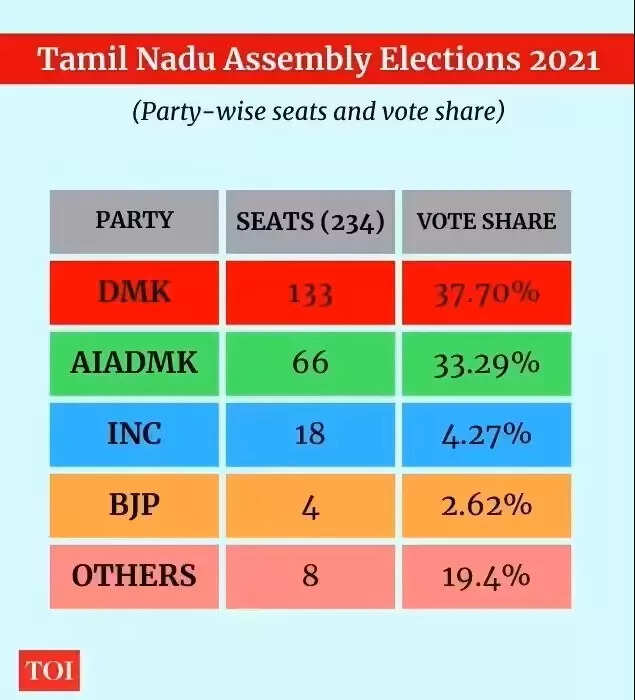
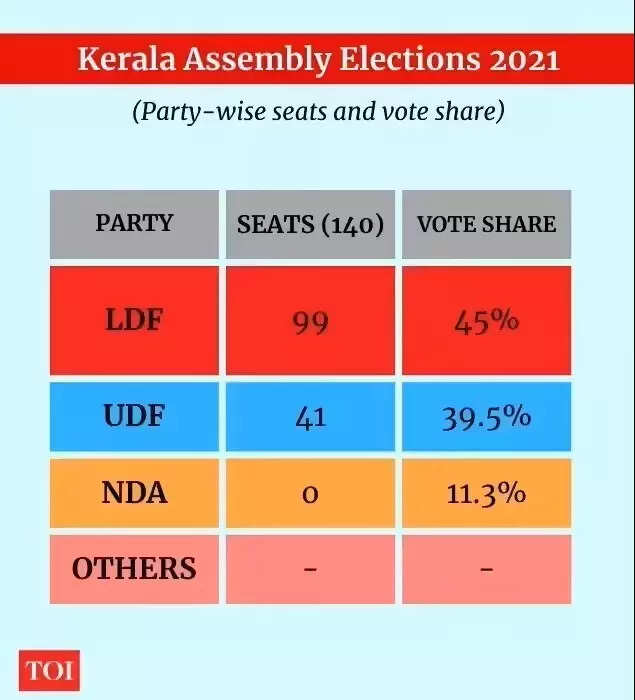
Meanwhile, it is also looking to foster ties with actor Vijay’s TVK party ahead of the assembly elections.In the previous assembly elections, BJP contested 20 seats as part of the AIADMK-led alliance and won four.Kerala presents a different puzzle. Local body elections in December 2025 dented the Left Democratic Front, creating space for challengers. Yet the BJP’s base remains in single digits. Any growth strategy requires outreach to Christian communities without alienating Hindu voters.
PuducherryPuducherry, with its 30-seat assembly, is small but politically useful. A BJP win or strong showing here would reinforce its southern narrative and help Rajya Sabha arithmetic. Failure would underline the party’s limited coastal footprint.75 vacant Rajya Sabha seatsAlong with this is the Rajya Sabha calendar. Seventy-five seats will fall vacant in 2026, including 10 from Uttar Pradesh, where the BJP currently holds eight. Retaining numbers in the Upper House is critical for BJP to continue its legislative momentum, especially as its economic and governance reforms remain on the agenda.Leadership churnWhile BJP publicly dismisses succession talk, signs of internal recalibration are increasingly visible. RSS chief Mohan Bhagwat has repeatedly spoken about age-based retirement, fuelling speculation about generational change.The emergence of Nitin Nabin, a young MP from Bihar, as BJP’s acting president after JP Nadda is widely seen as part of a long-term reset. Backed by PM Modi and Amit Shah, Nabin’s rise reflects an attempt to blend organisational roots with youth appeal.Notably, the move sidelines heavyweight contenders, reinforcing the idea that the high command wants continuity without rivalry.The Modi factorPM Narendra Modi remains BJP’s most powerful asset. His ability to dominate narratives, mobilise voters, and frame elections as civilisational choices continues to set the party apart.Yet 2026 will test whether Brand Modi retains its potency in states where local faces are weak and regional identities strong. The question is no longer whether Modi can win elections, but whether he can compensate indefinitely for organisational gaps on the ground.Opposition weakness, but not absenceThe opposition INDIA bloc is visibly weakened after its poor showing in Bihar and Delhi. Congress remains marginal in most 2026-bound states, and regional parties are prioritising local battles over national unity.This fragmentation gives the BJP breathing room, but not immunity. Mamata Banerjee remains formidable in Bengal, and the Left in Kerala retains a loyal base. In Uttar Pradesh, the SP’s focus on jobs and inflation could complicate Rajya Sabha calculations.The road to 2029 runs through 2026Inside the BJP, planning for 2026 is already tied to 2029. Amit Shah’s “Mission 2026” includes sustained deployments, organisational audits, and a renewed push in the South.The risks are real. Assam’s ethnic volatility, Bengal’s organisational drift, and Kerala’s demographic complexity could blunt ambitions. Success, however, would cement the BJP’s claim as a truly pan-Indian party.2026 will redefine BJP. The year will test its North Indian tag, the limits of Hindutva, and the durability of PM Modi’s appeal all at once.For a party accustomed to momentum, 2026 is not just another election year. It looks like a referendum on whether dominance can evolve into longevity. Go to Source