
.
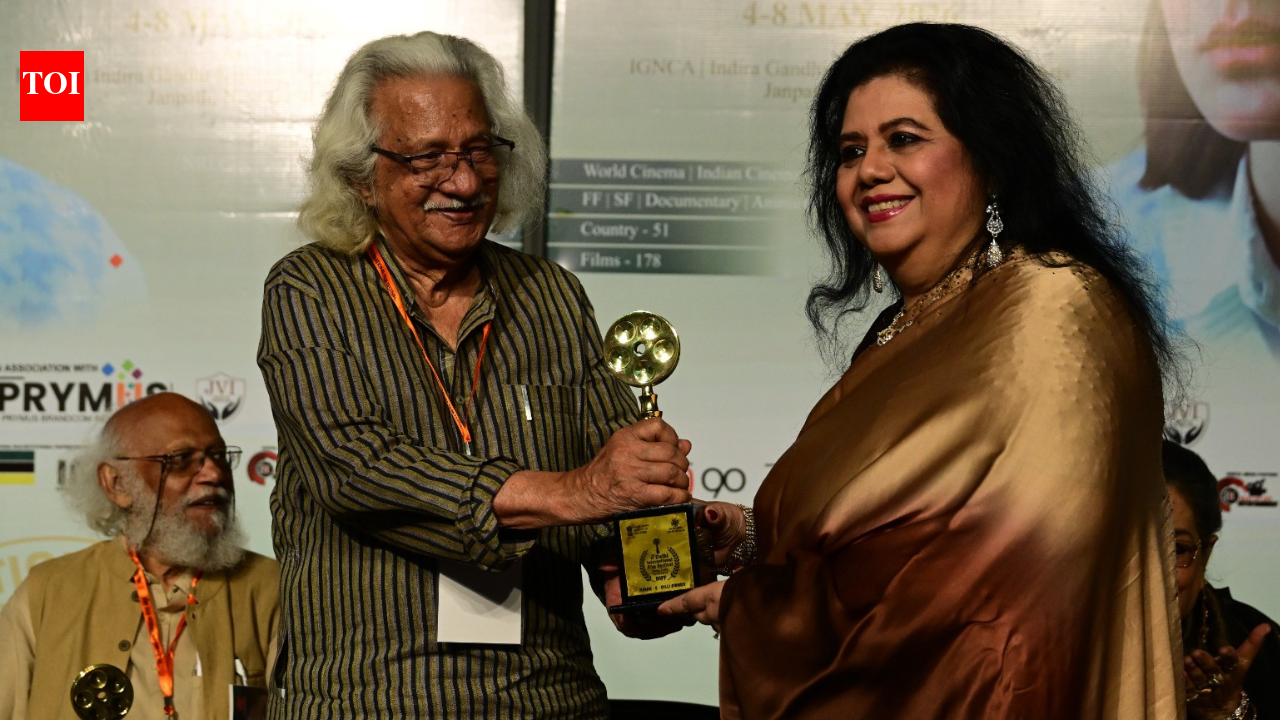
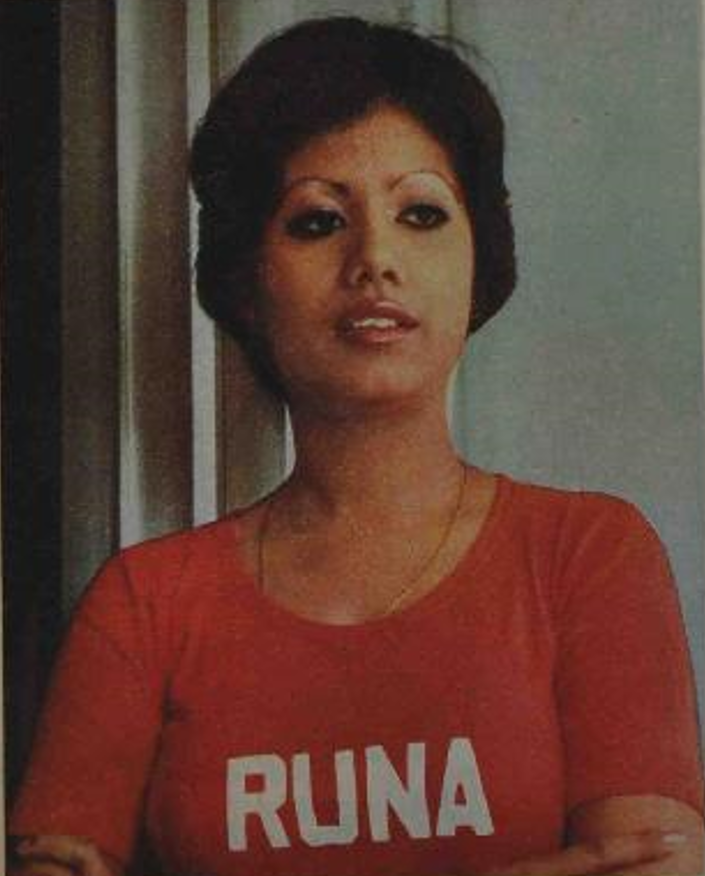
NEW DELHI: Exactly 50 years ago, Runa Laila arrived in Hindi films crooning the sizzling title track for ‘Ek Se Badhkar Ek’ (1976). Filmed in a nightclub, with Helen trying to tempt and tease a very hairy-chested Raaj Kumar, the song rode on the inviting hook line, “Kya programme hai aaj raat ka.” In a voice as irresistible as smoked hilsa, Runa infused the number with the right degree of wantonness, subtly recalibrating her tone each time the words returned. The song, composed by Kalyanji-Anandji, climbed to 16th position in the wildly-popular Binaca Geetmala’s annual rankings. It announced that the Sylhet-born singer, already a star on either side of the border, was ready to create her own space in the Hindi film music’s playback world dominated by the Mangeshkar sisters. She was only 23.A lot of water has flown beneath the Farakka Barrage since then. Over the past five decades, Indo-Bangladesh ties have witnessed both highs and lows; the relationship is currently in a state of mending. Yet Runa’s voice has been a reassuring constant, almost therapeutic — a shared songbook that has overcome the rancour and uncertainty of sub-continental politics.“Music transcends boundaries. It also heals in a lot of ways,” said the 73-year-old singer at the 15th Delhi International Film Festival at IGNCA last week where she received the Minar-e-Dilli award from noted filmmaker Adoor Gopalakrishnan. Runa first came to India in 1974 as part of a cultural exchange programme organised by Indian Council for Cultural Relations (ICCR). “Her lilting voice and sprightly TV personality,” took both Bombay and Delhi “by storm,” The Illustrated Weekly of India (now defunct) noted in 1976. Not many know that as a child, she was more interested in dancing. A profile published in the Weekly details how she took to singing. Her father worked as a customs officer in Multan and Karachi in the 1960s. When six, Runa substituted for her indisposed elder sister at a cultural show and stunned everyone with her flawless rendition of raag Basant Bahar which expresses the mood of spring. When 12, she won the first prize in an all-Pakistan school music competition in Karachi. Films followed. In 1965, she sang for ‘Jugnu’, a Pakistani film. In the next few years, Runa became a regular in Pakistani films, radio and TV singing in Punjabi, Bengali, Multani, Pashto, Sindhi and Urdu.
.
Bangladesh (earlier East Pakistan) was born as an independent nation in 1971 after the Indo-Pak war. “Even after coming to Bangladesh, I still go to Lahore to sing for their films. (Because) In Bangladesh, the film industry is still very new,” she said in the Weekly interview.A move to the Hindi film industry was apt under the circumstances. Initial prognosis was encouraging. In 1976, Runa Laila performed at the Filmfare Awards function in Bombay. The Times of India gushed how she “captivated the heart of her listeners with her hypnotic voice and magnetic stage personality.” In 2012, actor Sarika, the female lead in Geet Gata Chal (1975), recalled how Runa’s upbeat song, ‘Dama Dam Mast Kalandar,’ became a craze and how she ran from pillar to post trying to meet the singer without success.The title track of ‘Ek Se Badhkar Ek’ took her voice via the airwaves, especially Vividh Bharati and Radio Sri Lanka, to a larger listenership in heartland India. Three songs from ‘Gharaonda (music: Jaidev, 1977), a poignant look at love and home ownership, underlined her versatility. “Tumhe ho na ho (lyrics: Naqsh Lyallpuri)” brimmed with romantic effervescence, while the sadder version of the same song, “Mujhe pyaar tumse nahi hai,” brought to fore the melancholic side of her voice. The perky duet with Bhupendra, “Do deewane shaher mein, (lyrics: Gulzar),” finished at a formidable No 6 in Binaca Geetmala’s 1978 annual programme. Runa, it seemed, had come to stay.But the future doesn’t always follow the script. Contemporary reports suggest that the singer was flooded with offers, including film roles. But acting didn’t interest Runa and few singing offers – the ‘rasgulla’ song in Jaan-e-Bahar (music: Bappi Lahiri, 1979) aside — came to fruition.Barring Bappi, no other Bollywood composer recorded regularly with her. Runa enjoyed a second coming in the Eighties courtesy Bappi and the disco wave. The super success of Biddu’s foot-tapping tunes — Nazia Hassan’s “Aap Jaisa Koi” in ‘Qurbani’ (1980) and later ‘Disco Deewane’ (1981) — had set the trend for a mandatory rhythm-driven disco number in Hindi films. Bappi reintroduced her to a new generation of music lovers with the chartbusting album, Superuna (1982). Songs like “Disco Express,” “Suno suno,” “Hello hi” became dance-floor bangers. “De de pyar de” was repurposed in the Big B film, Sharabi (1984).The same year, Runa also cut a private album with OP Nayyar, ‘The Loves of Runa Laila.’ One of her older hits, “Mera balma chhail chhabila” from the 1972 Pakistani movie, ‘Man Ki Jeet’, was used in the sleeper hit, ‘Ghar Dwaar’ (1985).After watching her perform, editor-writer Khushwant Singh wrote in the Weekly (April 25, 1976) that “Runa’s deep voice and lively exposition will make her the film singer of the next decade.” After watching her on DD Srinagar in 1978, renowned poet Nissim Ezekiel swooned in The Times of India, “The voice belongs to some mountain-top priestess of ecstatic communion with the gods.” Sadly, the singer didn’t get enough opportunities to create the tsunami she was expected to.Yet Runa enthralled India whenever she came, notably in 2010 when she electrified Bandra Fort with “Dama Dam Mast Kalandar”. Two years later, she was a judge for ‘Sur Kshetra’, a musical TV show lensed in Dubai, where she developed a fond relationship with fellow judge Asha Bhosle. Speaking to ‘Prothom Alo English’ newspaper following Asha’s demise last month, she said, “I don’t think a talent like hers will be born again…The relationship we shared was truly incredible.”While receiving the Minar-e-Dilli award, Runa recalled how a fan wrote to her saying that listening to her songs helped him get out of depression. “This is the biggest prize an artist can achieve. Music doesn’t distinguish between caste, creed or religion,” she said.Music doesn’t care for the barbed wires dividing nations either. The Minar-e-Dilli award, which went relatively underreported due to the hullabaloo over the state elections results, is a fitting recognition of her vital role in bringing India and Bangladesh closer through music. Go to Source