
Image: Netflix
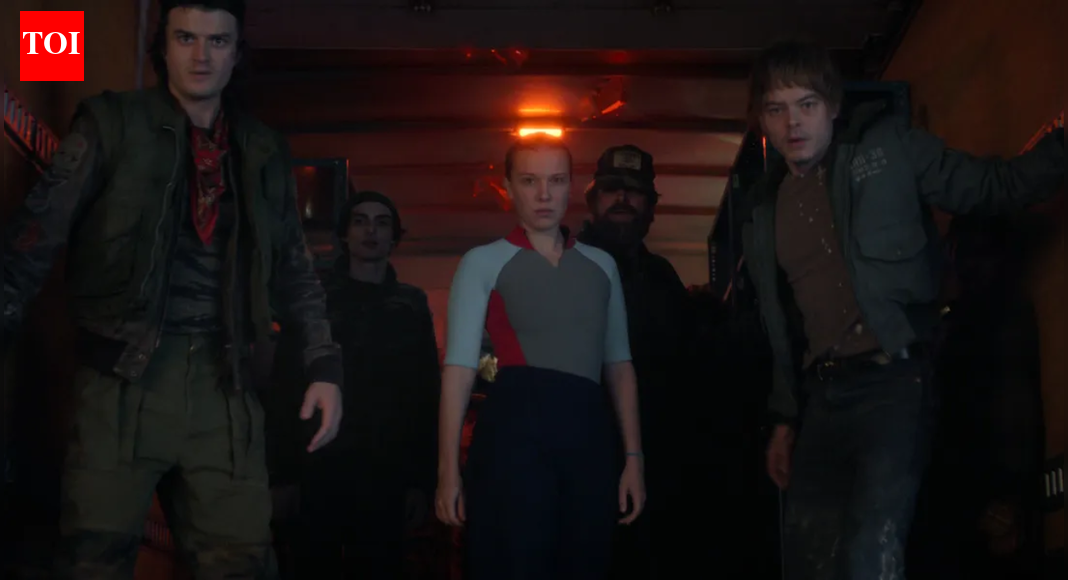
After five seasons and nearly a decade on air, Stranger Things has finally come to an end. The series finale, Chapter 8: The Rightside Up, arrived on New Year’s Eve, closing out a run that began in 2016 and grew from a surprise hit into one of Netflix’s defining pop-culture juggernauts. This time, the goodbye was not confined to living rooms. Netflix gave the episode a limited theatrical rollout on December 31 and January 1, turning the finale into a shared event rather than a quiet sign-off. Season 5 had been inching toward this moment over weeks, broken into three volumes that landed around Thanksgiving, Christmas, and New Year’s. By the time the finale dropped, most viewers already felt they knew what kind of ending they were bracing for. Hawkins was in pieces, the show had promised answers and emotional payoff, and there was a sense that this was the last time everything would be asked to add up. Instead, the episode landed and immediately split opinion.
Mixed reactions, almost by design
On X, reactions arrived within minutes of the finale’s release and moved quickly from celebration to critique. Many viewers described feeling conflicted rather than satisfied or disappointed outright. “I had many issues with this final season like most people, but holy shit did I love the finale,” one user wrote. “Far from perfect, but I’m very happy with how it all ended and came together, even if they played it a bit safe. Dustin is the GOAT.” Others leaned into that sense of emotional contradiction. “The brilliance of the finale IS the conflicting reaction,” another post read. “I wanted a better ending for El, but that was never real. I’m grieving too, but I also understand her choice.” That tension between affection for the characters and frustration with the choices became a recurring theme. For some, the finale worked best as a farewell, a final chance to sit with relationships built over years. For others, the affection only made the perceived shortcomings harder to accept.
Predictable, safe, and too neat
A significant portion of criticism focused on how familiar the ending felt. Viewers repeatedly described the finale as safe, tidy, and unwilling to take risks.“The whole Stranger Things finale was unsatisfying, cliché, and painfully corny,” one user wrote. “The lack of creativity, surprises, or complex writing choices is eye-roll worthy.” Another summed it up more bluntly: “Typical ending. Everyone ends up walking off into the sunset. No significant deaths. The bad guy dies, and the final battle was way too short.” Several posts fixated on Vecna’s defeat, arguing that the villain, built up across multiple seasons, was dispatched too easily. “Vecna felt weak this entire season,” one fan wrote. “The finale never reaches the scale or intensity you’d expect from a series ending.”The absence of major character deaths also became a flashpoint, with some fans accusing the show of pulling its punches at the very end.
The Game of Thrones comparison returns
As often happens with divisive finales, comparisons followed quickly. This time, Game of Thrones became the reference point.“Game of Thrones has officially been dethroned for biggest fumble of a final season,” one frustrated fan wrote. Another went further, asking whether “humanity is cursed to have a pathetic finale to every cult-favorite show.” Not everyone agreed. Some argued that while Stranger Things struggled to tie everything together, it never approached the level of narrative collapse that defined Game of Thrones’ final year. The debate itself became part of the reaction, less about declaring a winner and more about measuring disappointment.
Queerbaiting, Will, and unresolved tension
Beyond structure and spectacle, one of the most emotional fault lines centred on Will Byers. Some viewers praised the show for addressing his arc directly. Others accused the writers of queerbaiting, arguing that years of subtext around Will’s feelings, particularly toward Mike Wheeler, never received a clear payoff.“I did enjoy how things wrapped up,” one fan wrote, “but that was one of the WORST cases of queerbaiting possible.” The criticism here overlapped with earlier backlash from Volume 2, with some viewers feeling the show gestured toward queerness without fully committing to its implications. Others felt the finale reopened that debate without resolving it.
Eleven’s ending divides viewers
Eleven’s fate also proved contentious. While some appreciated the quiet, restrained note her story ended on, others felt it undercut the arc the show had been building.“Her whole arc was about friendship,” one post read, “and even if alive, she ended up alone.” That sense of emotional imbalance appeared repeatedly, with viewers questioning whether the ending matched the values the series had spent years reinforcing.
Critics and ratings reflect the split
The divided response has shown up in numbers as well. According to Variety, audience scores on Rotten Tomatoes dropped sharply, with the Popcorn Meter falling to 56 percent, well below the consistently high ratings of previous seasons. Earlier entries regularly scored above 86 percent, with Season 1 sitting at 96 percent.
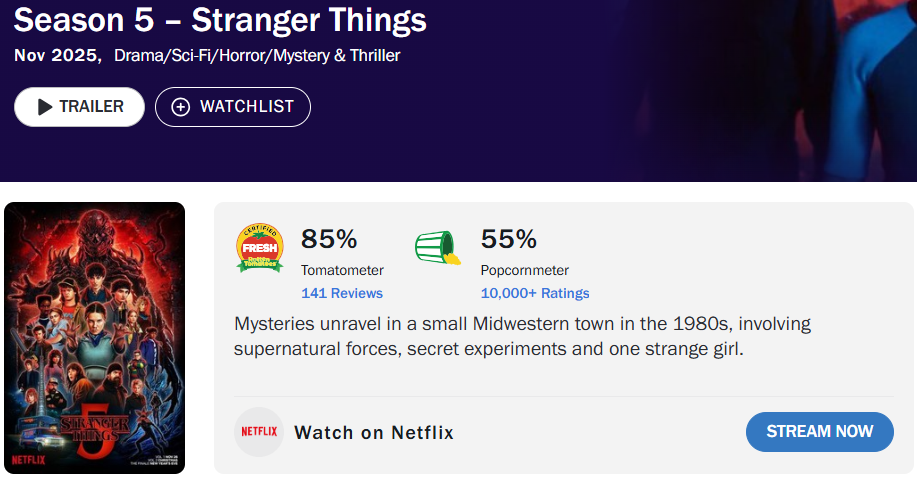
The drop has been attributed to review bombing as well as genuine disappointment, reflecting just how polarising the finale became.
An ending people are still arguing about
Not all reactions were negative. Some viewers described loving the finale in spite of its flaws, especially when experienced in a packed theatre. Others admitted they cried, even while questioning specific decisions. A handful joked about enjoying the ending before logging onto X and realising how angry everyone else was.That may be the clearest takeaway. The Stranger Things finale did not land cleanly, but it did land loudly. For a show that spent years balancing nostalgia, horror, and coming-of-age drama, the final episode became another extension of that tension. Less a consensus ending than a mirror, reflecting back what different viewers wanted the series to be when it finally said goodbye. Go to Source