
 "10 reasons India sees Trump tariff crisis as an opportunity and a time to reboot")

Here are 10 reasons rooted in Indian economy’s fundamentals and historical trends that make India see American tariffs as an opportunity for a reboot.
In India, there is a view that US President Donald Trump’s 50 per cent tariffs are more of an opportunity for a reboot than a setback.
Such a view is backed by the Indian economy’s fundamentals and historical trends. Independence analyses have also supported such a view.
Strong fundamentals
India’s economic fundamentals remain robust that allow India to better handle 50 per cent American tariffs.
In recent weeks, independent agencies have also attested to these strong fundamentals — S&P Global has upgraded India’s sovereign rating and EY in its Economy Watch Report in August said that fundamentals remain strong, such as high savings and investment rates, favourable demographics, and a sustainable fiscal position.
Market size with high growth potential
India’s large domestic market of 1.4 billion is a cushion against disruption for tariffs.
The large market size means that it is too big ignore for any trading partner for a long time. At the same time, the big market size allows measures like GST cuts to spur consumption-led growth to make up for any short-term losses.
History highlights resilience to crises:
India has overcome bigger crises in the past, such as sanctions after the nuclear tests of 1998, the global financial crisis of 2008, and the Covid-19 pandemic’s disruptions. This history of resilience fuels confidence to face the current trade challenges without panic.
Opportunity to push reforms
Trump’s tariffs have presented an opportunity for India to deepen structural reforms aimed at improving the ease of doing business, regulatory environment, quality standards, and innovation ecosystems, and push India towards a globally competitive business climate.
The government had already announced GST reforms. The government is also looking to diversify India’s export destinations and reach trade deals with more countries.
Self-reliance
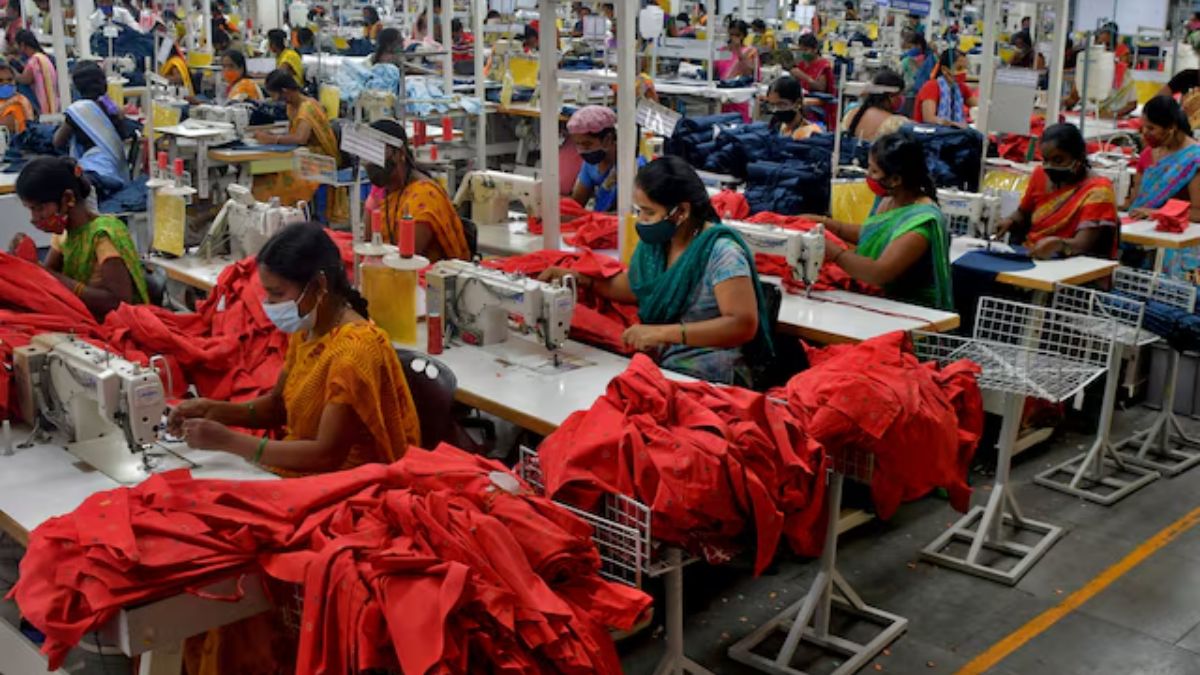
Trump’s tariffs have also made India double down on the vision of ‘Atmanirbhar Bharat’ (self-reliant India). India is leveraging the moment to promote its self-reliance initiative, supporting domestic manufacturing and exports, exemplified by new ventures such as Suzuki’s EV plant targeting exports to 100 countries.
In recent years, the government has floated PLI schemes to boost manufacturing of electronics and other goods in the country.
Diversification of trade partners and markets:
To make up for losses of exports to the United Stats and to also expand India’s foreign trade in general, India is exploring more and more trading partners.
India has signed trade deals with the United Kingdom and the European Free Trade Association (EFTA) comprising Switzerland, Norway, Iceland, and Liechtenstein. India is also negotiating trade deals with the European Union (EU) and the Eurasian Economic Union (EEU). India is also capitalising on its historical partnership with Russia and recent improvement of ties with China to explore export opportunities and attract investments.
Pragmatism, not retaliation
Instead of retaliation, India has sought to handle the situation with pragmatism. India has kept channels of communication open and has sought to reach the middle ground with the Trump administration.
Support to affected industries
The government is considering floating a financial support package for sectors worst hit from Trump’s tariffs, such as shrimp producers.
Domestic demand generation
With actions like GST rate cuts, the government is aiming to cushion the blow of loss of exports to the United States. The GST cuts-induced consumption boost could halve the loss to the GDP growth.
Private consumption has been one of the key factors in India’s growth story. The same Indian market is what attracts companies from all over the world. The government has said it is exploring new measures to boost domestic demand. Rationalising GST and other fiscal measures aim to spur domestic demand, leveraging the large internal market to offset external trade shocks.
Increasing competitiveness and innovation
Learning from China, India has decided to ramp up improving its competitiveness and innovation compared to global partners. There is a view that says that Trump’s tariff war has fuelled India’s resolve to build advanced manufacturing capabilities, improve quality of products and services, and ramp up R&D investments to compete globally.
End of Article

&description=10+reasons+India+sees+Trump+tariff+crisis+as+an+opportunity+and+a+time+to+reboot)