
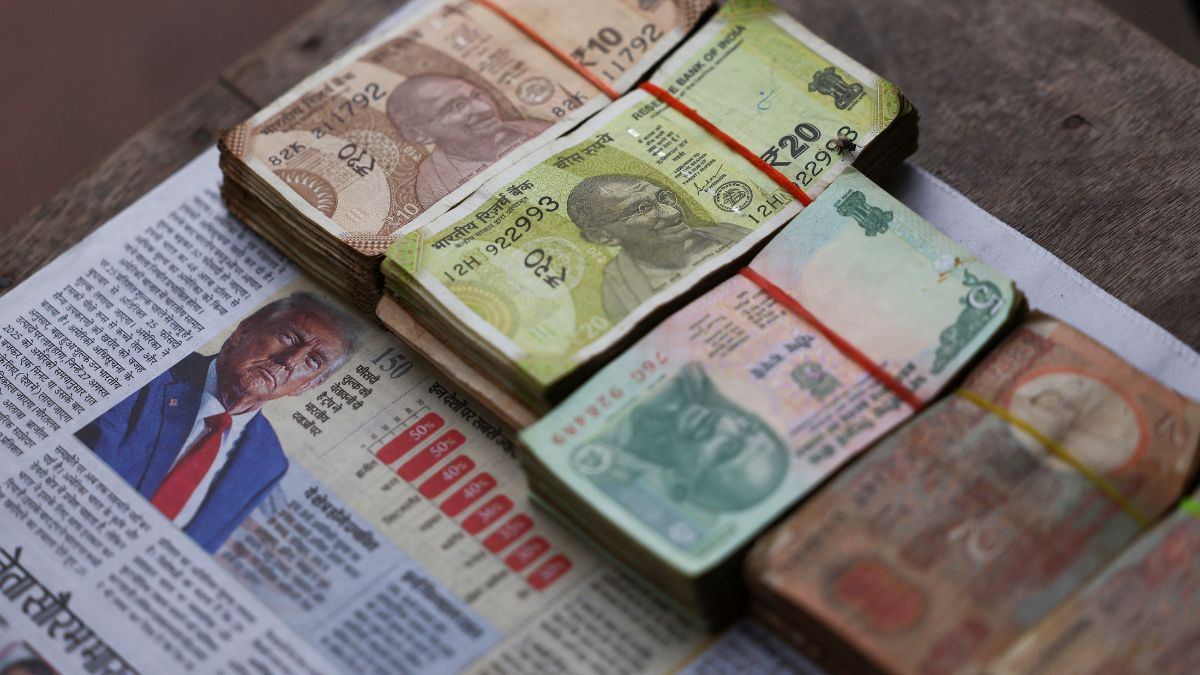
 "How Trump’s 50% tariffs on India will backfire on US businesses too")

The United States has officially doubled tariffs on Indian exports, raising duties to as high as 50 per cent.
The decision, announced by US President Donald Trump in response to India’s continued purchase of Russian crude oil, has significantly escalated trade tensions between the two democracies.
While the tariffs were intended to pressure New Delhi, experts warn that the repercussions will extend well beyond India’s exporters, with American industries also facing higher costs and inflationary pressures.
How US imposed tariffs on India
The additional tariffs took effect on Wednesday (August 27, 2025), following a draft order by the US Department of Homeland Security (DHS).
According to the DHS, all Indian products entered for consumption, or withdrawn from warehouses for use in the United States after 12:01 am Eastern Daylight Time (EDT) on August 27, are now subject to the higher duties.
This action followed Trump’s announcement on August 7, when he first imposed a 25 per cent duty on Indian goods, which coincided with new tariffs on about 70 other countries.
Alongside that, he declared that India’s levies would double to 50 per cent unless a compromise was reached within a 21-day window. Negotiations between the two sides failed to achieve a resolution, leading to the full 50 per cent tariff being enforced.
A specific exemption has been granted for goods that were already shipped before the deadline. Products loaded onto vessels and in transit before 12:01 am EDT on August 27 will not face the higher tariffs if they are cleared for consumption or removed from warehouses before 12:01 am EDT on September 17.
Editor’s Picks
Importers must certify these exemptions by declaring a special customs code (HTSUS 9903.01.85).
The affected goods cover a wide range of exports, including garments, footwear, chemicals, furniture, sporting goods, and gems and jewellery.
By contrast, some categories such as steel, aluminium, passenger vehicles, and copper remain covered under separate tariff frameworks, primarily those implemented under Section 232 of US trade law.
How Indian exports will be impacted
The United States is India’s single largest export destination. In 2024, bilateral trade in goods reached $129 billion, with India exporting $87 billion worth of merchandise and recording a $45.8 billion surplus against the United States.
The doubling of tariffs now directly endangers this trade balance.
Industry estimates suggest that about 55 per cent of India’s exports to the US will be negatively impacted by the higher duties.
Textiles, leather, chemicals, furniture, and jewellery are expected to face a 30 to 35 per cent price disadvantage compared to competitors from countries such as Vietnam, Bangladesh, and China.
“The move will disrupt Indian exports to the largest export market,” said SC Ralhan, president of the Federation of Indian Export Organisations (FIEO).
He called for immediate government support, suggesting a moratorium on bank loan repayments for one year and increased availability of low-cost credit to help businesses stay afloat.
The US is especially critical for India’s textile and jewellery industries. Over the past five years, India has steadily increased its share in US textile imports, even as China’s dominance has declined.
Similarly, nearly one-third of India’s $28.5 billion in gems and jewellery exports go to the US The doubling of duties from 25 per cent to 50 per cent is expected to cause serious disruption in both sectors.
A senior official from India’s Commerce Ministry, speaking anonymously, said that exporters severely affected by the new levies would receive government assistance, while efforts would be made to expand India’s market access to regions such as Latin America, Africa, China, and West Asia.
How this will take a toll on US businesses as well
While Indian exporters are preparing for steep challenges, American industries are also set to bear significant costs. According to a report by the State Bank of India (SBI), US GDP could take a hit of 40 to 50 basis points due to the higher tariffs.
The report warned that the tariffs would add to input cost inflation and extend the period during which inflation remains above the Federal Reserve’s 2 per cent target, potentially until 2026.
“We believe that US tariffs are likely to affect U.S. GDP by 40-50 bps along with higher input cost inflation,” the SBI report noted.
It also pointed to growing signs of renewed inflationary pressure in the US, largely caused by the pass-through effects of the new duties and a weaker dollar.
The report identified import-sensitive sectors — including automobiles, electronics and consumer durables — as the most vulnerable.
Higher duties on components and raw materials imported from India could raise prices for American consumers, undermining US companies that rely on cost-efficient global supply chains.
Industry experts in Washington have expressed concern about the broader consequences. Nisha Biswal, Partner at The Asia Group, said, “The 50 per cent tariffs on India now the highest of any US trading partner will be hugely disruptive, pricing Indian textiles and garments out of the US market. US businesses have also lost the unprecedentedly low tariff rates that USTR had previously negotiated. The move also casts doubt on the China+1 strategy, creating uncertainty for companies that had shifted production to India.”
Mark Linscott, Senior Advisor at The Asia Group, added, “Unfortunately, the U.S. and India have managed to convert what appeared to be a true and unprecedented win-win on trade into a remarkable lose-lose. For the moment, the trade talks on reciprocal tariffs are on thin ice while the two sides stew over how to reach an understanding on Russian oil purchases. Hopefully, cooler heads who understand the value of the relationship will prevail in finding the path forward.”
Why the tariffs were imposed
The doubling of tariffs stems from Washington’s displeasure over India’s continued purchase of Russian crude oil. US Treasury Secretary Scott Bessent accused India of profiteering by re-selling Russian oil in global markets.
The tariffs are not just symbolic; they make Indian products among the most heavily taxed in US trade policy, on par with tariffs applied to certain Chinese and Brazilian exports.
The US Trade Representative’s office has long criticised India’s tariff regime, highlighting that New Delhi imposes rates as high as 100 per cent on American automobiles and maintains an average tariff of 39 per cent on US agricultural products.
In response, Indian officials have insisted that the latest US measures are “unjustified and unreasonable.” Prime Minister Narendra Modi has said his government cannot compromise on the interests of critical sectors such as small industries, farmers and cattle-rearers.
“Pressure on us may increase, but we will bear it,” Modi declared earlier this week.
How negotiations have failed
The tariff escalation followed five rounds of talks between Indian and US negotiators that ultimately failed.
Indian officials had been cautiously optimistic that tariffs might be capped at 15 per cent, in line with rates offered to Japan, South Korea, and the European Union. But as the August 27 deadline drew closer, Washington gave no indication of compromise.
White House trade adviser Peter Navarro confirmed the move would go ahead, simply saying “Yeah” when asked whether the tariffs would be implemented as scheduled.
The collapse of talks has been attributed to political misjudgement and communication breakdowns on both sides.
Analysts argue that the impasse not only weakens the trade relationship but also risks denting India’s attractiveness as a global manufacturing hub, particularly as many multinational companies had begun relocating production from China to India under the “China+1” diversification strategy.
How India is planning to tackle the US tariffs
Facing mounting pressure, India has started preparing measures to shield its economy. The government is considering reforms to boost local consumption, including adjustments to the goods and services tax (GST) aimed at reducing the cost of insurance, automobiles and household appliances.
These measures are expected to be finalised ahead of Diwali, a major festival that drives consumer spending.
Additionally, the trade and finance ministries are discussing ways to provide exporters with financial support, including preferential bank loan rates.
New trade negotiations with the European Union and other markets are also expected to gain momentum as India seeks to reduce reliance on the US market.
Economists argue that currency policy could play a role as well. Rajeswari Sengupta, professor at the Indira Gandhi Institute of Development Research, said a gradual depreciation of the rupee might indirectly help exporters regain competitiveness in the face of higher US tariffs.
How US-India ties are faring
The tariff standoff raises broader questions about the trajectory of US-India relations. Despite the economic dispute, both governments have reaffirmed their commitment to cooperation in other areas.
On Tuesday, just before the tariffs came into effect, the US State Department and India’s Ministry of External Affairs issued identical statements noting that senior officials from both sides had met virtually to discuss strengthening bilateral ties, including defence cooperation.
They also reiterated their commitment to the Quad, the security grouping that includes the US, India, Japan, and Australia.
Nevertheless, business leaders caution that without direct engagement between Trump and Modi, the relationship could deteriorate further.
Basant Sanghera, Managing Principal at The Asia Group, observed, “Without some level of leader-level engagement, the trade relationship will remain in the doldrums, with risk of further damage.”
With inputs from agencies
End of Article


&description=How+Trump%E2%80%99s+50%25+tariffs+on+India+will+backfire+on+US+businesses+too)