
 "After 7 years, PM Modi–Xi talks take centre stage as US tariffs shake global trade order")

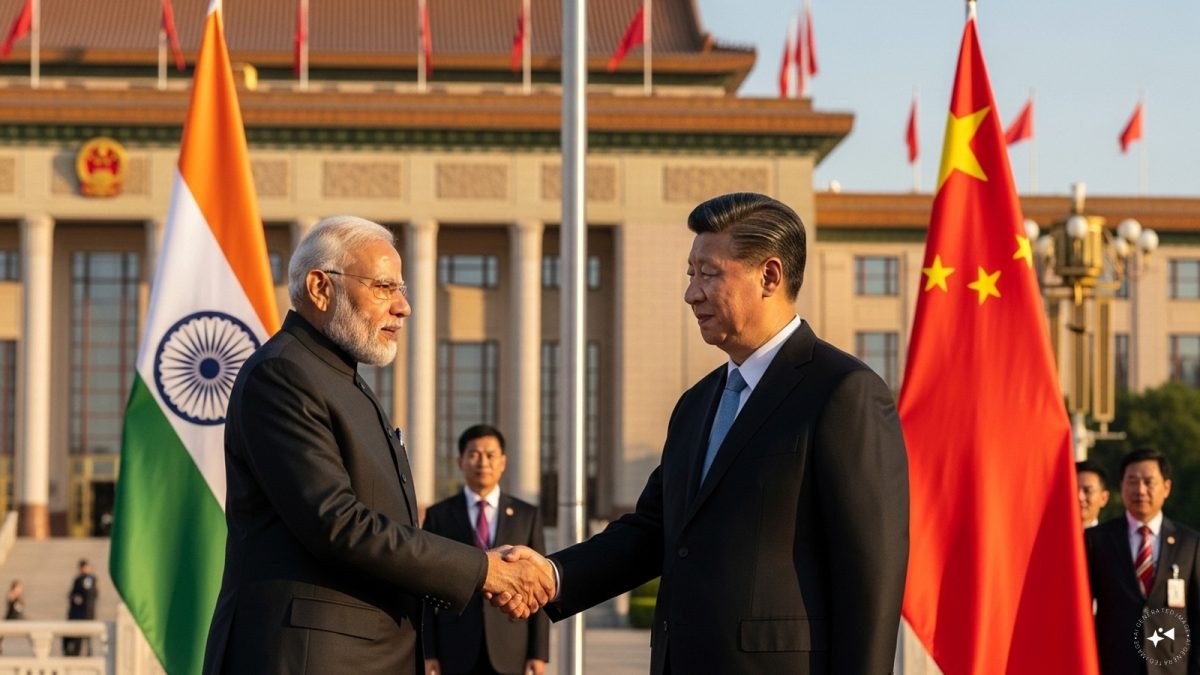
After a gap of over seven years, Prime Minister Narendra Modi landed in China on Saturday evening on a keenly watched visit that assumed greater significance in view of a sudden downturn in India-US ties triggered by Washington’s policies on trade and tariff.
After years of border tensions and diplomatic chill, India and China are edging towards a reset. Five years after their frontier standoff turned deadly, the two Asian powers are restoring border peace, rolling back curbs on trade and investment, easing visas, resuming flights and reviving high-level exchanges.
This thaw has set the stage for Prime Minister Narendra Modi’s first visit to China in over seven years, with his much-anticipated meeting with President Xi Jinping on Sunday emerging as the focal point of his trip.
While Modi is officially in Tianjin to attend the Shanghai Cooperation Organisation (SCO) summit on August 31 and September 1, the bilateral with Xi carries added weight against the backdrop of escalating US tariffs that are unsettling the global economy.
US tariffs drive Asian realignment
The diplomatic warmth between New Delhi and Beijing coincides with a period of economic strain triggered by Washington’s trade policies. President Donald Trump’s administration has imposed steep levies, a 30 per cent tariff on Chinese goods, with the threat of rising to 145 per cent in November if talks collapse, and a 50 per cent tariff on Indian exports. These measures have forced the two Asian giants to consider closer coordination.
In their meeting, Modi and Xi are expected to review the state of economic ties and explore ways to deepen cooperation, while also addressing the strains left behind by the eastern Ladakh border clashes.
Modi sets tone for cooperation
Before arriving in China from Japan, the prime minister highlighted the need for joint action by the world’s largest emerging economies. In an interview with Japan’s The Yomiuri Shimbun, Modi said, “Given the current volatility in the world economy, it is also important for India and China, as two major economies, to work together to bring stability to the world economic order.”
He added that “stable, predictable and amicable bilateral relations between India and China can have a positive impact on regional and global peace and prosperity.”
PM Modi was welcomed at his hotel with Indian classical music and dance performances, symbolising the warmth marking this visit. He is also scheduled to meet Russian President Vladimir Putin and other world leaders during the SCO summit.
Steps towards reconciliation
The trip comes less than two weeks after Chinese Foreign Minister Wang Yi visited India, holding talks with External Affairs Minister S. Jaishankar and National Security Advisor Ajit Doval. Both sides unveiled a framework for a “stable, cooperative and forward-looking” relationship, including commitments to jointly maintain peace on the contested frontier, reopen border trade, and resume direct flights.
These moves build on the October 21 agreement last year that completed troop disengagement at the remaining friction points of Demchok and Depsang, effectively ending the eastern Ladakh face-off that began with the 2020 Galwan clashes.
Rekindling high-level diplomacy
PM Modi last travelled to China in June 2018 for the SCO summit, while Xi’s last visit to India was in October 2019 for the second “informal summit.” The renewed engagement marks a sharp turn from years of standoff, suggesting both leaders see advantage in stabilising ties at a time when US tariffs are shaking the foundations of global trade.
With inputs from agencies
End of Article
 "Kim Jong Un promises “beautiful life” to families of North Korean soldiers killed in Russia-Ukraine war")
&description=After+7+years%2C+PM+Modi%E2%80%93Xi+talks+take+centre+stage+as+US+tariffs+shake+global+trade+order)