

Last Updated:
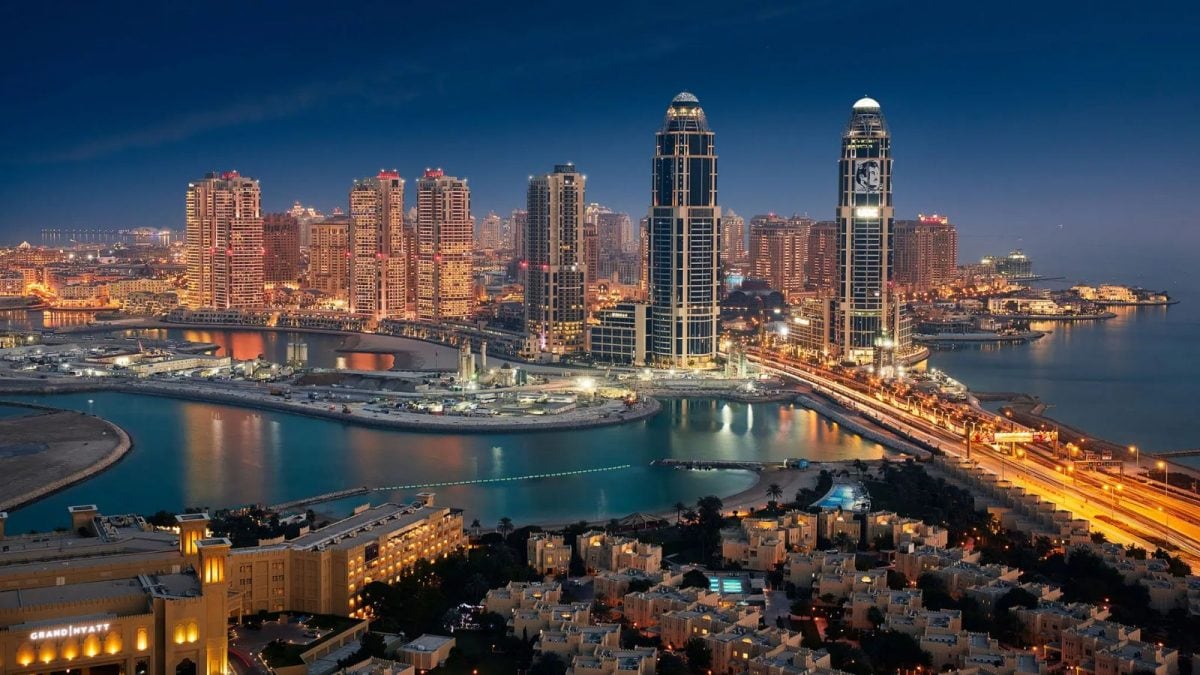
Doha has become a key global mediator, hosting crucial negotiations like US-Taliban talks and Gaza peace efforts, thanks to its neutral, discreet diplomacy and wealth



Mossad chief had recently visited Doha aims to revive Gaza peace talks.
For much of the late 20th century, the world’s most delicate negotiations took place in Europe. Whether it was nuclear arms talks, secret backchannel discussions, or peace settlements, neutral capitals like Geneva, Vienna, and Oslo were the preferred stages. Safe, distant from the frontlines, and trusted by adversaries, these cities defined the era of classical diplomacy.
That era is fading. In the new geopolitics of the 21st century, the center of global mediation has shifted eastward, to Qatar, and more specifically, to its capital Doha.
Recommended Stories
Until recently, Qatar was known primarily for its gas riches and gleaming football stadiums. But in less than a decade, it has earned a reputation as one of the world’s most reliable mediators. From hosting secret US-Taliban talks to facilitating prisoner swaps and easing tensions between bitter rivals, Doha has become a place where enemies come to negotiate.
This transformation is not a matter of chance. Mediation is written into Qatar’s national DNA, even enshrined in the country’s 2003 constitution, which pledges to promote peace through dialogue. But its rise as a diplomatic power is also the product of a deliberate long-term strategy: staying neutral, taking calculated risks, engaging with all sides, and building trust with adversaries who trust almost no one.
Mossad Chief’s Quiet Visit
The latest example came last week, when Mossad chief David Barnea travelled to Doha. His visit, closely watched across the region, is being viewed as an attempt to revive Gaza peace talks. Alongside Egypt, Qatar has been at the centre of repeated but fragile attempts to negotiate a ceasefire in the devastating war.
Doha has already played critical roles in past crises, from negotiating the release of hostages in Gaza to facilitating the US withdrawal from Afghanistan, and more recently, preventing a flare-up between Iran, Israel, and Washington from spiraling out of control.
As one Qatari official told The Guardian, “Whenever there is a conflict you will see us.”
From Obscurity To Influence
Qatar was not always on the global map. When it gained independence from Britain in 1971, the Gulf state was a little-known desert monarchy, lacking the religious weight of Saudi Arabia or the cultural clout of Egypt. Even into the 1980s, it remained conservative and introverted.
The turning point came in the 1990s. The discovery of the massive North Field, the world’s largest natural gas reserve shared with Iran, transformed Qatar’s fortunes. By the mid-1990s, a palace coup added momentum. In 1995, Sheikh Hamad bin Khalifa al-Thani deposed his father and pushed Qatar onto the global stage.
Within a year, he launched Al Jazeera, a pan-Arab satellite network that broke the mold of state-run media. Bold, often controversial, and willing to challenge regional taboos, Al Jazeera turned Qatar into a household name across the Arab world.
Sheikh Hamad also diversified the country’s presence abroad; buying assets from Harrods to Paris Saint-Germain, investing in Western capitals, and winning the bid to host the 2022 FIFA World Cup.
Everyone’s Friend, Everyone’s Mediator
Unlike its Gulf neighbors, Qatar made a deliberate choice to remain militarily cautious while diplomatically ambitious. While Saudi Arabia waged war in Yemen, Doha offered its palaces as negotiation venues.
Its philosophy was simple: maintain ties with all sides, no matter how opposed they were to one another. From Hamas to Washington, from the Taliban to Israel, Qatar engaged across the spectrum. Sometimes praised for neutrality, sometimes accused of double-dealing, Doha nonetheless built a track record.
In 2008, it mediated the end of Lebanon’s political crisis. In 2012, it hosted the Syrian opposition in exile. In 2020, it helped broker the US-Taliban peace deal. In just the past year, it has hosted ceasefire negotiations for Gaza, brokered a US-Venezuela prisoner exchange, facilitated the return of Ukrainian children from Russia, and even helped African rivals Congo and Rwanda sign peace deals in Washington.
The Doha Principle
Qatar’s wealth has made its diplomacy possible. With the world’s third-largest natural gas reserves and a $450 billion sovereign wealth fund, Doha can finance credibility, sponsoring global summits, building infrastructure, and funding quiet diplomacy. Hosting the World Cup was only the most visible sign of this ambition.
But its greatest asset has been discretion. Unlike larger powers, Qatar mediates quietly, often without publicity. This low-profile approach makes it an attractive broker for groups that need secrecy.
At the heart of this effort is Dr Mohammed bin Abdulaziz al-Khulaifi, Qatar’s Minister of State and chief mediator, who is said to shuttle between continents so frequently that he is rarely in the same time zone two days in a row.
“Whenever there is a conflict you will see us,” he said, summing up Doha’s philosophy.
The New Geneva
Qatar cannot solve every war. But in an age where trust is scarce, international organisations are weakened, and dialogue is breaking down, Doha has carved out a rare space. It keeps channels open even when everyone else slams the door.
By choosing opportunities over sides, Qatar has built a model of pragmatic diplomacy in a region too often driven by ego and ideology. When missiles fly, the world increasingly listens for echoes from Doha.
In that sense, the Gulf emirate has become not just the “new Geneva,” but perhaps a blueprint for conflict resolution in a fractured world.
- Location :
Doha, Qatar
Loading comments…
Read More
 "Why Ukraine may get to join the EU but not Nato right now")
