Monday, April 13, 2026
23.1 C
New Delhi

Rajiv Gandhi Assassination: How A Piece Of Denim Led To The Killers

Curated By :

Last Updated:

At first, four theories had circulated: the bomb was under the red carpet, hidden in a basket of flowers, hurled in the air, or concealed in a garland

font

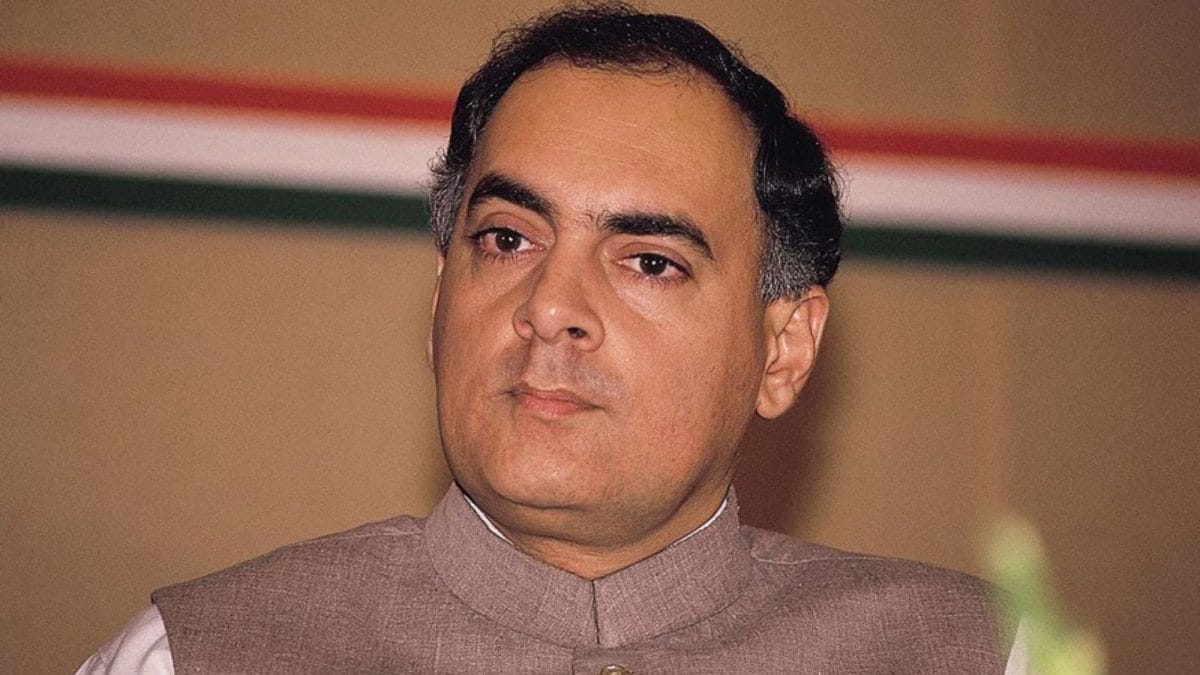
Rajiv Gandhi, born August 20, 1944, was assassinated on May 2, 1991. (File Photo)

Rajiv Gandhi, born August 20, 1944, was assassinated on May 2, 1991. (File Photo)

India’s former Prime Minister Rajiv Gandhi was born on August 20, 1944, in a Mumbai hospital. Had he lived, he would have turned 81 today. His presence would likely have shaped Indian politics in very different ways. But history took another turn on May 2, 1991, when he walked into a rally at Sriperumbudur near Chennai, unaware that death awaited him in the form of a human bomb.

That night, the first reports reaching newspaper offices spoke only of a blast at his public meeting. Within hours, the horrifying confirmation came in that Rajiv Gandhi had been killed in a massive explosion. The entire country was stunned, unable to comprehend that a national leader could be assassinated in such a brutal fashion.

Recommended Stories

For two days, there was silence about who carried out the killing, why it was done, or how it had been planned. Then, investigators pieced together the chilling details. The assassin was a woman, who bent to touch Gandhi’s feet, triggering a bomb strapped to her body. Within seconds, 18 people, including Rajiv Gandhi and the suicide bomber, were dead.

P Chandrashekhar, Director of Tamil Nadu’s Forensic Science Department, reached the scene within hours of the blast. For two days, he investigated quietly before presenting a preliminary report that turned the case on its head.

Chandrashekhar concluded that the bomb had been worn like a belt by a woman dressed in a green salwar-kurta. Photographs taken moments before the explosion confirmed her presence, she was the one bending down to touch Gandhi’s feet when the blast occurred.

At first, four theories had circulated: the bomb was under the red carpet, hidden in a basket of flowers, hurled in the air, or concealed in a garland. Chandrashekhar rejected all of them. The damage patterns, undisturbed carpet, and absence of basket fragments made these impossible. The explosion’s intensity was concentrated within a circle around Gandhi, pointing clearly to a body-borne device.

When Chandrashekhar examined the remains of 16 victims, one body stood out. It belonged to a woman whose face was partially intact, but the back of her head and torso were blown away. Parts of a denim vest with Velcro straps were recovered from the site, evidence that the bomb had been secured to her waist under her clothing. The investigation confirmed she was the assassin. Later, she was identified as Dhanu, a member of the LTTE.

Eyewitness accounts and forensic reconstruction revealed the sequence. As Dhanu bent to touch Gandhi’s feet, he instinctively lowered himself to lift her up, a gesture of humility he was known for. At that instant, the trigger was pressed. The blast tore through the crowd, leaving Gandhi fatally injured. His face was destroyed, his bones scattered by the force of the detonation.

It took Chandrashekhar six months to compile a detailed report, supported by photographs taken before and after the tragedy. The conclusion was unambiguous: Rajiv Gandhi was assassinated by a suicide bomber disguised as a devotee seeking blessings.

The trial court sentenced 26 people in connection with the assassination. In 1999, the Supreme Court acquitted 19 of them, while four – Nalini, Murugan alias Sriharan, Santhan, and Perarivalan – were given the death penalty. Three others, Ravichandran, Robert Payas, and Jayakumar, were sentenced to life imprisonment.

Nalini’s sentence was later commuted to life on the Tamil Nadu Governor’s orders, while the President rejected mercy petitions of the others in 2011. Over the decades, one by one, the convicts completed their prison terms or were granted release.

In November 2022, the Supreme Court ordered the release of Nalini Sriharan after she had spent more than 30 years behind bars. Other convicts, including Murugan, Jayakumar, and Robert Payas, were freed earlier and sent to Sri Lanka. Today, no one remains in jail for the murder of Rajiv Gandhi.

News india Rajiv Gandhi Assassination: How A Piece Of Denim Led To The Killers
Disclaimer: Comments reflect users’ views, not News18’s. Please keep discussions respectful and constructive. Abusive, defamatory, or illegal comments will be removed. News18 may disable any comment at its discretion. By posting, you agree to our Terms of Use and Privacy Policy.

Loading comments…

Read More

Go to Source

Hot this week

Candidates leader Sindarov reveals why he played for a quick draw against Nakamura in Round 12: ’It was most logical to…’

Javokhir Sindarov played out a quick draw against Hikaru Nakamura in Round 12 of the 2026 Fide Candidates on Sunday, their game ending in a stalemate in just 33 moves less than an hour after start of play, leaving the Uzbekistani Grandmaster on the v Read More

‘We have liberated Hungary’: Péter Magyar pledges closer EU ties in victory speech as Orban concedes defeat

Hungary’s incumbent Prime Minister Péter Magyar pledged to bring the country closer to the European Union after he ended the 16-year-long reign of the country’s longtime authoritative premier Viktor Orban. Read More

Iran, UAE to meet face to face in India at Brics Summit after West Asia conflict

India will host a crucial Brics meeting bringing Iran and the UAE face to face for the first time since the start of West Asia conflict, with focus on regional tensions, Gulf stability, and efforts to build consensus among member nations. Read More

Orbán era swept away by Péter Magyar’s Hungary election landslide

Hungary has for some time felt like two different worlds running in tandem. Read More

Beach Cafes In India Perfect For Slow, Soulful Brunches By The Sea

Discover the best beach cafes in India for slow, relaxed brunches by the sea from Goa and Gokarna to Varkala, perfect for scenic views and easy coastal vibes. Read More

Topics

Candidates leader Sindarov reveals why he played for a quick draw against Nakamura in Round 12: ’It was most logical to…’

Javokhir Sindarov played out a quick draw against Hikaru Nakamura in Round 12 of the 2026 Fide Candidates on Sunday, their game ending in a stalemate in just 33 moves less than an hour after start of play, leaving the Uzbekistani Grandmaster on the v Read More

‘We have liberated Hungary’: Péter Magyar pledges closer EU ties in victory speech as Orban concedes defeat

Hungary’s incumbent Prime Minister Péter Magyar pledged to bring the country closer to the European Union after he ended the 16-year-long reign of the country’s longtime authoritative premier Viktor Orban. Read More

Iran, UAE to meet face to face in India at Brics Summit after West Asia conflict

India will host a crucial Brics meeting bringing Iran and the UAE face to face for the first time since the start of West Asia conflict, with focus on regional tensions, Gulf stability, and efforts to build consensus among member nations. Read More

Orbán era swept away by Péter Magyar’s Hungary election landslide

Hungary has for some time felt like two different worlds running in tandem. Read More

Beach Cafes In India Perfect For Slow, Soulful Brunches By The Sea

Discover the best beach cafes in India for slow, relaxed brunches by the sea from Goa and Gokarna to Varkala, perfect for scenic views and easy coastal vibes. Read More

‘Me Time’ Vs Productivity Pressure: Why Balance Is The Real Key To Success

Is constant productivity harming your mental health? Experts explain why ‘me time’ is essential for balance, focus, and long-term well-being. Read More

Varuthini Ekadashi 2026: Date, Significance, Muhurat And Fasting Rules

Varuthini Ekadashi is a sacred day dedicated to Lord Vishnu’s Vamana avatar. Learn its significance, fasting rules, and auspicious time to observe Ekadashi fast. Read More

Asha Bhosle passes away: Haan, yahi kahenge hum sada, ki dil abhi nahin bhara

Asha Bhosle, whose voice foregrounded the rebellious notes of desire and abandon in Hindi film music at a time when such attributes were frowned upon in cinema and society, who overcame the looming shadow of her peerless sister Lata M Read More

Related Articles