Wednesday, December 31, 2025
10.1 C
New Delhi

How A Bird Saved Japan’s Bullet Train And Now Powers PM Modi’s High-Speed Rail Project

Curated By :

Last Updated:

PM Narendra Modi and Shigeru Ishiba discuss the Mumbai-Ahmedabad Shinkansen bullet train project, with E10 series trains set to launch by 2027 using Japanese technology


font

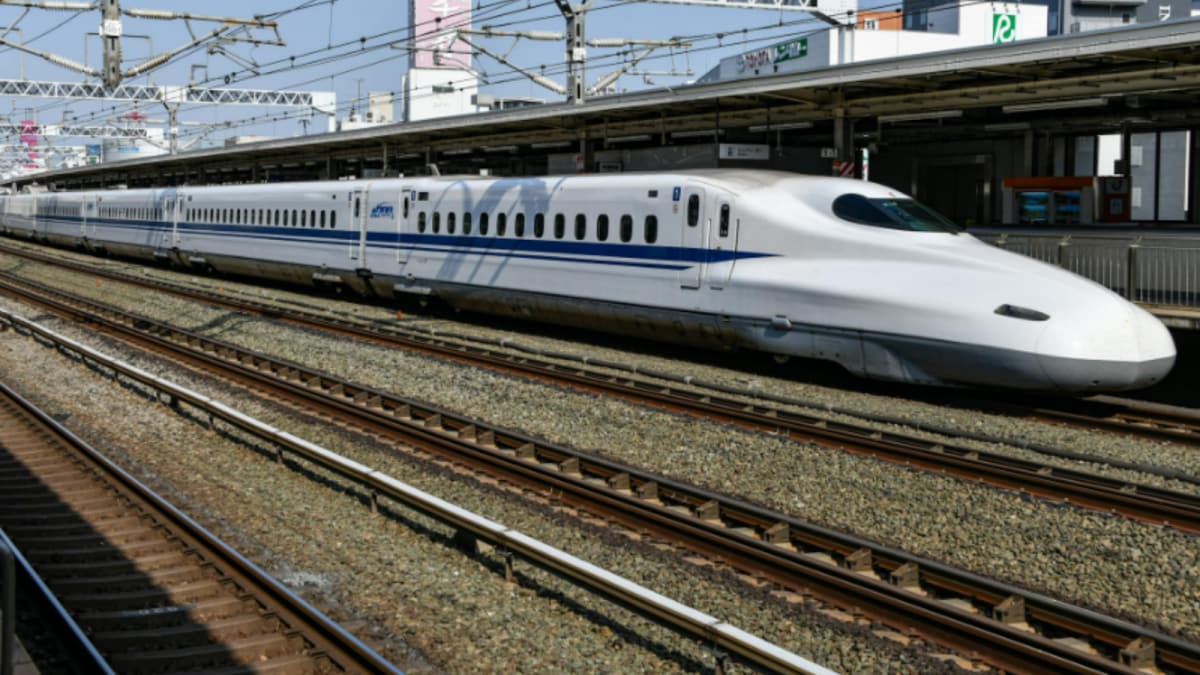
India's first bullet train project is likely to start in 2027. (Pexels/Representative Image)

India’s first bullet train project is likely to start in 2027. (Pexels/Representative Image)

Prime Minister Narendra Modi arrived in Japan on Saturday for a two-day visit, where talks with his counterpart Shigeru Ishiba are expected to center on strategic partnerships, trade, and a flagship project that has long captured India’s imagination, the Shinkansen bullet train.

For India, the Mumbai-Ahmedabad high-speed rail corridor represents a leap into a new era of modern transport. First formalised through a 2015 agreement between India and Japan, the project aims to bring Japan’s world-renowned Shinkansen technology to India. Construction is underway, with commercial services targeted for 2027. But few know that the very trains India plans to adopt nearly faced extinction decades ago, until an unlikely saviour appeared in the form of a bird.

Recommended Stories

Japan’s bullet train network, first unveiled during the Tokyo Olympics in 1964, revolutionised travel with its unprecedented speed and efficiency. The Tokaido-Shinkansen line soon became the busiest high-speed rail corridor in the world, carrying billions of passengers over decades. Yet, despite its engineering marvel, the project encountered a critical obstacle: noise pollution.

When the trains, then operating at over 300 km per hour, exited tunnels, they produced deafening booms that echoed like a gunshot. Residents living within 400 metres of tunnels reported unbearable disturbances. The culprit was aerodynamics, compressed air rushing through tunnels and exploding outward as the train emerged. The resulting sonic boom reached levels above 70 decibels, threatening the survival of Japan’s proudest transport innovation.

Nature Provided The Solution

Faced with mounting pressure, Japanese engineers needed a solution. Eiji Nakatsu, General Manager in the Technical Development Department of Japan Railways, turned to nature for answers. A passionate birdwatcher, Nakatsu recalled observing the kingfisher bird, which dives into water at high speed with barely a splash. Its long, narrow beak allowed it to slice through two mediums, air and water, with remarkable efficiency.

Nakatsu replicated this principle in his redesign of the bullet train’s nose. By shaping the front of the train like a kingfisher’s beak – long, pointed, and gradually widening – engineers not only eliminated the thunderous booms but also improved fuel efficiency and stability. The redesigned trains could cruise at 320 km per hour while meeting strict environmental standards.

This “biomimicry” breakthrough did more than silence critics; it rescued the Shinkansen project itself. Without it, Japan’s bullet train might have been abandoned, never to inspire global adoption.

Today, decades after the kingfisher-inspired design saved the bullet train, India is preparing to launch its own Shinkansen-based corridor. The 508-kilometre Mumbai–Ahmedabad project, 352 kilometres of which fall in Gujarat and 156 kilometres in Maharashtra, will introduce Japanese-designed rolling stock on Indian tracks.

Initially, Japan had planned to export its E5 series trains to India. But as Tokyo prepares to unveil the more advanced E10 Shinkansen by 2030, New Delhi has been offered the latest generation instead. According to officials quoted in the Economic Times, the new trains will be deployed on India’s high-speed route, with prototype testing likely in 2026 and full-scale operations beginning the following year.

Symbol of India–Japan Ties

For Modi, who with former Japanese Prime Minister Shinzo Abe laid the foundation stone of the project at Sabarmati in 2017, the bullet train has become symbolic of India’s future ambitions. During his ongoing visit, he and Ishiba are also expected to tour the Tohoku Shinkansen plant in Sendai to inspect production.

News india How A Bird Saved Japan’s Bullet Train And Now Powers PM Modi’s High-Speed Rail Project
Disclaimer: Comments reflect users’ views, not News18’s. Please keep discussions respectful and constructive. Abusive, defamatory, or illegal comments will be removed. News18 may disable any comment at its discretion. By posting, you agree to our Terms of Use and Privacy Policy.

Loading comments…

Read More

Go to Source

Hot this week

Ronaldo scores with his back and moves closer to 1,000 career goals, but Al Nassr’s winning streak ends

An unusual goal for Cristiano Ronaldo helped the star footballer move closer to the 1,000 career goals milestone, but Al Nassr’s winning streak was brought to an end by Al Ettifaq. Read More

End Of The Battling Begums: Bangladesh May Be Headed For A Male Prime Minister After 30 Years

For over three decades, Bangladesh’s democracy revolved around this singular axis—Khaleda Zia versus Sheikh Hasina or BNP vs Awami League Go to Source Read More

Saiyaara Star Aneet Padda Proves Budget Fashion Can Be Chic, Styles Top Worth Just Rs 1,450

Aneet Padda made waves this year as she debuted in Bollywood opposite actor Ahaan Pandey in Saiyaara. Read More

‘Complete breakdown of law and order’: Congress Shama Mohamed on Anjel Chakma’s death

NEW DELHI: Congress leader Shama Mohamed has raised concerns over the law and order situation following the death of Angel Chakma, a student from Tripura in Dehradun. Read More

How Alert Bank Staff Saved This Elderly Woman From Losing Rs 1.2 Crore In UP’s Prayagraj

Thanks to the alertness and timely action of the staff at Punjab National Bank’s Civil Lines branch, the woman and her life savings were saved Go to Source Read More

Topics

Ronaldo scores with his back and moves closer to 1,000 career goals, but Al Nassr’s winning streak ends

An unusual goal for Cristiano Ronaldo helped the star footballer move closer to the 1,000 career goals milestone, but Al Nassr’s winning streak was brought to an end by Al Ettifaq. Read More

End Of The Battling Begums: Bangladesh May Be Headed For A Male Prime Minister After 30 Years

For over three decades, Bangladesh’s democracy revolved around this singular axis—Khaleda Zia versus Sheikh Hasina or BNP vs Awami League Go to Source Read More

Saiyaara Star Aneet Padda Proves Budget Fashion Can Be Chic, Styles Top Worth Just Rs 1,450

Aneet Padda made waves this year as she debuted in Bollywood opposite actor Ahaan Pandey in Saiyaara. Read More

‘Complete breakdown of law and order’: Congress Shama Mohamed on Anjel Chakma’s death

NEW DELHI: Congress leader Shama Mohamed has raised concerns over the law and order situation following the death of Angel Chakma, a student from Tripura in Dehradun. Read More

How Alert Bank Staff Saved This Elderly Woman From Losing Rs 1.2 Crore In UP’s Prayagraj

Thanks to the alertness and timely action of the staff at Punjab National Bank’s Civil Lines branch, the woman and her life savings were saved Go to Source Read More

‘NEP Promotes Choice, Not Imposition’: Dharmendra Pradhan Speaks In Tamil, Says ‘Languages Unite’

Dharmendra Pradhan highlighted the cultural significance of the event and described Tamil civilisation as one of the foundational pillars of India’s rich civilisational heritage. Read More

Dalal Street Opens Last Session Of 2025 In Green, Sensex Over 84,900, Nifty Nears 26K

Indian share markets geared up for the last trading session of 2025 on Wednesday morning with renewed optimism. Read More

Deepti Sharma Smashes World Record, Tops Women’s T20I Wicket Charts

Show Quick Read Key points generated by AI, verified by newsroom Thiruvananthapuram: India all-rounder Deepti Sharma scripts history by becoming the highest wicket-taker in women’s T20 Internationals after claiming her 152nd wicket Read More

Related Articles