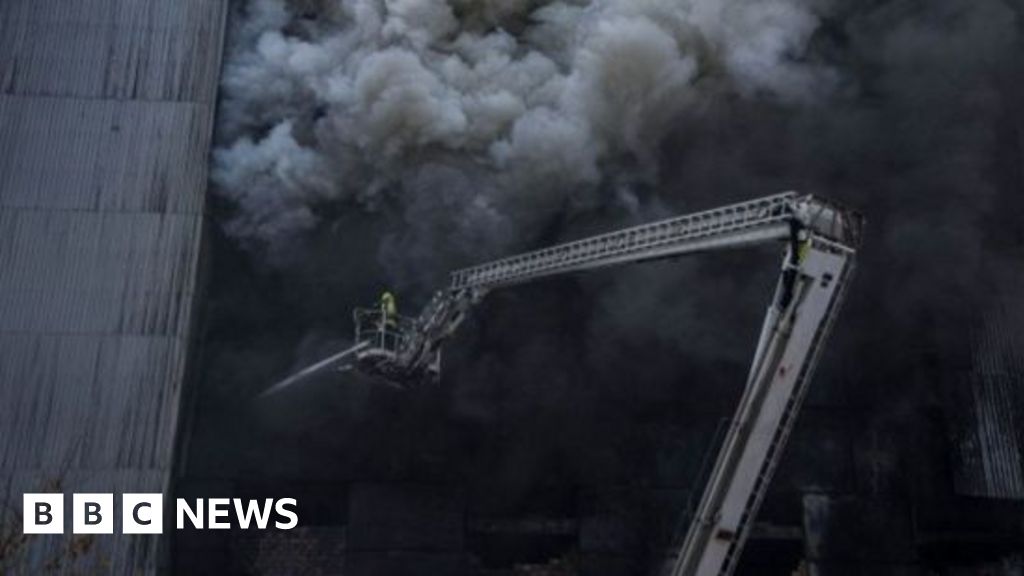

Warehouses supplying the vast majority of Ukraine’s pharmacies have been destroyed in a series of Russian attacks over recent months.
Medical supplies worth about $200m (£145m) were destroyed in just two strikes in December and October.
A large warehouse storing medicines in the city of Dnipro was destroyed in a Russian air strike on 6 December. As a result, about $110m worth of medicines were destroyed – estimated at up to 30% of Ukraine’s monthly supply.
“It was a missile and drone strike against our facility. The missiles flew past, but the drones hit it,” said Dmytro Babenko, acting director-general of pharmaceutical distributor BADM.
“They caused a fire which unfortunately proved impossible to contain and the whole facility was destroyed.”
BADM is one of two companies that supply about 85% of Ukrainian pharmacies in roughly equal shares.
The other company is Optima Pharm, whose warehouses have been hit three times this year – on 28 August, 25 October and 15 November.
The October attack destroyed its main storage facility in Kyiv, and cost the company more than $100m, says Optima Pharm’s chief financial officer Artem Suprun.
Russia denies hitting civilian targets, but when the Optima Pharm warehouse was hit in October, the defence ministry in Moscow said only that it had targeted a factory producing drones.
On the day BADM’s warehouse was destroyed, Russia said it had hit “a warehouse storing military equipment” as well as energy and transport infrastructure.
Such attacks significantly complicate the treatment of sick and wounded in Ukraine, after almost four years of Russia’s full-scale war.
The International Rescue Committee (IRC), an NGO that had been using the warehouse in Dnipro, says it lost $195,000 worth of medication and supplies, which could have served 30,000 people in need.
“When I arrived at the site I was devastated, the scene was simply awful. All of this medicine could have served people for years, and in a single moment it was all lost,” says the IRC’s Andriy Moskalenko.
The IRC said the Dnipro facility had served “as a critical hub for hospitals, healthcare providers, pharmacies and humanitarian actors”.
Mr Babenko from BADM said the Russian attack had destroyed “vitally important medicines” that had been imported and are not produced in Ukraine.
“It’s a pretty complicated situation,” he told the BBC.
But he is hopeful that the attack will not leave Ukrainians without medicines.
“There won’t be significant shortages, possibly only of certain types of goods. We’re hoping to restore all supplies in a month or a month-and-a-half,” Mr Babenko said.
Ukrainian authorities accuse Russia of deliberately targeting hospitals, ambulances, medics and rescue workers, claims Moscow has denied.
According to the government in Kyiv, more than 2,500 medical institutions have been damaged or destroyed, and more than 500 civilian doctors, nurses and other medical workers killed.
Earlier this month, the World Health Organization said it had recorded 2,763 attacks on Ukraine’s healthcare system since the start of Russia’s full-scale invasion, and it said that in 2025 there had been a 12% increase in attacks from the previous year.