
 As the auto industry continues to evolve, one thing is clear: automotive design is no longer confined to only functionality or aesthetics; it is deeply integrated for shaping everything across the vehicle.
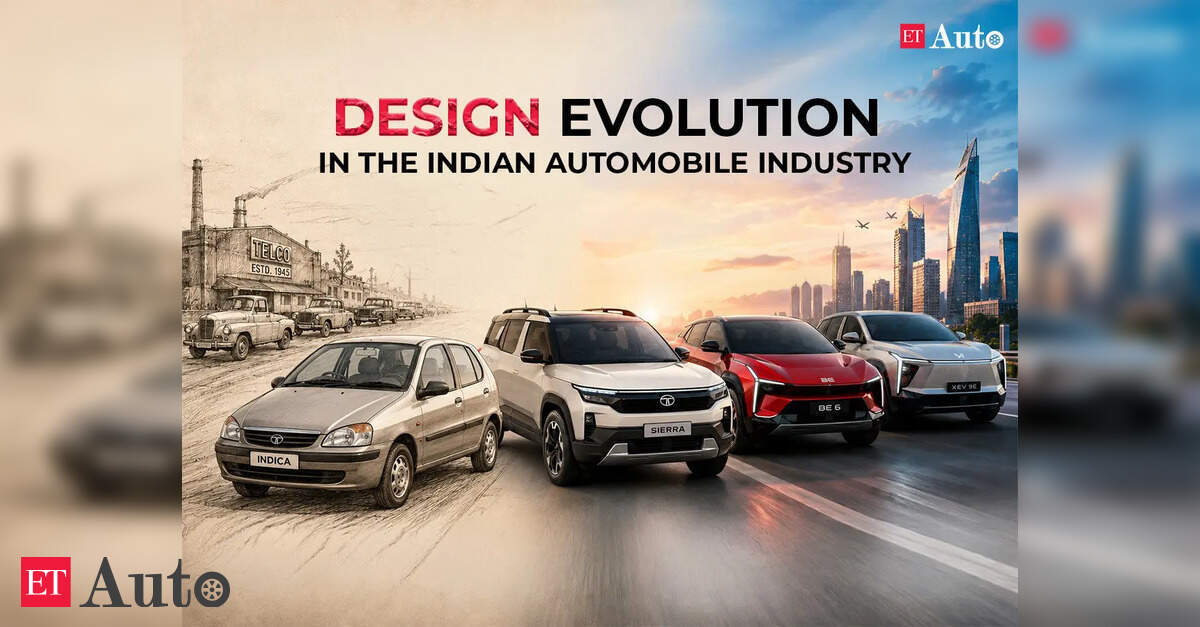
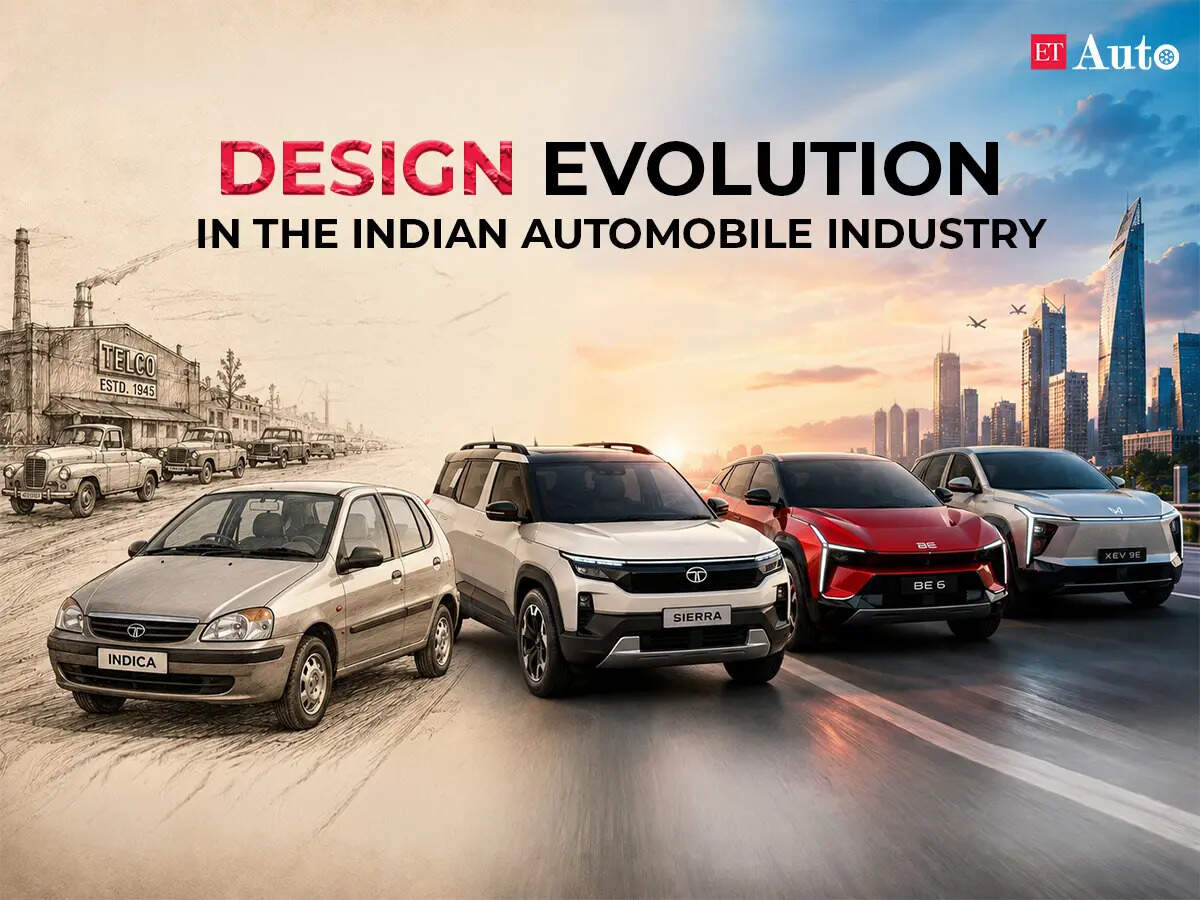
If one looks at Mahindra’s BE6 or XEV9e, or Tata Motors’ Sierra, Curvv or even the Nano before them, what stands out is not just the product concept but also the distinctive design language they bring to Indian customers.
From Tata’s Indica, India’s first fully indigenised car designed and built in India, to vehicles being developed for the global market, the Indian automotive industry has undergone a significant transformation over the decades.
What was once a function-led discipline focused mainly on meeting engineering requirements has now evolved into a strategic foundation for product development.
Automobile design experts describe them as being “much more front-loaded today than it ever was in the history of automobile design and manufacturing.”
Today, vehicle designs are shaping vehicle architecture, customer experience, and brand positioning from the earliest stages of development.
A 2019 JD Power study captured this trend, noting that Indian car buyers are becoming less price-conscious and placing greater emphasis on vehicle looks and styling.
The study reported that consumers now give “more emphasis on styling” as their attitude shifted from pure price consciousness to being “driven by vehicle looks and content”.
“Design is one of the top two reasons why anyone chooses any car in any category…design gets people through the door, and then everything else has to live up to that,” Mahindra’s Chief Design Officer Pratap Bose told ETAuto.
This transformation comes as Indian buyers increasingly consider automobiles as a lifestyle product rather than just a functional means of transportation.
“Today, we are going through an era where we are focusing on aspirations and experience. It’s much more about the experience and the aspiration,” said Ajay Jain, Head of India Design Studio at Tata Motors.
India’s unique design laboratory
One of the strongest examples of Indian design evolution is the emergence of the sub-4-metre vehicle segment, a segment largely distinctive to India. Over the years, this segment has expanded beyond hatchbacks to include compact SUVs, sedans, and more, creating new opportunities for designers. “The sub-4-metre category has really grown well over the last 10 years. It’s a unique category, it doesn’t exist anywhere in the world,” Bose added.
Hyundai Santro not only introduced a different design in the sub-4-meter category but also popularised the tall-boy form factor, while its Creta brought a fresh outlook to the family SUV segment, becoming one of the company’s best-selling models.
Maruti Suzuki Swift also brought a distinctive styling, achieving sustained long-term mass-market success with over 3 million units sold to date.
Earlier generations of cars, such as the Ambassador and Premier Padmini, were inspired by overseas designs, while today’s OEMs are developing everything in-house, customised for the Indian market.
This in-house design and growth is not limited to the country; in fact, it is grabbing attention beyond India.
Bose believes compact vehicles designed for Indian customers are rapidly finding export opportunities in Europe as global markets grapple with congestion.
“What was originally envisaged to be an India-only product is also finding favour in other markets,” he said.
South Korean automaker Kia brought a blend of both technology and design when it entered the Indian market with its Seltos and Sonet. The unique designs introduced by both South Korean automakers helped them capture more than 15 per cent of the market share over the years.
Earlier, premium designs were associated with luxury brands; however, now consumers expect them in mass-market products too, prompting automakers to bring a luxury aesthetic touch to their products and thereby democratising premium design.
EVs unlock new design language
This new era of automobile design has also been unlocked by the transition to alternative fuels, such as electric vehicles (EVs). Unlike internal combustion engine (ICE) vehicles, EVs don’t have conventional packaging constraints such as large engines and complex drivetrains, which permit designers to rethink the overall vehicle layout from both inside and outside.
“Electrification has created opportunities, but also challenges…we want EVs to communicate very forward-looking; more aerodynamic, more clean, more seamless…we are trying to communicate emotionally through the sculpture of design,” Jain added.
JSW MG Motor experimented with a new body style, a CUV, and brought the Windsor to the Indian market, making it its flagship product and the best-selling EV for a long time.
Mahindra’s Bose believes, “When you don’t have an engine in front of the passenger compartment, you are able to create a frunk, push the A-pillars more forward and make a more mono-volume shape…for the same footprint of a vehicle, the EV will give you more space. It’s purely physics.”
Stating the results of such designs, Bose cited how the BE6 and XEV 9e have helped attract customers who may not have previously considered the brand.
“People who never ever thought that they would buy a Mahindra get drawn into the showrooms by the BE6,” he said.
Designing for Indian families
Automotive design is anticipated to move beyond exterior styling towards a more holistic mobility experience, with the next wave of innovation driven by SDVs, AI-powered voice and gesture controls and more flexible vehicle architectures enabled by electrification, noted a SIAM White Paper on Automotive Design released last year.
While global trends influence Indian vehicle designs, both design leaders believe Indian customer behaviour will shape future products.
Tata Motors’ Jain believes Indian customers are becoming more confident and are opting for customised vehicle designs specific to their lifestyles rather than just accepting globally designed products.
“The Indian customer is not an individual buying a vehicle for their own needs, but for the entire family and multi-generational usage,” Jain added.
Along with this, another key distinction is the incorporation of sustainability in the design process. OEMs (Original Equipment Manufacturers) are now incorporating recycled materials, such as plastics, water-recycling systems, and renewable energy into vehicle programme development.
“We are moving to 100 per cent recycled PET bottle fabric,” Bose said.
Interior design is anticipated to gain greater prominence, with vehicles rapidly becoming connected living spaces rather than merely modes of transport.
Jain asserts future products will be more deeply rooted in Indian usage patterns and less dependent on Western and Japanese benchmarks. “By 2030, products will resonate much more with Indian customers…There’s going to be a lot more confidence and self-assuredness with our designs.”
Bose, meanwhile, believes minivan-inspired body styles can make a comeback globally with widespread AI integration into the vehicles.
As the auto industry continues to evolve, one thing is clear: automotive design is no longer confined to only functionality or aesthetics; it is deeply integrated for shaping everything across the vehicle.