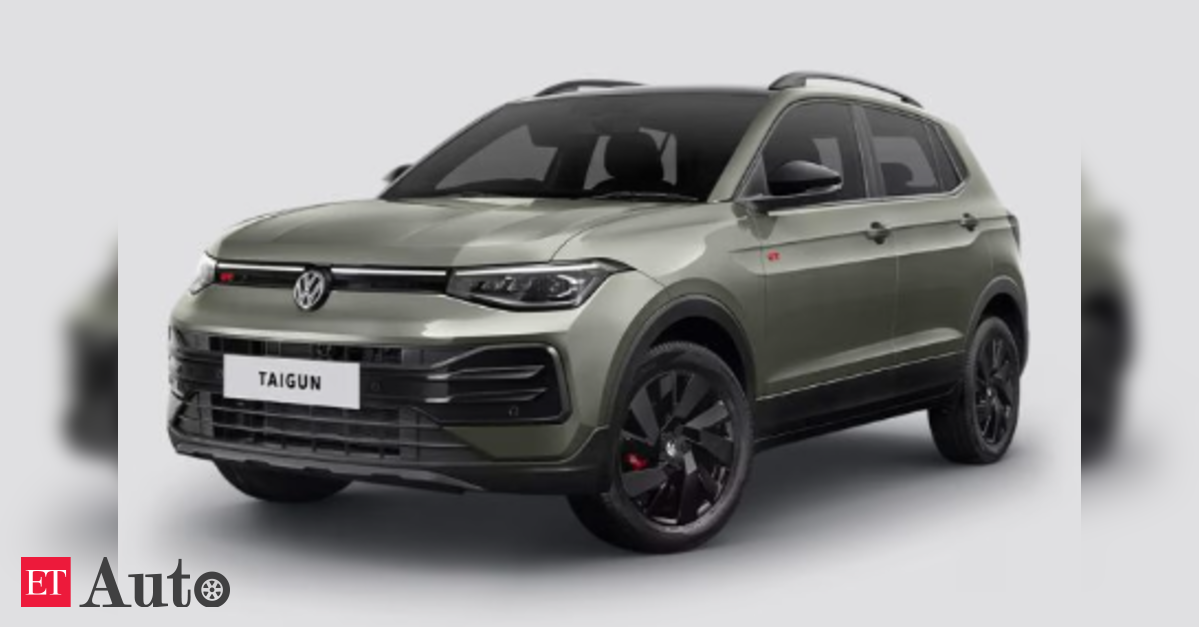

 For Volkswagen India, the Taigun remains central to its localisation-led India strategy.
Volkswagen Taigun sales posted a sharp rebound in April 2026, with wholesale volumes rising 34 per cent year-on-year to 1,543 units, compared to 1,155 units last year.
Sequentially, the growth came in at 70 per cent compared to 908 units in March 2026.
The jump in Taigun volumes comes at a time when the mid-size SUV space, once among the fastest-growing segments in the Indian passenger vehicle market, is showing signs of consolidation.
While market leaders such as Hyundai Creta and Kia Seltos continue to dominate the category, the pace of expansion has moderated amid rising consumer migration toward compact SUVs on one end and three-row utility vehicles on the other.
Against this backdrop, the Taigun’s April performance stands out because it has been a steady seller for Volkswagen India, rather than one that shows sharp growth swings.
The latest uptick in numbers could be due to a recovery after a weak March or to stronger retail demand, possibly supported by changes in pricing or variant mix.
What drove the sales uptick?
According to industry analysts, the gains are likely coming from a narrow yet consistent set of urban buyers who are looking beyond feature-heavy offerings.
Unlike several rivals that have leaned heavily on hybrid technology, panoramic sunroofs and ADAS-led marketing, Volkswagen has continued to position the Taigun around turbo-petrol performance, driving dynamics and European build quality.
Within the Volkswagen Group as well, Taigun’s rise is notable because it comes despite platform overlap with the Skoda Kushaq. The MQB-A0-IN architecture underpins both SUVs and shares powertrain options, making brand pull and dealership reach key differentiators in actual market performance.
A crowded segment
The broader segment itself has become considerably more crowded over the last two years. Apart from legacy leaders, newer entrants, including Toyota Hyryder, Maruti Suzuki Grand Vitara, and Honda Elevate, have expanded the competitive landscape, putting pressure on market share across the board. As a result, even modest volume swings now carry disproportionate significance. For Volkswagen India, the Taigun remains central to its localisation-led India strategy. While the company’s overall market share in India remains relatively small compared to mass-market rivals, products like the Taigun continue to anchor volumes and dealer activity.
Whether April’s spike translates into sustained momentum over the coming quarters will depend on the consistency of retail demand, inventory alignment, and the company’s ability to maintain competitiveness in an increasingly price-sensitive SUV market.