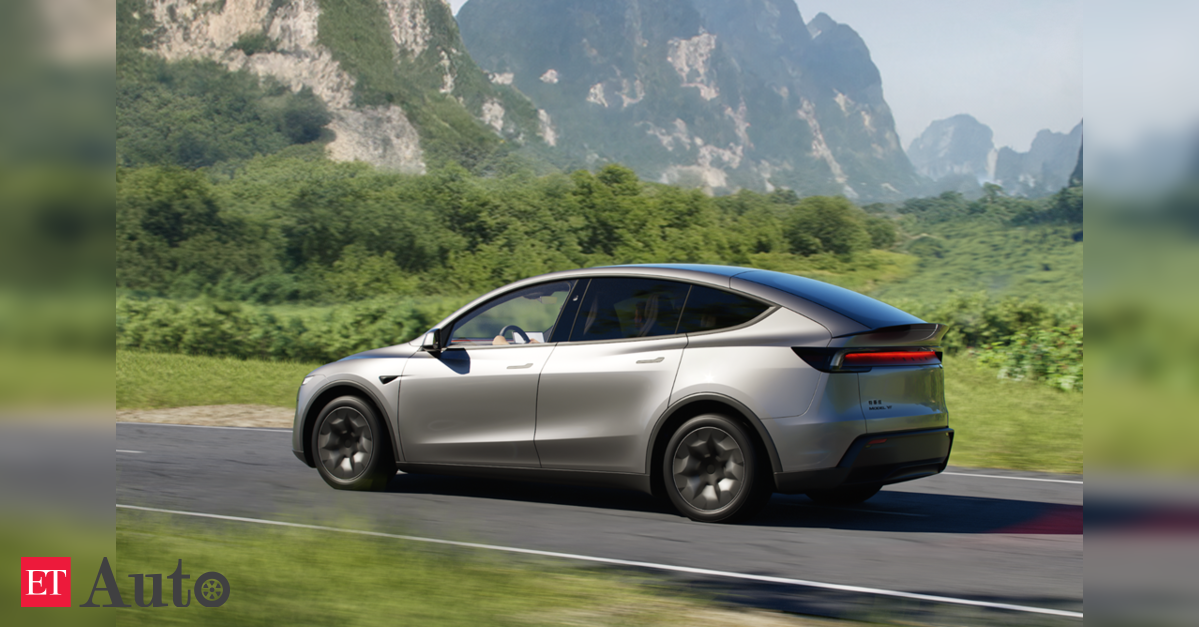

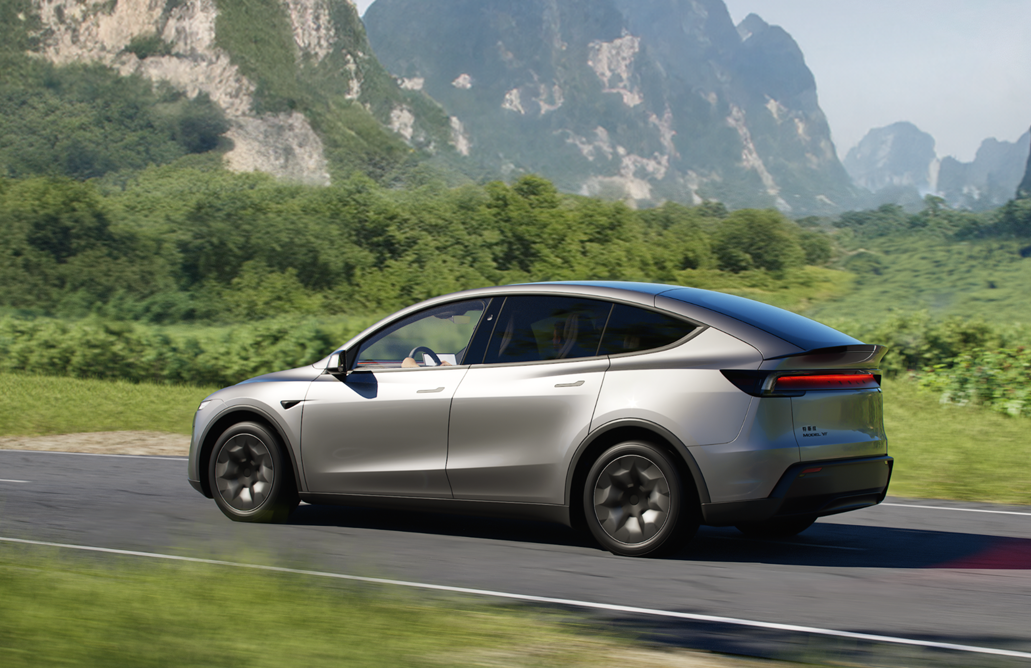
 Tesla Model Y L
Tesla is stepping up efforts to boost demand in India by launching a six-seater upgrade of its Model Y, as the premium electric carmaker struggles to find its footing in the world’s third largest auto market where it entered in July last year.
The Elon Musk-led automaker on Wednesday launched the six-seater option for its Model Y, priced at ₹61,99,000 (ex-showroom). Tesla said it delivers a range of up to 681 km (WLTP) and can accelerate from 0–100 km/h in 5.0 seconds. For Tesla, India is the second market after China to witness the introduction of the Model Y L, demonstrating the country’s appetite for bigger SUVs.
However, early traction for the automaker in India has remained modest. According to industry data, the carmaker has managed to sell around 340 units of the Model Y till March 2026. The features and self-driving autonomy wooed limited buyers till now; nevertheless, its monthly sales are only in double digits since its entrance. Moreover, self-driving upgrades remain an unrealistic feature for Indian roads.
Tesla’s monthly sales stood at 64 units in September, 40 in October, 48 in November, 73 in December, 37 in January, 29 in February and 49 in March, as per industry data.
| Month | Units sold |
| September | 64 |
| October | 40 |
| November | 48 |
| December | 73 |
| January | 37 |
| February | 29 |
| March | 49 |
(Source- Industry data) “Tesla enjoys strong brand equity among Indian consumers, but its current approach suggests it is still testing the waters. Right now Tesla is going very slow. And so, it looks like they are more trying to see what can work in India, “ said XXX.
Muted response
The so-far muted response to Tesla in India highlights the price-sensitive nature of the Indian market.
The modest demand has prompted Tesla to explore different methods, including variant upgrades, new financing schemes such as EMI schemes and feature-based monetisation such as self-driving upgrade with an additional charge of ₹6 lakh.
Experts say that Tesla’s lack of manufacturing capacity in India is also a drag on the sales of the company as 100 per cent duty on its vehicles place the models in the premium range between ₹59 lakh to ₹69 lakh, almost double the price of what VinFast sells in India.
The Vietnamese EV maker, which entered India around the same time as Tesla, has reported total sales of over 850 units in the country till February 2026.
“Compared to players like VinFast, which has already established a plant in India, Tesla’s lack of local infrastructure and limited sales and service network may weigh on consumer confidence,” said Gupta.
According to media reports, Tesla CEO Elon Musk has repeatedly flagged India’s high import duties as a key barrier for his entry being delayed for years, prompting the government to explore incentives and subsidy-linked proposals to attract foreign EV manufacturing. Though these efforts have so far failed to secure a commitment from Tesla regarding their manufacturing plans in India.
On the other hand, Vinfast, last year, announced an investment of $500 million for its facility in Thoothukudi, Tamil Nadu.
As per some reports, Tesla is already working on affordability and is planning to develop a smaller, cheaper SUV; although details of an India-specific strategy remain unclear.