
 Honda Cars India plans a broader product offensive focused on electrification, localisation and high-growth SUV segments amid intensifying competition.
Honda Cars India is done playing defence.
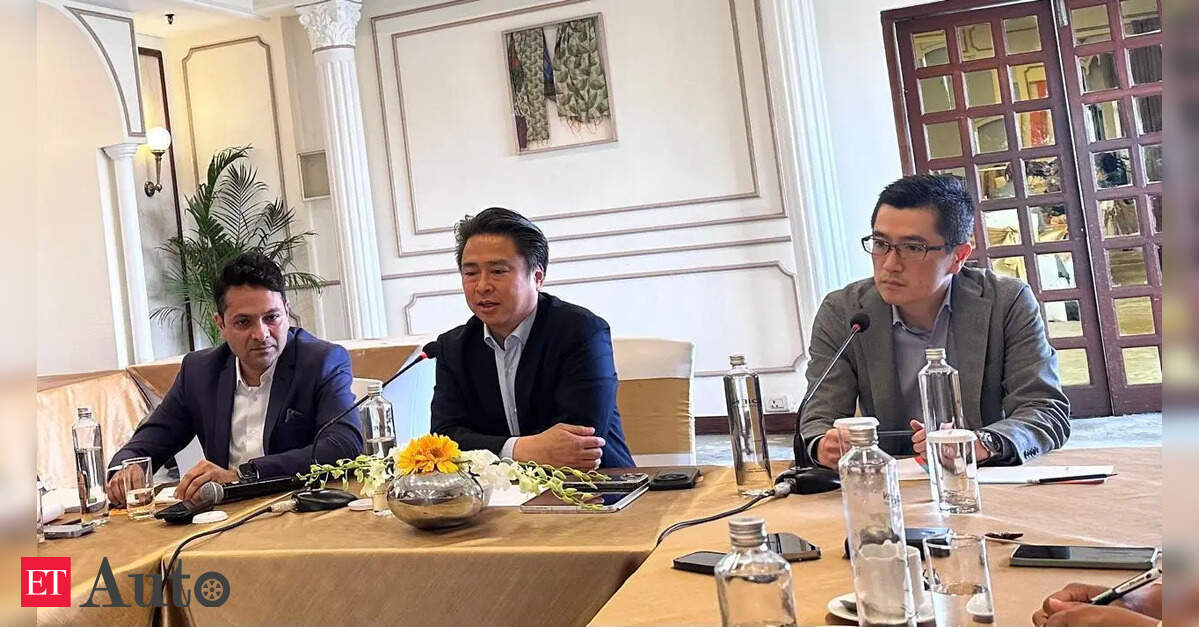
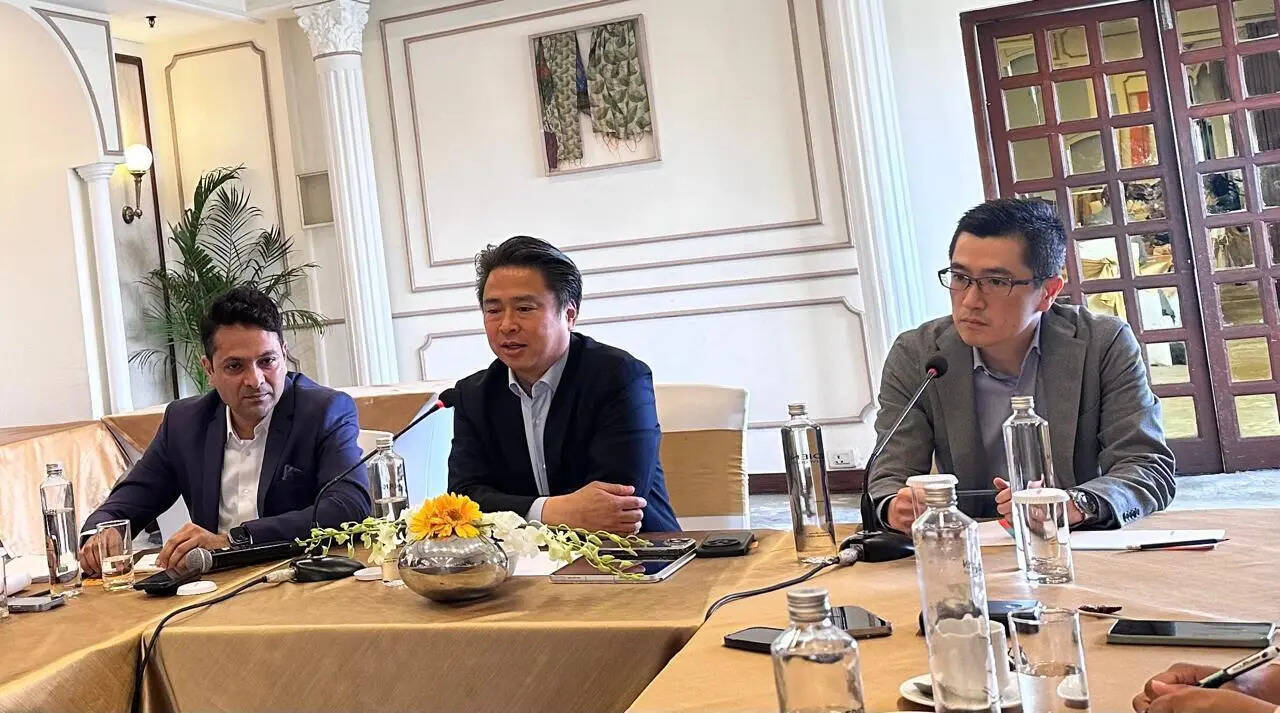
At a media interaction ahead of the refreshed Honda City launch and the India debut of its ZR-V hybrid SUV, Takashi Nakajima, President & CEO, and Kunal Behl, VP, Marketing & Sales, laid out a multi-powertrain, multi-segment assault that the company hopes will arrest years of market share erosion.
While Honda declined to specify the exact product pipeline, executives confirmed that the upcoming launches would include hybrid vehicles, India-specific models, select CBU imports and a locally manufactured battery electric vehicle scheduled for 2027. Sadly, no heritage nameplate like the Civic, would be a part of this 10 model showdown, confirmed the management.
What made the interaction unusually candid was Honda’s rare acknowledgment of strategic missteps. The company had bet heavily on diesel just as the segment collapsed under tighter emission norms. It stayed wedded to hatchbacks and sedans as the Indian buyer migrated decisively to SUVs.
“The hatchback segment has gone down drastically. The growth is in sub-4 metre and SUVs,” said Behl.
“India is one of Honda’s priority markets globally,” said Takashi Nakajima, reiterating comments made earlier by Honda Motor president Toshihiro Mibe during the Japan Mobility Show. “More than 10 models are coming by 2030.”
Sub-4 metre return signals course correction
One of the clearest takeaways from the interaction was Honda’s renewed focus on the sub-4-metre space, a segment where the company has lacked a strong presence after the decline of hatchbacks and compact cars in its portfolio.The company acknowledged that the Indian market has undergone a structural transformation over the last five years, with hatchback share falling sharply while compact SUVs and compact sedans gained prominence.
Honda currently derives most of its domestic volumes from three products: Amaze, Elevate and City, with Amaze remaining its largest-selling model.
The company indicated that upcoming launches would target both the compact SUV and premium SUV spaces, while continuing to strengthen its sedan portfolio.
Notably, Honda ruled out a return to hatchbacks.
EV launch confirmed for next year
Honda also confirmed that its first locally manufactured EV for India will be launched next year from its Tapukara plant in Rajasthan.
Executives referred to the company’s global “Zero” architecture previewed internationally, although the India-bound product name has not yet been finalised.
The EV will form part of Honda’s broader electrification strategy for India, where the company plans to simultaneously expand its hybrid portfolio.
“We are trying to attack the market with different powertrains — ICE, hybrid and electric,” Behl said.
Hybrids move to centrestage
Honda’s emphasis on hybrids appears to have strengthened after the response to the City e:HEV.
According to the company, hybrid variants currently account for around 13-15 per cent of City sales nationally, with penetration touching nearly 30 per cent in states that offer policy incentives such as road tax waivers, repeatedly stressing the need for stronger policy support for hybrids and EVs, arguing that fiscal incentives can significantly accelerate electrified vehicle adoption.
The newly introduced ZR-V hopes to further deepen Honda’s hybrid positioning in India. The premium SUV comes with a 2-litre strong hybrid powertrain and will initially be brought as a completely built unit (CBU).
Honda executives, however, clarified that the ZR-V is not intended to be a volume product.
“The objective is to showcase Honda’s global hybrid technology and strengthen brand perception,” Behl said.
Localisation and India-specific products
Honda also signalled a stronger localisation push, especially as it expands into hybrids and EVs. Current localisation levels vary by model. While the petrol-powered City is estimated to be around 95 per cent localised, hybrid variants continue to rely on higher import content.
Executives said increasing localisation would be critical for future growth but did not disclose specific investment figures or supplier partnerships.
The company also confirmed that several upcoming models would be India-specific, though some global products would continue to be introduced selectively.
No immediate plans for factory-fitted CNG
Despite rapid growth in the CNG segment, Honda said it currently has no plans to introduce factory-fitted CNG models owing to development costs, testing requirements and uncertain business viability as key constraints.
Instead, the company said it would focus on hybrids, EVs and potentially flex-fuel technologies in the longer term. Honda confirmed that all its models produced since 2009 are E20 fuel compliant and said it already possesses flex-fuel technology through its operations in Brazil.
Capacity utilisation remains key focus
Honda currently operates a single manufacturing facility at Tapukara with an installed annual production capacity of 180,000 units with the immediate priority set to fully utilise the existing capacity before considering any large-scale expansion.The company also confirmed that there are currently no production plans for its Greater Noida plant.
Digital and financing push
Apart from products, Honda is also building new business verticals aimed at strengthening customer acquisition and retention: Honda Finance India (HFI), a captive finance arm and Honda Digital Innovation India (HDII), a digital platform integrating two-wheeler and four-wheeler customer ecosystems.
Industry financing penetration currently stands at around 70-75 per cent, according to the company.
Attempting a comeback in a crowded market
Honda’s renewed India push comes at a time when competition in the passenger vehicle industry is intensifying sharply. The company’s monthly domestic volumes have consistently been challenged by rivals such as Kia and MG Motor India, while established players including Maruti Suzuki, Hyundai, Mahindra and Tata Motors continue to aggressively expand portfolios across SUVs, EVs and alternative fuels.
For Honda, the challenge will not only be launching products, but doing so at the speed and scale required in India’s evolving market.
The company has acknowledged that Honda’s global development cycles have historically been slow and expensive, and indicated that reducing development timelines and costs is now a priority.