
 Nissan Gravite
Thierry Sabbagh remembers the time when Nissan was a single-product company in India and, yet, consumers still queued up for the Magnite SUV.
“This was the turning point for us to realise the affinity that customers in India had with Nissan and I remember telling the team that this was a very strong sign of resilience. With one car, one model and in a competitive market, you have managed to really keep the boat moving,” he told ET Auto.
Sabbagh, who is Divisional Vice President and President, Middle East, Saudi Arabia, Commonwealth of Independent States, and India – Nissan and Infiniti, said the Magnite’s bonding with customers was a clear indication that the company needed to take the India growth story to the next level.
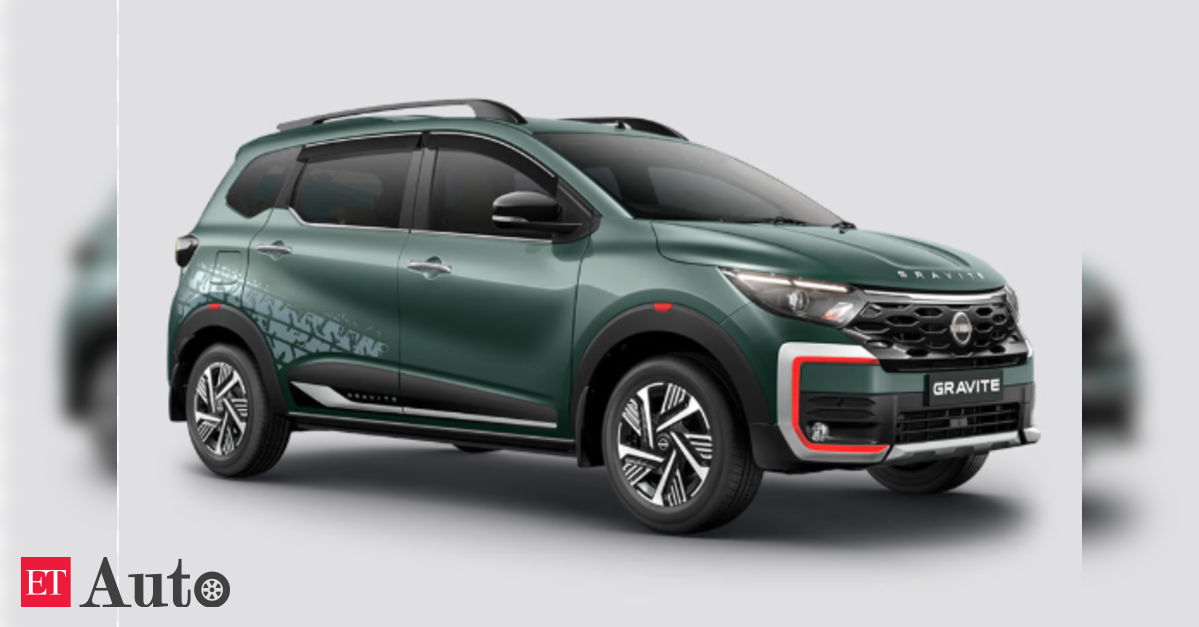
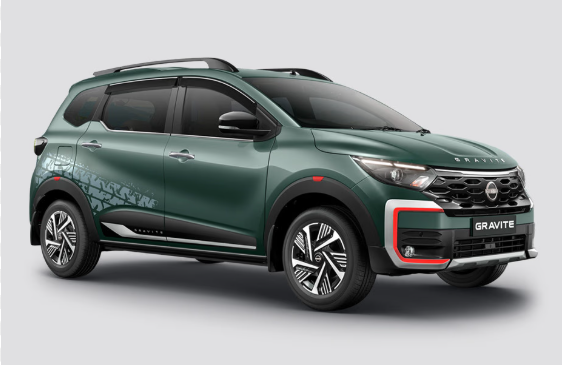
“The brand is very strong. And the proof of that was when it was a one car brand with Magnite,” he reiterated. Today, Nissan also has Gravite in its portfolio and is getting ready for the launch of Tekton in the coming months.
The company is now carefully looking at where it can further enhance its product lineup and in which segments. “We want to ensure that as we come in with a new product, it is in a segment where we can compete and win. It is not just about having 10 or 20 models,” said Sabbagh.
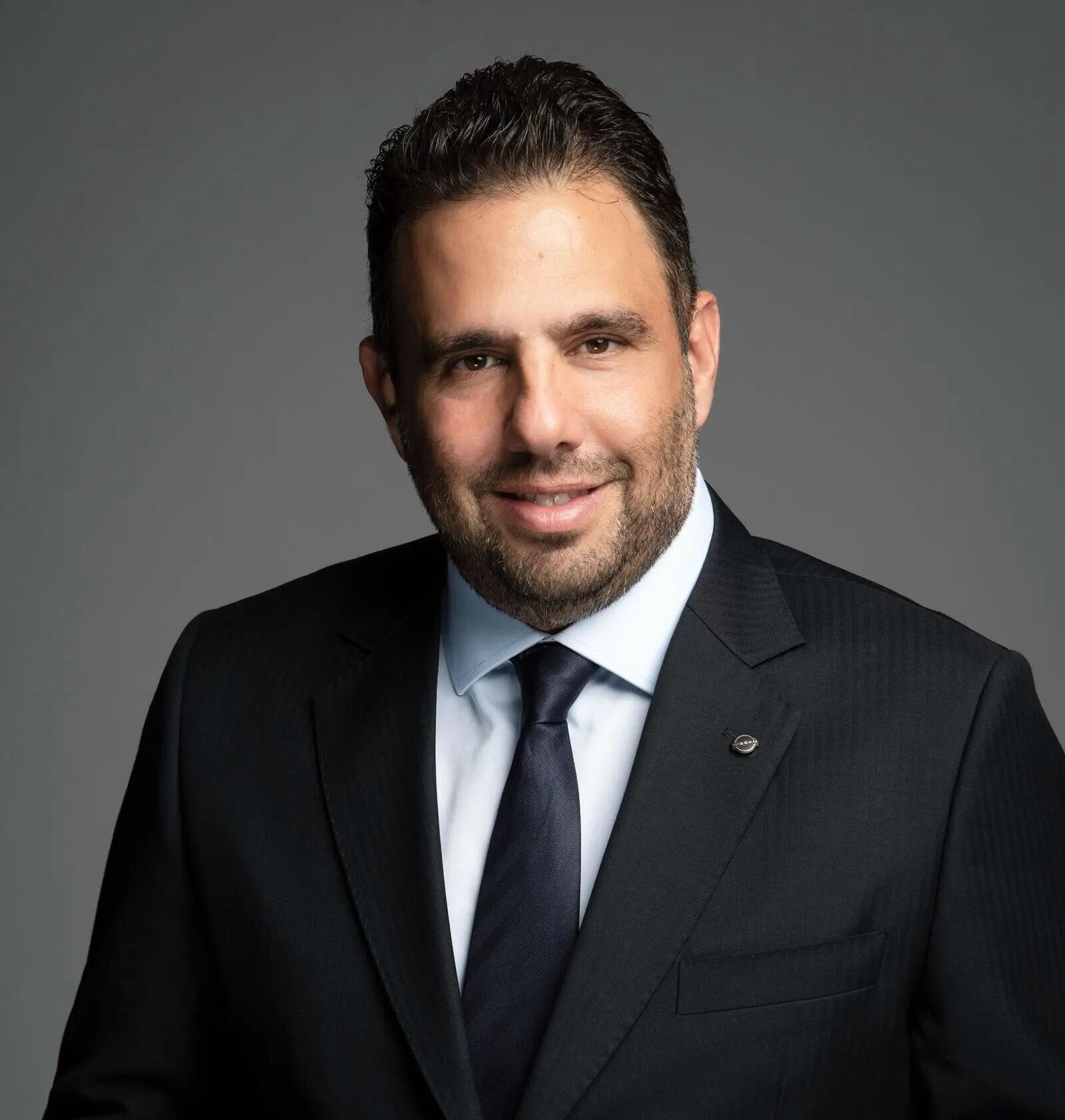 Thierry Sabbagh, Divisional VP & President – Middle East, Saudi Arabia, CIS & India, Nissan & Infiniti
Powertrains, CBUs for India
The other top priority is to diversify powertrains across existing models, taking into account developments in the energy sector amid the West Asia conflict and changing electric regulations in Europe. Beyond this lies the possibility of bringing in CBUs (completely built units), given Nissan’s extensive global lineup. “There are products that we call the heartbeat brands, including Patrol, which is the flagship in the Middle East,” he said. Plans are underway to launch Patrol in India as well, as this is an “important element” to reinforce Nissan’s DNA.
The next in line on the wish list are CBUs, but the timing becomes important to ensure dealer viabilityThierry Sabbagh
“It will not stop there but we do not want to do everything at the same time since we want to be successful in whatever we do. We continue to build on Magnite’s momentum with the Gravite launch a few months back. We have started to see the results and it is important that we capitalise on that,” explained Sabbagh. The Tekton is expected to build the momentum further with a seven-seater version to follow 6-8 months later. This “bigger brother” of Tekton, according to him, is a “really exceptional” product. The next in line on the wish list are CBUs, but the timing becomes important to ensure dealer viability.
Experience, reach and convenience
“We need to take care of our partners. The success of a brand today is not just about the product but the experience, reach, convenience and what we are doing from a digitalisation standpoint,” he said.
Eventually, it is not just about how many models are sold but about delivering the customer’s choice and really making an impact in the segments concerned. “I do not want to have a Christmas tree everywhere, and it is important that we have a focused strategy instead,” he reiterated.
While the network is being increased, outlets are also getting a makeover to be in sync with Nissan’s global retail template. Beyond this, training is key, especially as the product lineup increases and specialised skill sets become imperative.
It is with this in mind that Sabbagh wants to pursue a phased approach, with sufficient time between launches. “By doing so, we will have the right training and servicing in place at our workshops. We also have to ensure availability of parts,” he explained.
From Nissan’s point of view, there is no point putting the cart before the horse by launching 3-4 models and moving on. “On the contrary, we want to make things perfect by being in the right segments and increasing our reach in the market,” said Sabbagh.
India is such a diverse and rich country that we have changed the way in which we communicate to people by going more local than nationalThierry Sabbagh
Reality of diversity
Both physical touchpoints and digital capabilities will play a role in providing customers across the country with convenience.
“India is such a diverse and rich country that we have changed the way in which we communicate to people by going more local than national. So, whether you are in the north or south, we will talk your language and tradition,” he added. The idea is to stand out in this intensely competitive market.
There are two main pillars of Nissan’s strategy in India: India for India and India for the world. “We export to more than 40 countries, and the products are very well accepted,” said Sabbagh. The Middle East, as a case in point, is a major importer from India and receives models like the Sunny and Magnite. Tekton will also follow the seven-seater that will debut by the end of the year.
All this is welcome news, and the Nissan leadership team will have every reason to feel vindicated, especially after braving many a storm following the sale of its stake in the Chennai manufacturing operations to alliance partner Renault.
“The first half of last year was very tough and I had more explanations going to the media than our customers who were willing to put the money but wanted an assurance that we would be around,” recalled Saurabh Vatsa, Managing Director, Nissan Motor India.
Being a one-car company for so long, coupled with the change in shareholding, it was perfectly natural for people to assume that an exit would follow. Even while all kinds of news began doing the rounds, customers reposed their faith in Nissan.
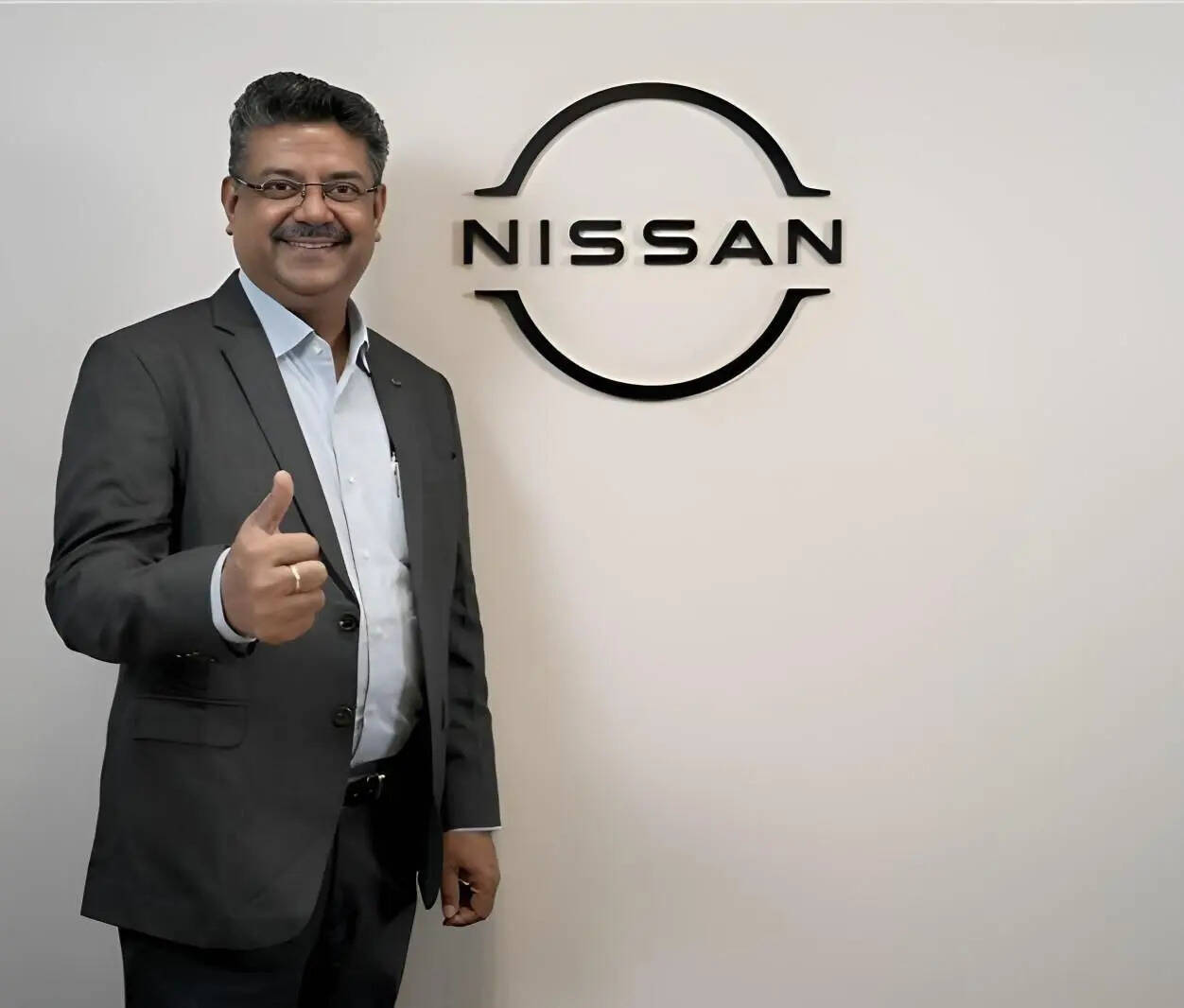 Saurabh Vatsa, Managing Director, Nissan Motor India
 Direct and clear message
The company was very direct and clear in its message that it was not going to offer any discounts but just a five-year maintenance plan. Customers were convinced that Nissan was not going anywhere, and a 10-year warranty also came out last year.
“We promised people a certain timeline and Gravite has been a huge hit. Nissan’s equity is so strong in India that the minute we expand your portfolio, market share is bound to follow,” reasoned Vatsa.
When the company decided to sell the plant to Renault, questions were raised about its future in India.
“Just to be clear, when we sold the plant, we reinvested all the money in product development. So it was not like we sold the plant to cash out,” said Sabbagh.
Nissan’s product development is completely independent of Renault, with its own team of engineers and designers working independently.
“We dictate, in a way, our destiny in that respect. So you have to look at Renault as a supplier that we are using to produce models. We are making sure that we continue to inject the Nissan DNA in the products that we have. So this is where we are really keeping that autonomy for us quite intact,” elaborated Sabbagh.
It is the same philosophy now which has flipped… it is just that the shareholdings have changedSaurabh Vatsa
The show goes on
Till a few years, Nissan was producing three cars for Renault and one for itself.
“I think it is the same philosophy now which has flipped and does not take away anything for Nissan since we did the same with the partner even before. It is just that the shareholdings have changed,” said Vatsa.
As Sabbagh put it, “We are fully aligned and have a clear understanding on the production cycles and allocation. So it is not as if we are just a spectator.”
By the end of the day, the Chennai plant has a huge capacity of 4.8 lakh units, which needs to be used optimally and, hence, needs the participation of both Renault and Nissan. It is a relationship of” mutual respect and understanding” of what needs to be achieved.
“Our aspiration is to really go and get a strong market share. So this is our strategy and this is how we operate. This also gives us time to work on what is beyond, which is definitely in the making,” said Sabbagh.
He was particularly pleased with the fact that Nissan was moving from one product to four in no time. “Usually, you have OEMs that upgrade their current existing lineup but we are coming from one to four in less than one year. We now want to keep growing,” he added.
Long association with India
Nissan has had a long association in India since the 1960s, when it was delivering the Patrol P60 with the Ministry of Defence for Jonga. Incidentally, Jonga was not the name of the car but the factory where it was built: Jabalpur Ordnance and Gun Carriage Assembly.
“That shows you that there has been quite a long history,” said Vatsa. And then there were the CBUs, such as Nissan Cedric and President, which were part of the Indian landscape. The light commercial vehicle wave that started in the 1980s also had Nissan throw its hat into the ring, along with
Toyota, Mazda and Mitsubishi.
According to Sabbagh, Japan has always been synonymous with quality, precision, high value, and reliability, which explains the trust in brands like Toyota, Honda, and Nissan.
“India was still a priority for us then as it is today. The team is now putting together an aggressive product development plan and this is how we are executing it,” he said.