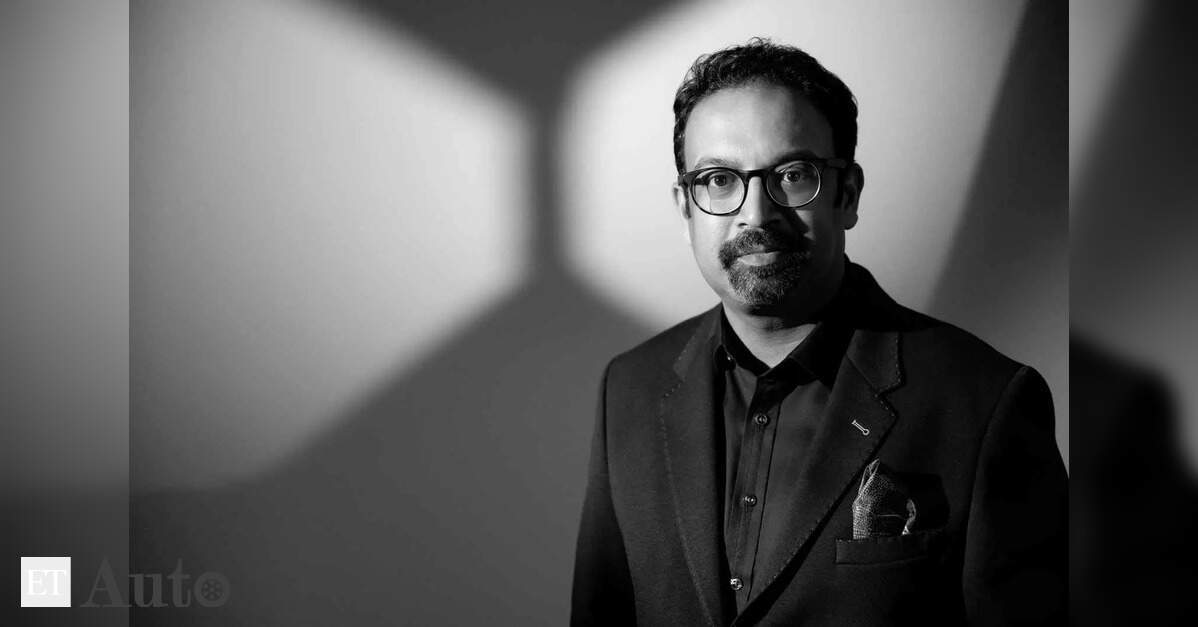

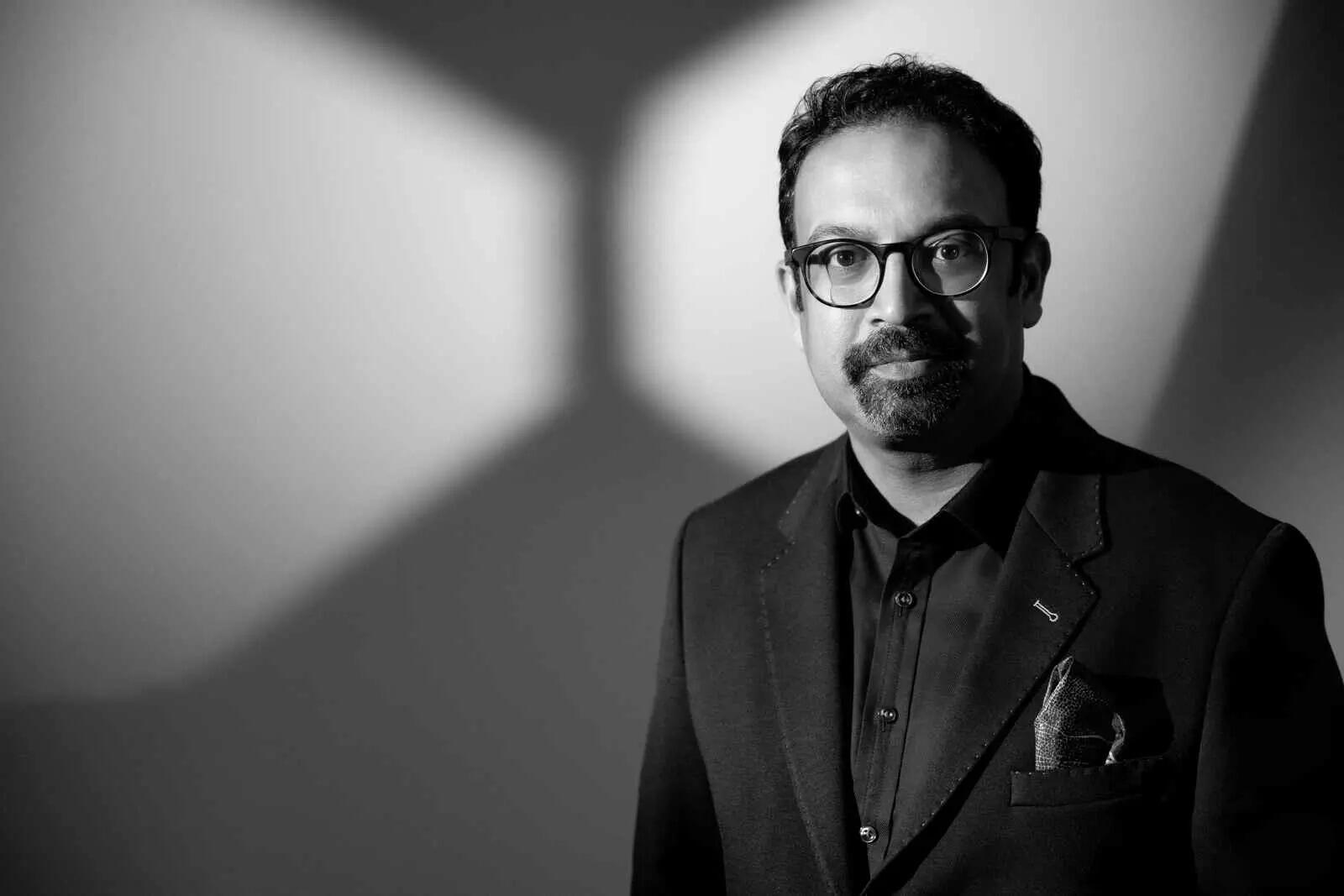
 Pratap Bose
As Chief Design & Creative Officer, Auto & Farm Sectors, Mahindra & Mahindra, Pratap Bose believes that the skill sets required in his field of specialisation are changing rapidly.
“We have found that increasingly we have had to enlarge and expand the capabilities and skills within the design team because what design does in a company itself has changed,” he told ET Auto. Consequently, there is a chief creative role that is now in place beyond the chief design role.
Simply put, this means that anywhere that the brand manifests itself, even beyond cars, Bose’s involvement becomes mandatory: how the photographs are shot for the press kits, how the advertising works, what the showroom looks like, the chargers that are rolling out “my team and me have a say here and design all that”.
This additional need arises from the fact that new customers wants a seamless experience across every touch point that they come across. “So, right from the app to the charging station itself, there cannot be five different things and five different experiences. It has to be that singular Mahindra experience,” explains Bose.
Architects and futurists
Interestingly, all this does not really make the exercise difficult but, on the contrary, more interesting because the role goes beyond designing the cars themselves. “You need people with skills like that in your team. You need architects and futurists,” he adds. For instance, there is no telling what the future of car retail is going to be some years down the line. “Tomorrow, someone may come and say you do not need a dealership at all which is the case in many places. It maybe does not work for India because we like to see, touch, feel and taste what we buy,” says Bose.
The design talent pool is also changing by the day and all the animation “that you see today” is done on software from the gaming industry. “So, you have to bring in those people to help you visualise these cars; all the cool films and clips you see because they are customers too and the kind of people who buy your cars,” he continues.
The other important requirement is to constantly plan ahead and ensure that the product stays relevant for a certain period of time. “If I take an average of 36 to 40 months to design a car and it stays in the market for seven years, you are talking about a 10-year-lifecycle that you are designing for,” says Bose.
Ensuring customer traction
In the same 10 years, a mobile phone company would have typically launched 10 to 12 generations of products and that is the speed of what people are getting used to nowadays. In contrast, a single car/SUV will still need to get customer traction during this timespan and this is where design plays a key role.
“From the moment it hits the showroom to the day we phase out that generation of product, it’s a good 10 years. Most people do not even know what is going to happen in two years which is why you have to really push the boat out. If you design for today, by the time you come to the market, you are dead. You are obsolete,” cautions Bose.
The NU_IQ platform showcased in August this year is a pointer in that direction where the products will start entering the market from 2027 with the last coming out sometime in 2031. Eventually, they will last till 2040 or thereabouts.
Catching them young
“I always say the person we are designing NU_IQ for does not even have a driver’s licence today. Someone who is 16 or 17 today — by the time he or she is in the market for a car, three years from now — that is whom we are designing NU_IQ for,” he says.
This targeted buyer cannot drive today and it is a moot point if he/he may not even want to. The number of people applying for driving licences in the West, for instance, is drastically reducing. “How do you design for a generation which does not even drive currently and who are too young to do so? The answer to that is to stay ahead and meet their expectations/aspirations,” elaborates Bose.
The ‘cool’ factor is very important for them in terms of how they are perceived. This is because the choices they make “talk more about their own value systems” rather than the choice per se. “Does it reflect what they feel just beyond colours and all of that? Does it really, at a core level, reflect who they are and who they want to be,” he asks.
According to Bose, the number of kids walking into showrooms today are fully prepared and have done their research thoroughly. They know “more than their parents” about the car that they are going to buy.
Family decision eventually
Yet, the buying process involves the whole family because “you are spending” upward of ₹20 to 30 lakh. “It is a family decision and not something that I walk out on a weekend and say, oh, this is a toy for me. This becomes a family vehicle,” he says.
Interestingly, some sceptics were of the view that the Mahindra EV designs of the BE 6 and XEV 9e were a bit too radical for Indian customers at the time of their unveiling last year. “I think if you are not radical, you are already old. And this is true for human beings. It is true for cars and for any product,” defends Bose.
The same people had to eat their words when data showed that 80 per cent of the buying came from non-Mahindra customers who walked into the showroom as first-time buyers.
The EV customer, he adds, is also very different from his ICE counterpart. They are a little more adventurous and willing to give something else a try. They are also younger which includes being younger at heart too. For many of them, it is the first car. They have dispensed with the whole need to service, use gears and go in for oil changes because they “do not do any of that” with their phones.
“I think the benefits that EVs bring are totally understandable by a certain generation which wants a great vehicle, but not all the other pain points that their parents faced with oil changes and engine servicing,” explains Bose.
Indian designers have come of age
In his view, Indian designers globally have come of age with the market coming of age too. “In no field can you come of age if the field itself has not (come of age). So, if you are a journalist or musician, you have to play in a geography or space where what you do is amongst the best in that category. And the category itself has to be there,” he says.
In a country like India, which is among the world’s fastest growing car markets, the intensity of product launches combined with the energy of manufacturers and the “absolute passion” of customers becomes a great mix for design to flourish.
Many Indian designers are also working overseas in global OEMs which shows that they are as good as anybody anywhere in the world. “The other advantage they have is that they come from a hyper-competitive market. These designers who are born and raised in India already know what it means to stay fresh and cutting edge and not be burdened by legacy,” explains Bose.
Products like sub-4-metres in length do not exist anywhere in the world and at such competitive price points either. “So we have to do all of this in a cost framework which makes it challenging but also extremely exciting while creating designers who can work anywhere in the world,” he says.
He reiterates that the design talent in India has become much more mature with Mahindra’s Mumbai studio home to 130 of the real best designers who could be working in any studio anywhere in the world. Likewise, the studio in the UK has “allowed us to access” 60-odd designers who worked at the best OEMs globally.
Electric spawns more players
What is also happening today, especially in China, are companies which did not make any cars before like Xiaomi and Huawei for instance. With electrification, car making has become a lot more democratised unlike the past where only a handful of companies had the technology, know-how and expertise to build engines.
“You then put a car together around it whereas it has flipped completely now. Today, the new engine is software which is driving cars of today and will continue to do so tomorrow,” says Bose.