
 Albeit the decline in volumes, it was the best-ever performance for the company in revenue terms.
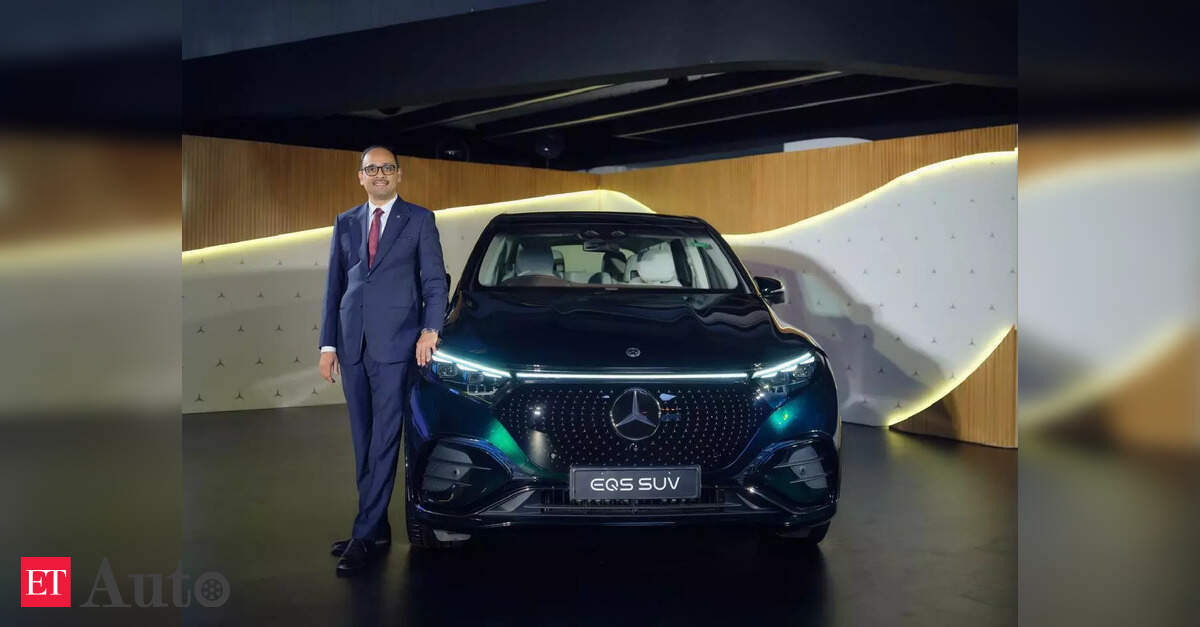
India’s luxury car market is likely to grow in single digits in 2026, with demand remaining steady but unlikely to accelerate sharply due to currency volatility, muted first-time buyer sentiment and continued pressure at the entry level, said Santosh Iyer, Managing Director & CEO, Mercedes-Benz India.
Luxury car sales (those above Rs50 lakh) are estimated to have closed the calendar year with 52000 units, a 1.6% increase over the last year, the slowest pace since the pandemic, ET reported in its 26 December edition. The overall volumes were dragged down by a decline seen at Mercedes which saw its overall sales drop 3% year-on-year to 19007 units.
“Growth will continue, but at similar levels to last year. The demand is there, but the market is constrained by factors such as exchange rate pressures and the sentiment of first-time luxury buyers,” Iyer said, outlining the company’s outlook for the year.
Against this cautious market environment, Mercedes-Benz India is entering 2026 with an aggressive product and ecosystem strategy, said Iyer. The company plans to introduce 12 new models during the year across internal combustion engine and electric powertrains, while expanding its local manufacturing footprint and retail network.
Albeit the decline in volumes, it was the best-ever performance for the company in revenue terms. The growth was led by a richer product mix, with Top-End Vehicles (TEVs) such as the S-Class, Mercedes-Maybach and AMG models growing 11% year-on-year, said Iyer. The high-performance AMG portfolio surged 34%, while battery electric vehicles recorded 12% growth.
India entered the top five global markets for Mercedes-Maybach for the first time in 2025, reflecting growing demand for ultra-luxury vehicles. Encouraged, Mercedes-Benz has begun local production of the Mercedes-Maybach GLS, making India the first market outside the US to assemble the ultra-luxury SUV. Localisation has enabled a significant reduction in the entry price of the model, while allowing the brand to continue offering highly customised, premium editions.
Electric vehicles remain a key growth pillar, with BEVs accounting for 20% of all top-end Mercedes-Benz vehicles sold in India. Nearly 70% of the company’s EV sales are priced above ₹1.25 crore, underscoring that EV adoption in the luxury segment is being driven from the top end of the market, the company said in a statement
To address concerns around public charging, Mercedes-Benz has rolled out MB.Charge Public in India, aggregating over 9,000 DC fast chargers into a single digital ecosystem that enables seamless discovery, authentication and post-usage payment through one interface.
Despite strong performance by top players, the overall luxury car market remains range-bound at around 50,000 units annually. Iyer attributed this to intense price competition in the entry luxury segment, currency-driven price increases and limited elasticity among first-time buyers.
“We consciously stay away from price wars because they hurt residual values and brand equity in the long term,” he said, adding that a sustained acceleration in luxury car demand will depend on improved sentiment, currency stability and renewed confidence among first-time buyers.