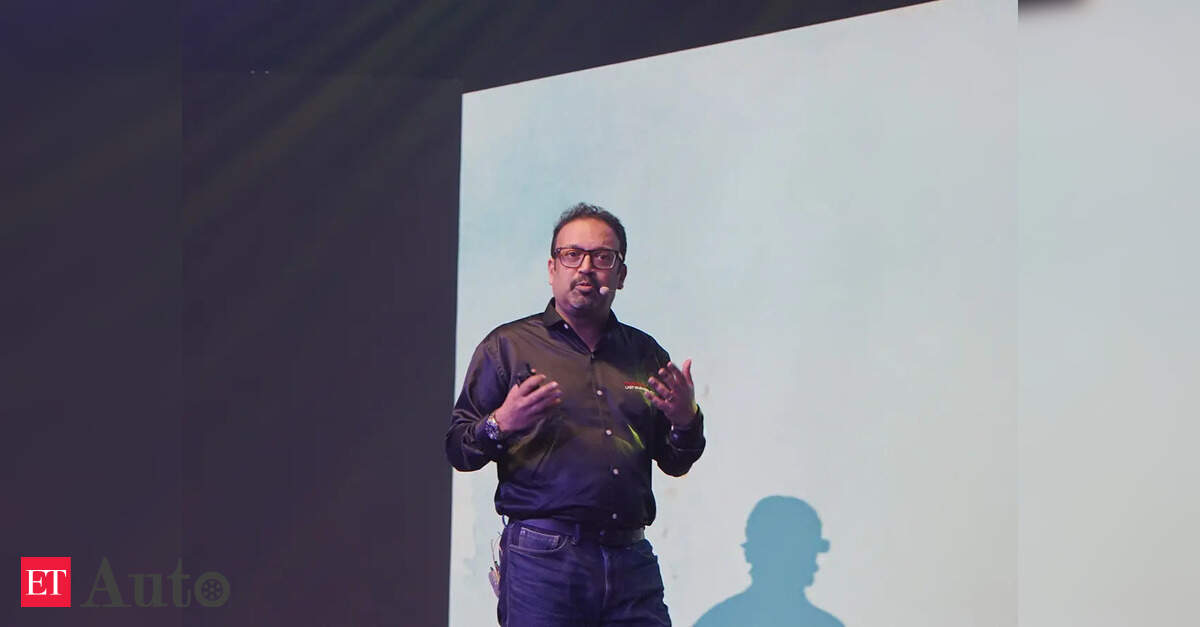

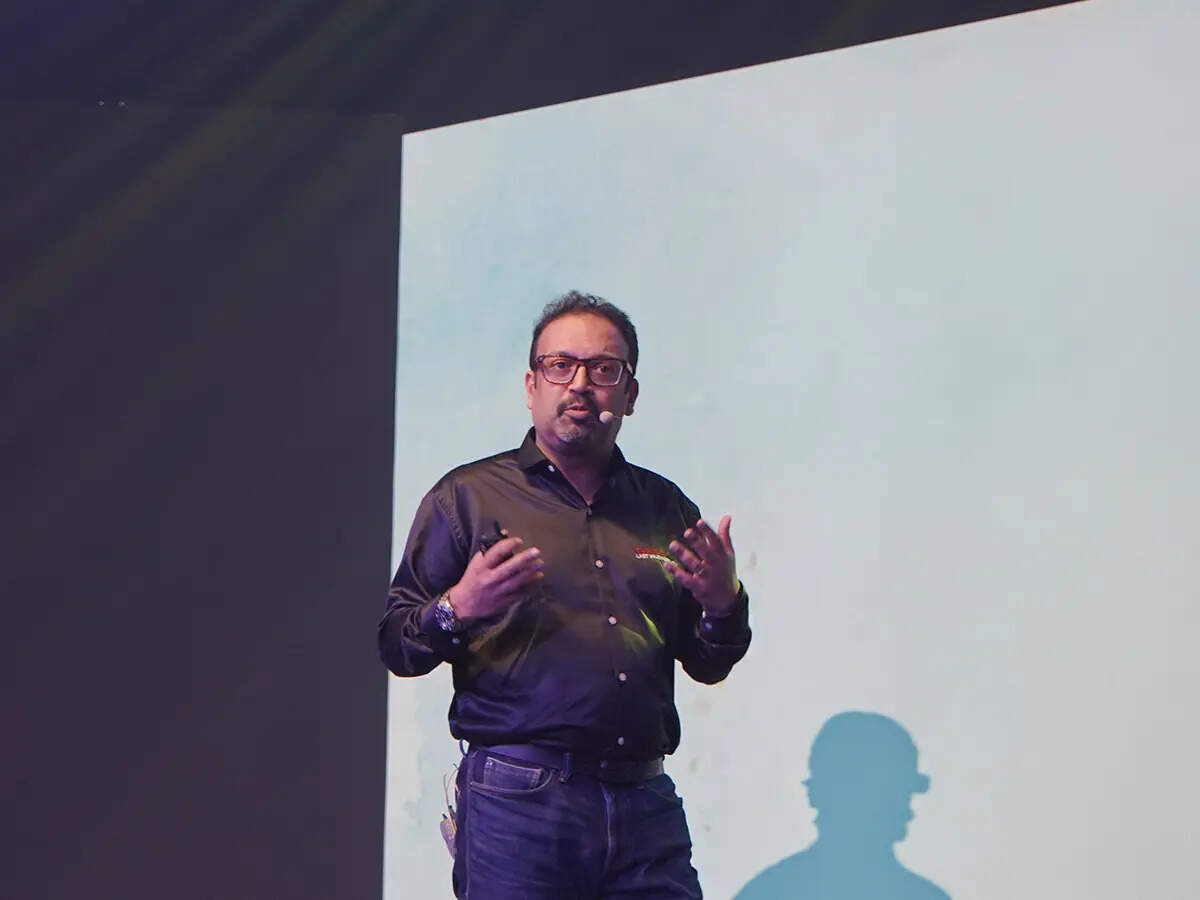
 Pratap Bose
New Delhi: With electric vehicle architectures opening up new possibilities in packaging, space utilisation and styling, Mahindra’s Chief Design Officer Pratap Bose, in an interview with ETAuto, said EVs are fundamentally rewriting how cars are designed, adding that India is no longer a conservative market and is increasingly ready to lead the shift with bold, global-standard products.
Excerpts:
How has passenger vehicle design evolved in India over the past few years?
There are at least two ways to look at it: size and body type. The sub-4-metre category has grown tremendously over the last 10 years. It is a unique category that doesn’t exist anywhere else in the world, except Japan’s K-car segment. In India, within the sub-4-metre bracket, we have innovated heavily in hatchbacks, sedans, SUVs, and even minivans. Many global players are surprised by how much variety exists in this size limitation. Another major evolution has been body type. SUVs have become the dominant segment in India, and this is true globally too. In India, SUVs range from around 3.6 metres to 5 metres. Also, the rise of all-electric architectures has opened up design possibilities, as EVs offer greater packaging flexibility.
Does EV adoption unlock more radical design experimentation?
Yes, because EV architecture changes everything. Removing the engine from the front frees up a lot of space. Batteries go on the floor, motors shift elsewhere, there’s no transmission tunnel, and you get a flat floor.
For the same footprint, EVs offer more cabin space. It’s pure physics. You can also create a frunk. This gives designers much more flexibility in proportions and form.
M&M is experimenting with coupe SUVs like BE6 and XUV9e. Does this show the market is ready for new body types?
Yes. It is a myth that India is a traditional market that won’t accept bold design. If the proposition is right, customers are willing to experiment.
For example, the BE6 and XUV9e have sold over 40,000 units combined in about a year. We’ve also seen interest from overseas markets, with people asking when these models will be launched internationally. If a product is balanced and stands out, adventurous design can definitely come from India.
Can Indian automotive design gain stronger global presence?
Yes, absolutely. Any sub-4-metre product that is designed and engineered to global standards has export potential. We are already exporting products like the XUV 3XO. It was originally planned as an India-only product but has found success overseas. There is also renewed interest globally in compact cars, even in Europe, where a new small-car classification may emerge. That could open opportunities for Indian automakers.
Europe has always had a strong tradition of small cars — the Mini, Fiat 500, and Renault models. Somewhere along the way, the market drifted towards bigger vehicles. But European cities are old and not built for large cars. With electrification and stricter emission rules, such as London’s Ultra-Low Emission Zone, smaller EVs can become more relevant again. I do foresee compact cars returning in Europe.
India will remain a small-car market for a long time because we are still at around 30 cars per 1,000 people compared to Europe’s 700 per 1,000.
How has the relationship between design and manufacturing changed today?
Earlier, it used to be siloed — design would finish work and pass it to engineering, engineering to manufacturing, and then manufacturing would say it can’t be made.
Today, the process is concurrent. Digital tools allow early sharing of 3D CAD models with internal teams and suppliers. This gives feedback within weeks of starting a project. We call this front-loading. In some cases, manufacturing evolves in response to design needs. For example, we introduced laser welding for roof joints in BE6 and 9E, improving both strength and visual cleanliness.
How is sustainability being integrated into vehicle design?
Sustainability is being incorporated right from the materials and manufacturing. For example, fabrics used in some interiors already contain around 50 per cent recycled PET bottle filaments, and we are moving towards 100 per cent.
In plastics, we aim to reduce the number of plastic types used to make recycling easier. Many interior plastics are not painted, making them easier to reuse and recycle.
Sustainability also includes manufacturing processes — water recycling, solar energy use, and planning end-of-life battery reuse through recycling systems.
With faster launches, has the design cycle also become shorter?
Yes. About 10 years ago, a car development programme typically took around 6 years. Over time, it has been reduced to 3–4 years. Today, we can launch a car in about 36 months. China can do it in around 24 months.
This acceleration is possible due to digitisation, reduced rework, and stable platform strategies. If a platform is established, multiple products can be developed faster.
Having said that, speed cannot come at the cost of safety and reliability. We still physically validate our cars extensively, often running them for over a million kilometres across harsh terrains. That is not something we want to compromise on.
What key design trends do you foresee in the next 3–5 years?
I believe the minivan body shape will re-emerge globally. SUVs replaced them, but some form of minivan will return in the next 3–5 years.
For interiors, voice recognition and gesture control will become far more prominent. As these systems improve, interiors could become cleaner and simpler, with fewer physical buttons and hardware.