
 The March 2026 wholesale projections hint that the PV sector is likely to close FY26 at around 4.65 to 4.70 million.
The Indian passenger vehicle (PV) industry is poised to register strong double-digit growth in the second half (H2) of FY26, fuelled by the GST 2.0 reforms, introduced in September last year, which resulted in a downward revision of the tax slabs for automobiles across segments.
According to SIAM data, PV sales grew from 1.8 million units to 2.1 million units (see table below), registering a healthy 14.71 per cent year-on-year growth between October 2025 and February 2026. With just two weeks left for the current financial year (FY26), the segment will likely close H2 FY26 in a similar growth range.
Industry analysts predict that wholesale figures for March 2026 will likely be around 440,000 to 450,000 units. Given that wholesale numbers in March 2025 were 381,358 units, this could push the overall H2 performance of passenger vehicles to an upward growth rate even exceeding 15 per cent.
| Month | 2025/2026 | 2024/2025 | YoY growth |
| October | 4,60,739 | 3,93,238 | 17.17% |
| November | 4,12,405 | 3,47,522 | 18.67% |
| December | 3,99,216 | 3,14,934 | 26.76% |
| January 2026 | 3,99,386 | 3,93,074 | 1.61% |
| February 2026 | 4,17,705 | 3,70,786 | 12.65% |
| March 2026 | 4,50,000 (est.) | 3,81,358 | 18.00% |
| Total | 25,39,451 | 22,00,912 | 15.38% |
The March 2026 wholesale projections also hint that the PV sector is likely to close FY26 at around 4.65 to 4.70 million cumulative units for the entire 12-month period beginning April 2025, thereby indicating approximately 8 per cent year-on-year growth, from 4.3 million registered in FY25.
The key driver of this growth has been the PV segment’s H2 performance, with the industry registering its best-ever fiscal performance in October 2025 (see table above) – the first full month after the GST 2.0 implementation – which also coincided with the peak festive season in the country.
“It is a tale of two cities: while the first half was flat, and the stock volume was large, growth rates increased significantly in the second half, and OEMs have been trying to increase production to meet the demand,” an industry analyst said.
“The government’s GST intervention was a very significant event fueling this growth,” the expert added.
Small cars get a new lease of life
The GST reduction boosted sales of sub-four-metre cars – small cars, compact sedans as well as compact SUVs – with a 10 percentage point drop in slab rates from 28 per cent to 18 per cent. This segment saw the largest tax cut, translating to price reductions in the range of ₹40,000 to ₹120,000, depending on the model. As a result, cars such as the Maruti Suzuki Alto, S-Presso, Swift, Baleno, and Hyundai Grand i10 registered notable growth rates in their H2 performance, as compared to H1 FY26. Industry data shows that sales of the entry-level Alto jumped over 48 per cent between H1 and the first five months of H2 FY26.
Similarly, the Grand i10 Nios and Maruti Suzuki Baleno recorded a 12 per cent and 17 per cent increase in volumes, respectively, while the Swift registered an uptick of 3 per cent between H1 and H2 so far. “Entry-level small cars regained momentum after prices dropped following GST-related reductions, encouraging more buyers,” said another industry analyst.
| Model | Oct’25-Feb’26 | Apr’25-Sep’25 | YoY growth |
| Alto, S-Presso | 60,145 | 40,405 | 48.85% |
| Swift | 86,680 | 84,124 | 3.04% |
| Grand i10 Nios | 27,294 | 24,424 | 11.75% |
| Baleno | 84,179 | 71,989 | 16.93% |
“After GST 2.0, we have seen a surge in small car volumes. While the overall market has also grown, the incremental growth rate of smaller cars has been double that of larger ones on a year-on-year basis after the GST change,” Ashim Sharma, Senior Partner and Business Unit Head, Nomura Research Institute, told ETAuto.
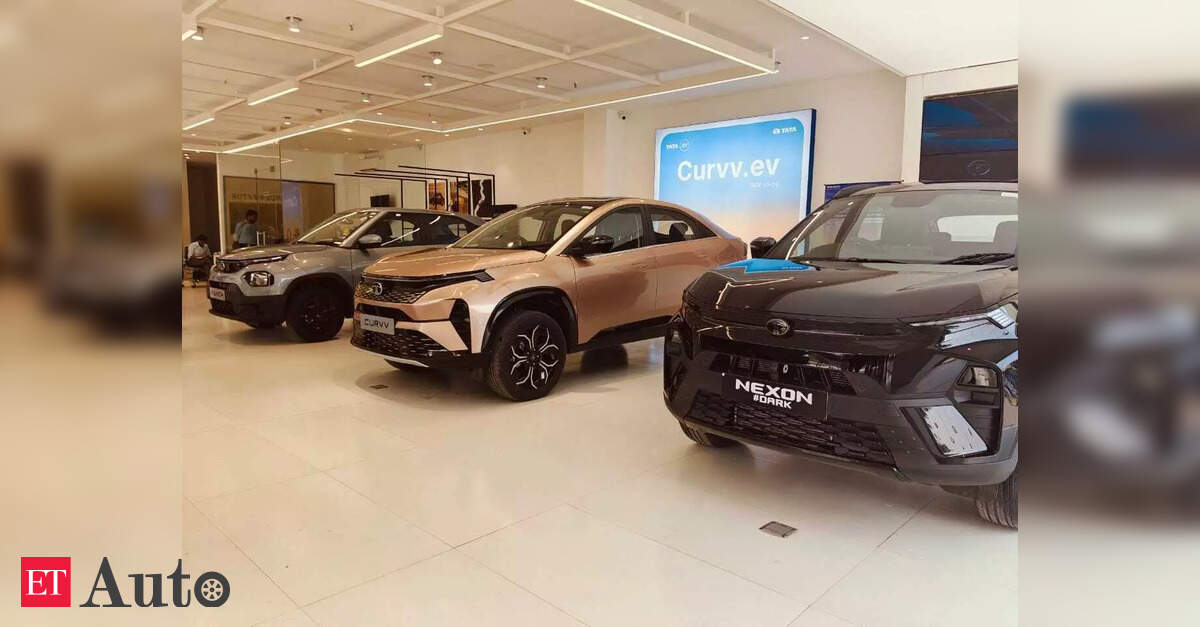
Coming to the sub-four-metre sedan and compact-SUV segments, the effect of the sizable GST reduction is clearly visible in the performance of models like the Maruti Suzuki Dzire, Hyundai Aura, Tata Nexon, and Kia Sonet. Industry data suggests that the Tata Nexon is on the verge of emerging as the top-selling compact SUV in FY26 with a notable growth of nearly 34 per cent. The Kia Sonet too will register an estimated 11 per cent growth by end-FY26.
However, despite the initial thrust, the hatchback and sedan segment will likely close at about 4 per cent growth by end-FY26, compared with the degrowth of 13 per cent witnessed by the segment in FY25.
Strong retail growth
The strong wholesale momentum in H2 FY26 has also translated into robust retail on ground, with the October 2025 to February 2026 timeframe reporting an over 36 per cent year-on-year growth. With a sustained demand, dealer inventory levels are approaching the optimal level of around 27 days, with the retail industry targeting an optimal 21-day inventory.
“Inventory has come down from nearly 85 days in H1 FY26 to about 27-29 days in the present scenario. As FADA, we always recommend 21 days as the optimum inventory level for dealers,” said CS Vigneshwar, President of the Federation of Automobile Dealers Associations of India.
| Month | 2025 / 2026 | 2024 / 2025 | YoY growth |
| October | 5,57,373 | 5,00,578 | 11.35% |
| November | 3,94,152 | 3,29,253 | 19.71% |
| December | 3,79,671 | 2,99,799 | 26.64% |
| January 2026 | 5,13,475 | 4,78,915 | 7.22% |
| February 2026 | 3,94,768 | 3,13,015 | 26.12% |
| Total | 22,39,439 | 16,39,846 | 36.46% |
While the industry has clearly regained a robust momentum in H2 FY26 with the government’s demand-side intervention in the form of the tax relief, the outbreak of West Asia conflict can overshadow the gains made by the industry in case the war gets prolonged.
“While the month of March has festive drivers in several parts of the country, the recent conflict in West Asia remains a concern regarding the supply chain, which could impact both manufacturing processes and exports. The industry will keep a close watch on evolving geopolitical developments,” said Rajesh Menon, Director General, SIAM.
Experts, however, believe that it is too early still for the war to cast any tangible impact on the on-ground demand. “While there is no immediate impact, markets crashing down and the fear of fuel prices going up — these are all uncertainties that will only create a negative sentiment in the market,” an industry analyst said.
Even as OEMs were scrambling to come to an optimal state to calibrate production and inventory in response to the GST intervention, the war broke out just as they were on the verge of achieving a steady-state situation, the expert further explained.
“That steady state will be postponed for some more months if the war continues,” he added.