

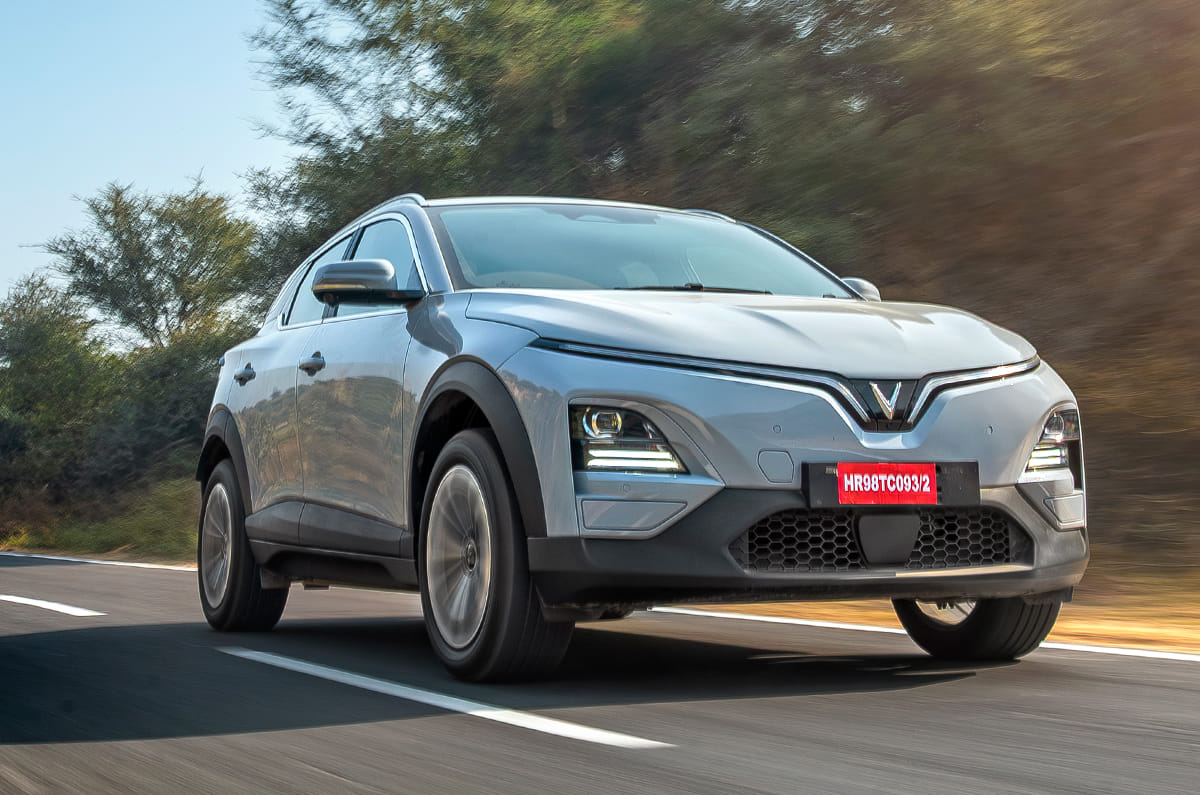
Our brief taste of the Vinfast VF6 on a smooth, straight test track in Vietnam back in June 2025 wasn’t enough to paint a complete picture. Though early impressions were good, many questions remained, and now we get to answer many of them as we review the made-in-India EV on Indian roads.
VF6 Exterior Design and Engineering –
Curvy design is more hatchback than SUV and makes it look smaller than it is.
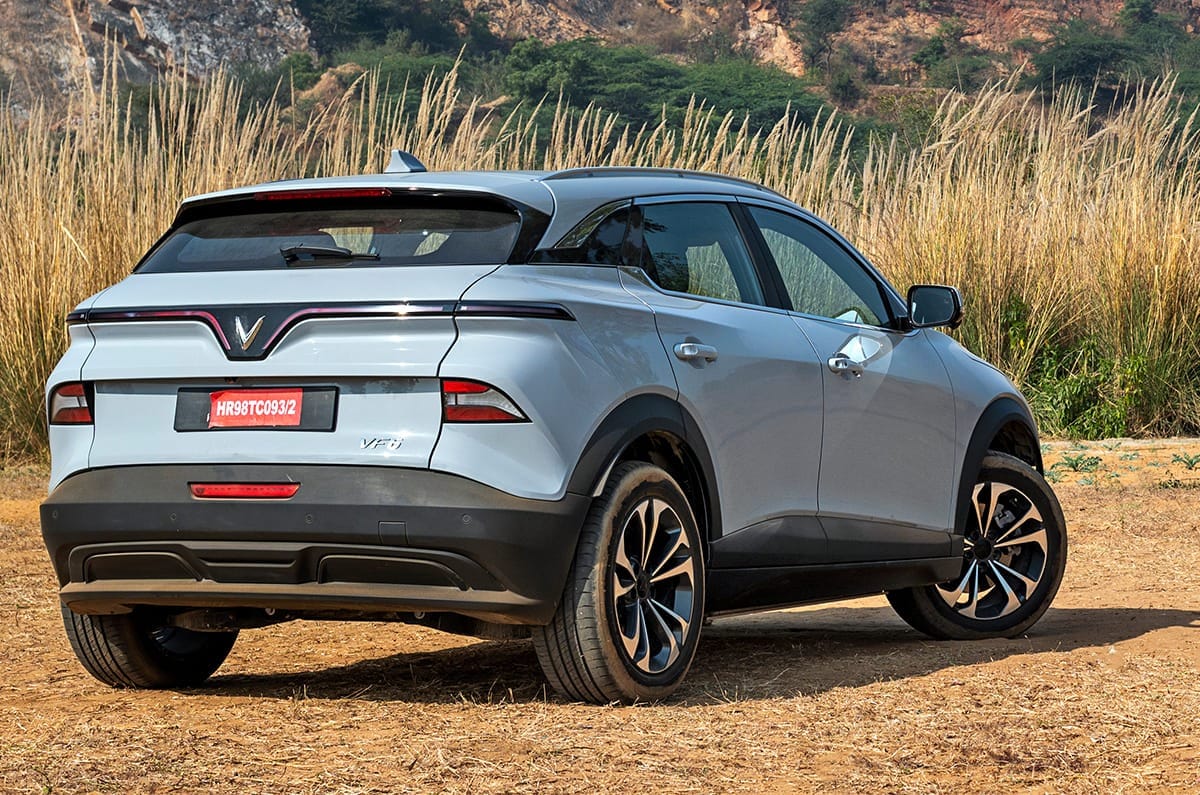
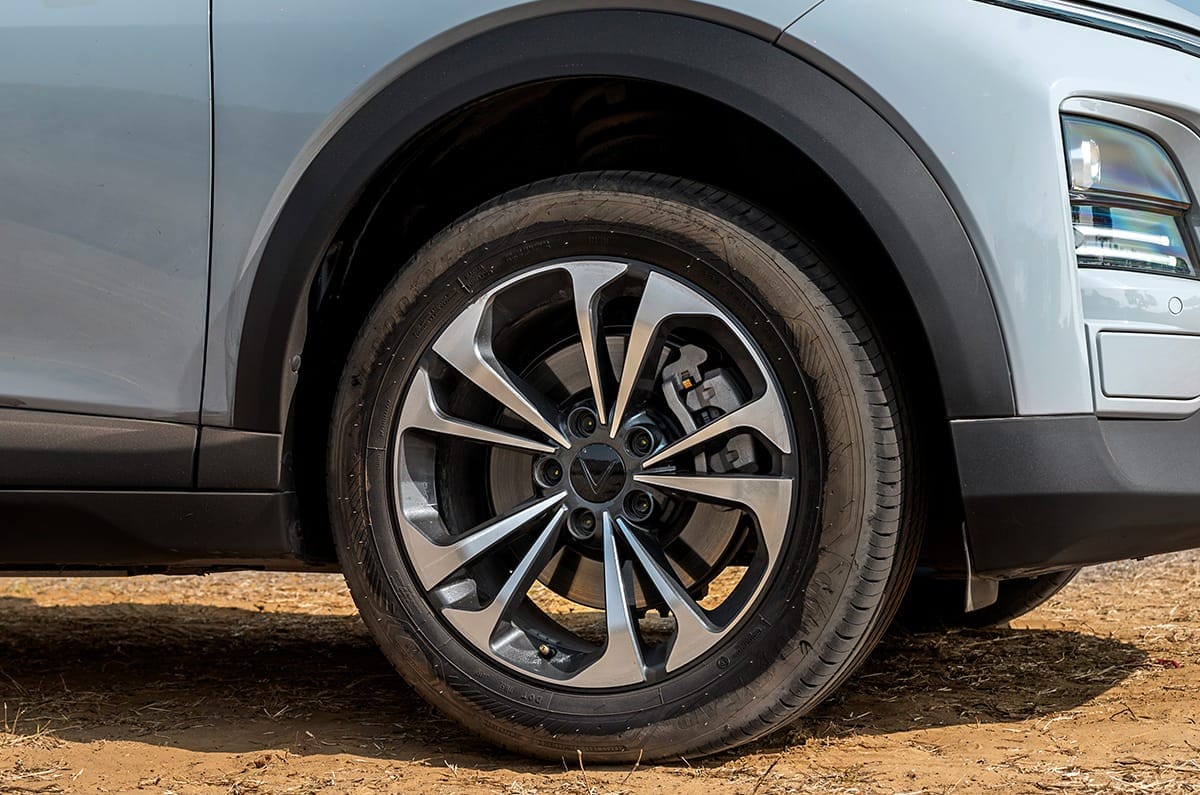
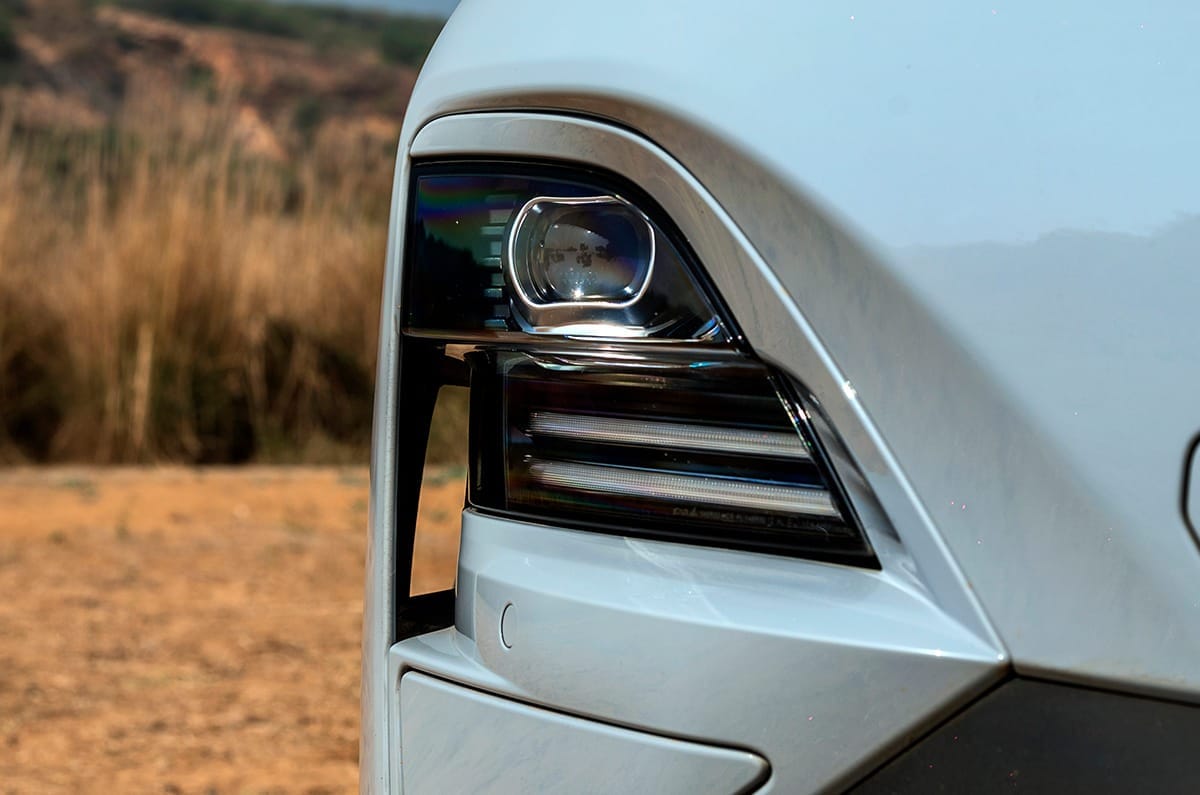
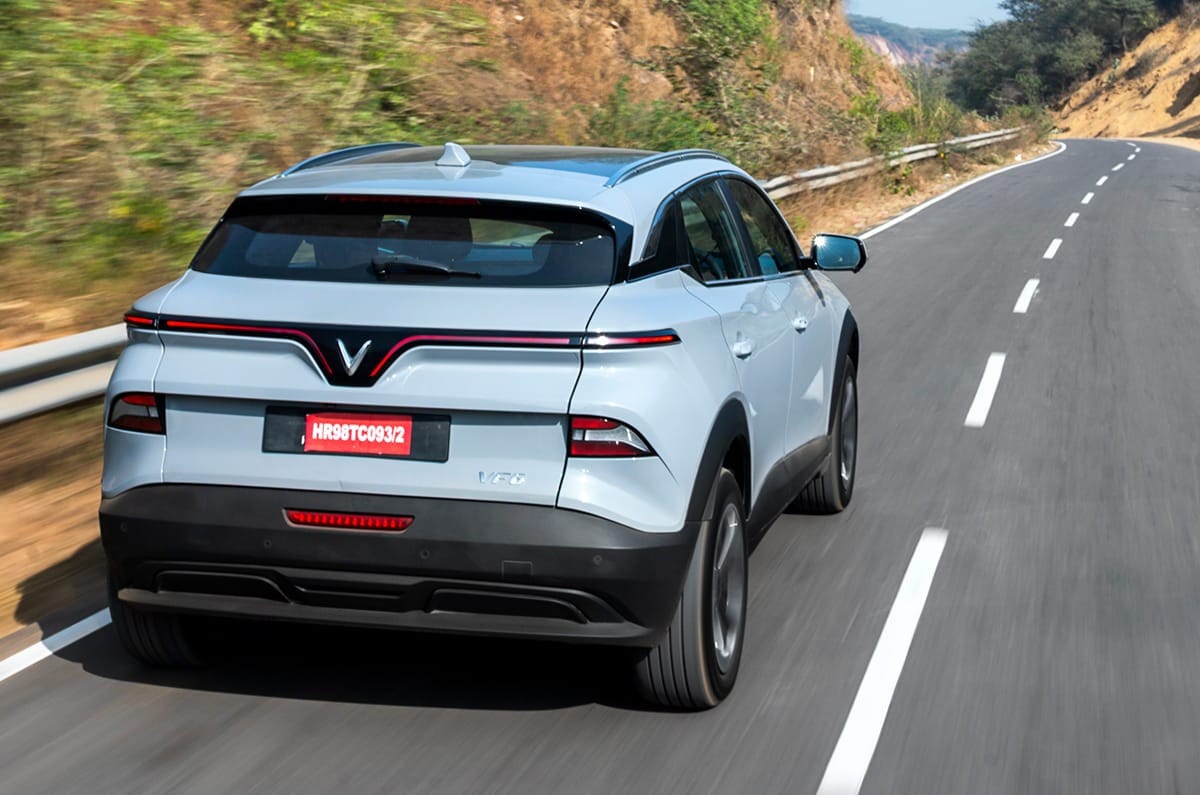
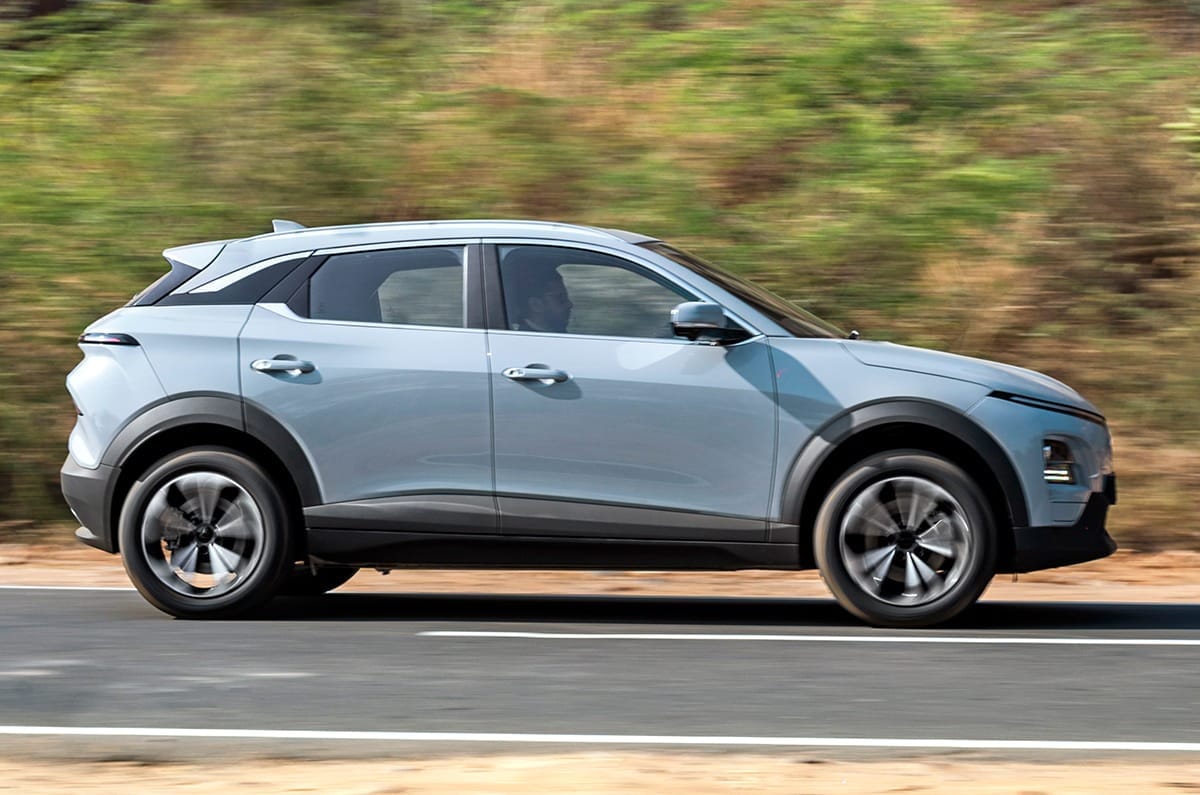
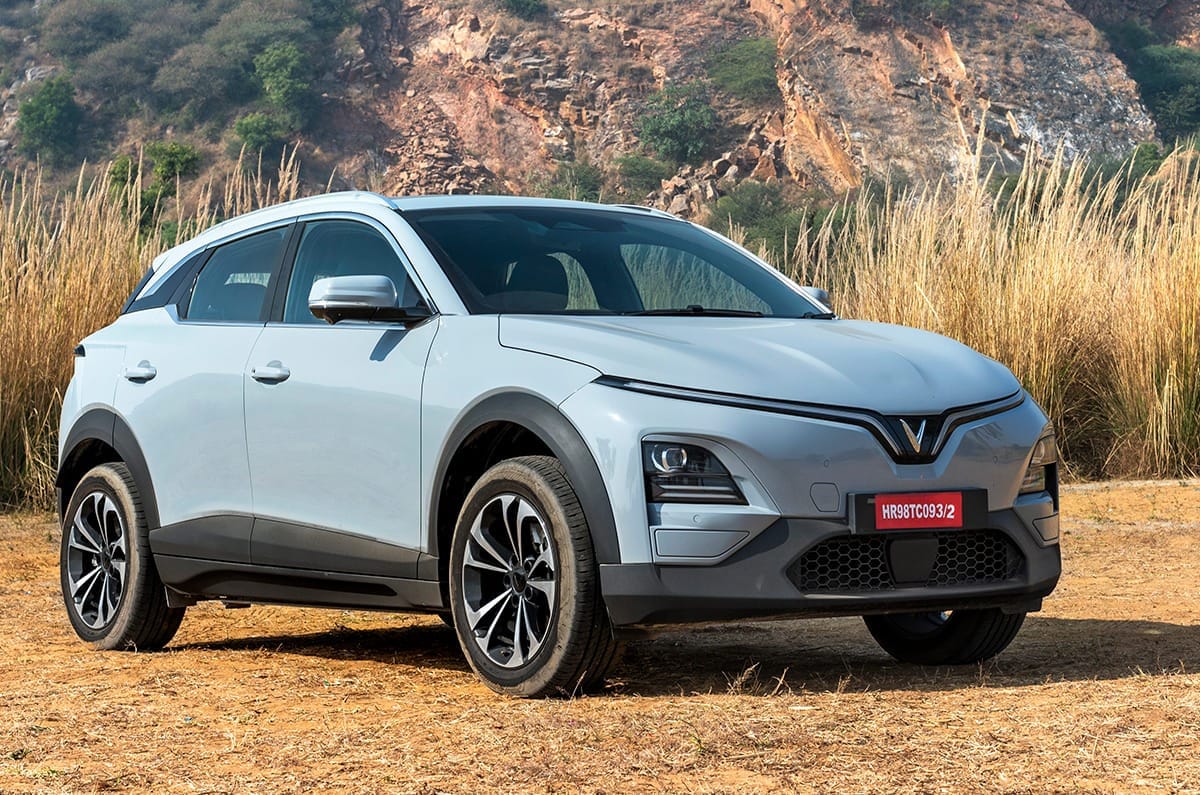
The design of Vinfast’s cars have gotten mixed reactions, but one thing that can’t be denied is that they’re distinctive and easily identifiable. The ‘V-Light’ LED signatures, front and rear, look like nothing else (apart from other Vinfasts) and there are some neat touches like air curtains in the front bumper. The machined 18-inch alloys on this top-spec Wind Infinity trim deliberately avoid the flat, aero-efficient look, and instead look surprisingly sporty. The black cladding, meanwhile, doesn’t look overdone, and is restricted to thin strips around the lower edges of the bodywork.
The bigger point of contention is the curvy shape of the VF6, which makes it look like a hatchback, and much smaller than its actual dimensions. At 4,241mm, it’s a bit longer than a Skoda Kushaq, but you wouldn’t guess by looking at it from afar. This is most apparent at the rear, where the rising beltline, floating roof, angular windscreen and ‘pinched’ tail section come together for a busy look. It may appear hatchback-like but it has a decidedly SUV-like 190mm of ground clearance, so you don’t have to worry about scraping the battery, which sits inside a generous 2,730mm wheelbase.
VF6 Interior Space and Comfort –
Well built but looks plain; rear seat and boot space aren’t generous.

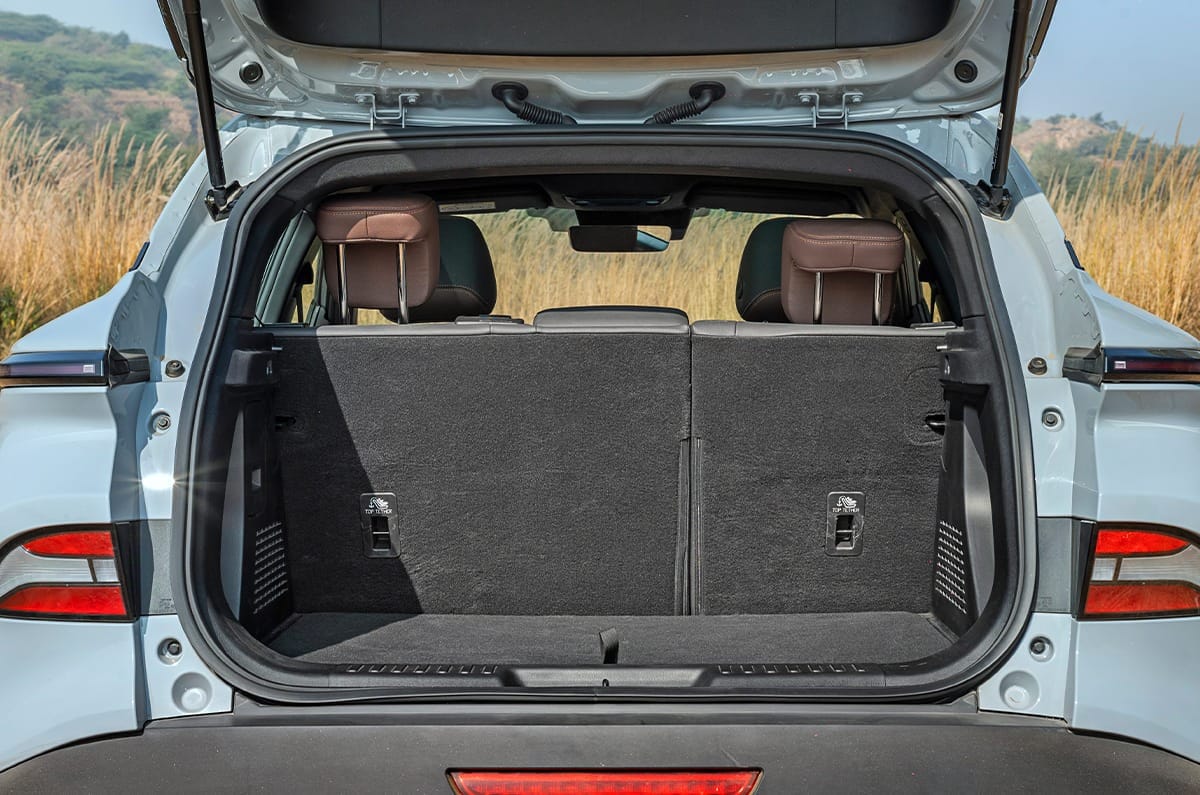
The long wheelbase means rear legroom is surprisingly good, but the high ground clearance means the battery pushes up into the cabin, resulting in a high floor. You sit knees up, the rising window line limits visibility, there are no rear sunshades and taller passengers will find headroom tight. What’s more, while the huge glass roof lets in a lot of light, it also heats up the cabin like a greenhouse. Seat cushioning is good, however, and the vegan leather upholstery feels suitably rich. The 423-litre boot looks good on paper, but feels smaller in practice, and there’s no front storage, and no spare tyre either.

News is better up front, where space – and the sense thereof – are good. The low dash, devoid of an instrument panel, gives a great view forward and the powered driver’s seat has good adjustability, though cushioning is a tad firm. To prevent the minimalist dashboard from looking too sparse, Vinfast has done well to use chocolate brown leatherette trim on the dash (contrast stitched in orange) and a champagne gold trim piece that runs the width as well.
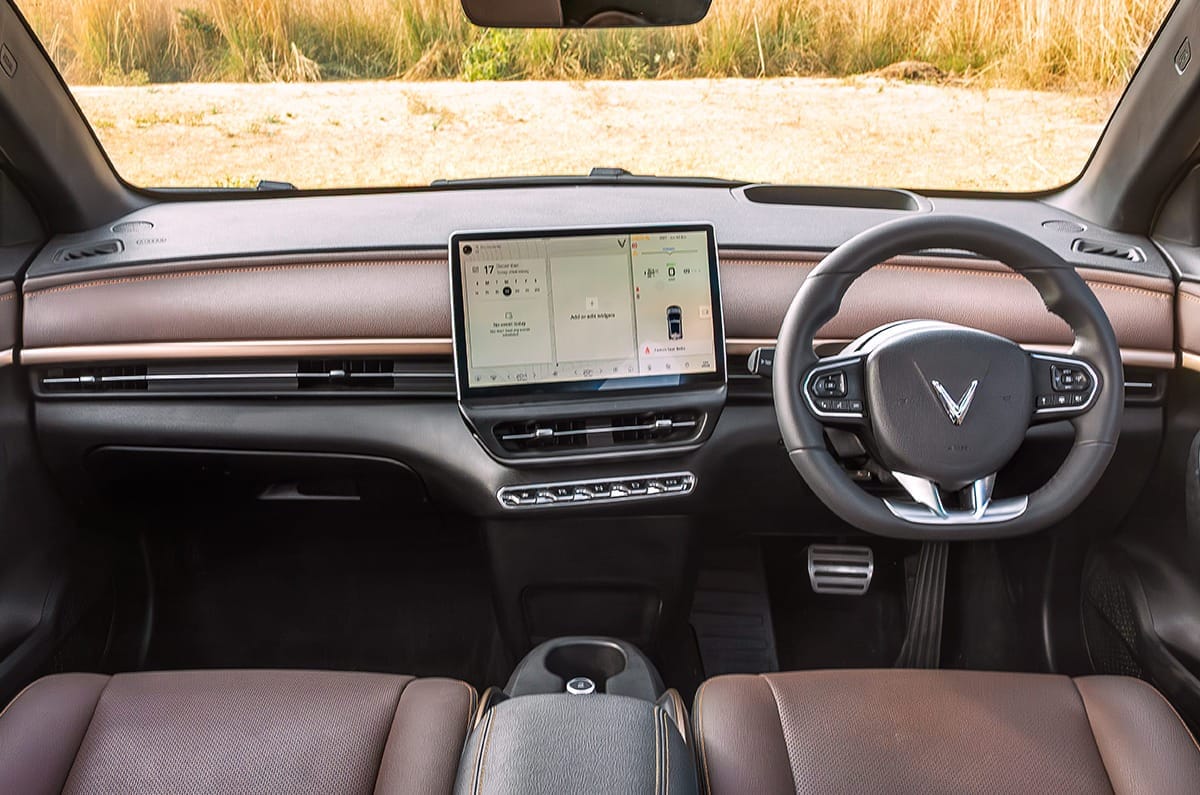
Though it doesn’t look flashy in the slightest, poke around and you’ll notice material quality is exceptional, with many components – door handles, stalks, window switches and more – borrowed from last-gen BMWs; Vinfast had a technical partnership with the German brand. Storage is decent, with one-litre bottle holders in each door, a cubbyhole under the central armrest, and a netted pocket under the dash. Some might not like the minimalist design approach, though, as while it frees up space, it hurts functionality.
VF6 Features and Safety –
Gets most of the features you’d expect and is loaded with safety kit.

With virtually all vehicular functions relegated to the 12.9-inch touchscreen, it shouldn’t have been angled so sharply towards the driver, as it makes viewing and access tricky for the front passenger. It should also have been a better screen, with greater brightness, larger hit boxes, better responsiveness and slicker animations. That said, it is logically laid out, with most functions where you’d expect them to be, and you do get hard controls for media volume, hazard lights and door locks. There are also buttons to select the drive state; toggle switches arranged under the screen, which feel plasticky and call for a firm prod.

The features list on the Wind trim includes wireless Apple Carplay and Android Auto, an 8-speaker audio system, electronic parking brake, a crisp-looking 360-degree camera array, an informative driver HUD, dual-zone climate control, a PM1.0 filter, auto headlamps and wipers, ventilated front seats, a powered driver’s seat, to name some. Interestingly, if you don’t want the aforementioned ‘Infinity’ glass roof, you can have the top VF6 Wind trim without it and save Rs 50,000 in the process. And oddly, while there are two USB ports up front and two at the rear, they’re all the older Type-A variety.

Safety kit is generous, with seven airbags as standard, including a driver knee airbag, ADAS with Level 2 autonomy, front and rear parking sensors, ISOFIX mounts and driver attention monitoring. Vinfast says it is targeting a 5-star Bharat NCAP crash test rating with both this and the VF7.
VF6 Mileage / Range and Efficiency –
Mediocre official range numbers; real-world use reveals slow SOC depletion.
The VF6 gets a sole 59.6kWh battery option, with a single, front-mounted motor in two power outputs options – 177hp and 204hp. The former has an official MIDC range rating of 468km, while the latter is rated at 463km, which are not great numbers given the battery capacity. This could have something to do with the weight, which at 1,962kg for the lower-powered version and a portly 2,028kg for the more powerful one, is a lot for an EV of this size.
While we didn’t do a comprehensive real-world test, in our mixed-condition driving over a day of shooting, we found the displayed SOC being chipped away quite sparingly, so perhaps its real-world range will come closer to its MIDC rating than others in the segment. The VF6 can be charged at speeds of up to 7.2kW on an AC plug, or 100kW on a DC fast charger.
VF6 Performance and Refinement –
Strong performance that can overwhelm the front wheels; noticeable road noise.

Vinfast hasn’t skimped on performance for the VF6, and with 204hp and 310Nm from its single motor, it’s only behind the Mahindra BE6 on power in this segment. The key difference is that the Vinfast’s motor is mounted on the front axle, so deploying full performance can overwhelm the front wheels. Floor it in Sport mode, even while already in motion and with the ESC switched on, and it will wheelspin wildly, with torque steer pulling the car to one side. Despite all this, we managed to clock a solid 8.07sec 0-100kph sprint, while rolling acceleration is quicker still.
To counter the unruliness, Vinfast seems to have built in a ‘dead zone’ in the power delivery, wherein light throttle travel elicits almost no movement at all, but it only makes the subsequent sudden burst of power feel more jarring. Better power delivery calibration is warranted, and hopefully is something that can be administered via an OTA update. Until then, move to a more docile mode and be more judicious with the accelerator, and you will soon learn to drive the VF6 smoothly.
It’s a pleasant, if characterless experience, with acceleration feeling slightly wooden and unsophisticated compared to some newer electric powertrains. While there is a noticeable step up between Normal and Sport, Eco mode doesn’t feel too dissimilar from Normal. There’s even less distinction between the four regen levels, with all of them feeling rather light, and it’s annoying while on the move to have to adjust this from the touchscreen.
VF6 Ride Comfort and Handling –
Feels solid and confident at high speeds and in corners; firm through bumps.
Though Vinfast says the VF6 and VF7 ride on a new born-electric platform, the way it rides and handles suggest there’s a bit of BMW in here too. It feels solid like, cliched as this may sound, a premium European car, and gripping the small-diameter steering wheel imbues the driver with a sense of confidence at all speeds. The steering feels light enough at low speeds, and only gets better as you go faster, with excellent weight and consistent rotation.
Body movements are well controlled, with very little pitch and heave under acceleration and braking, and not a lot of body roll – very European. The downside is a stiff-kneed feeling over uneven surfaces and through bumps at lower speeds, which will move you from side-to-side in your seat. The solution is simple – speed up! For as you go faster, the ride quality improves dramatically, and the VF6 has excellent road holding at highway speeds.
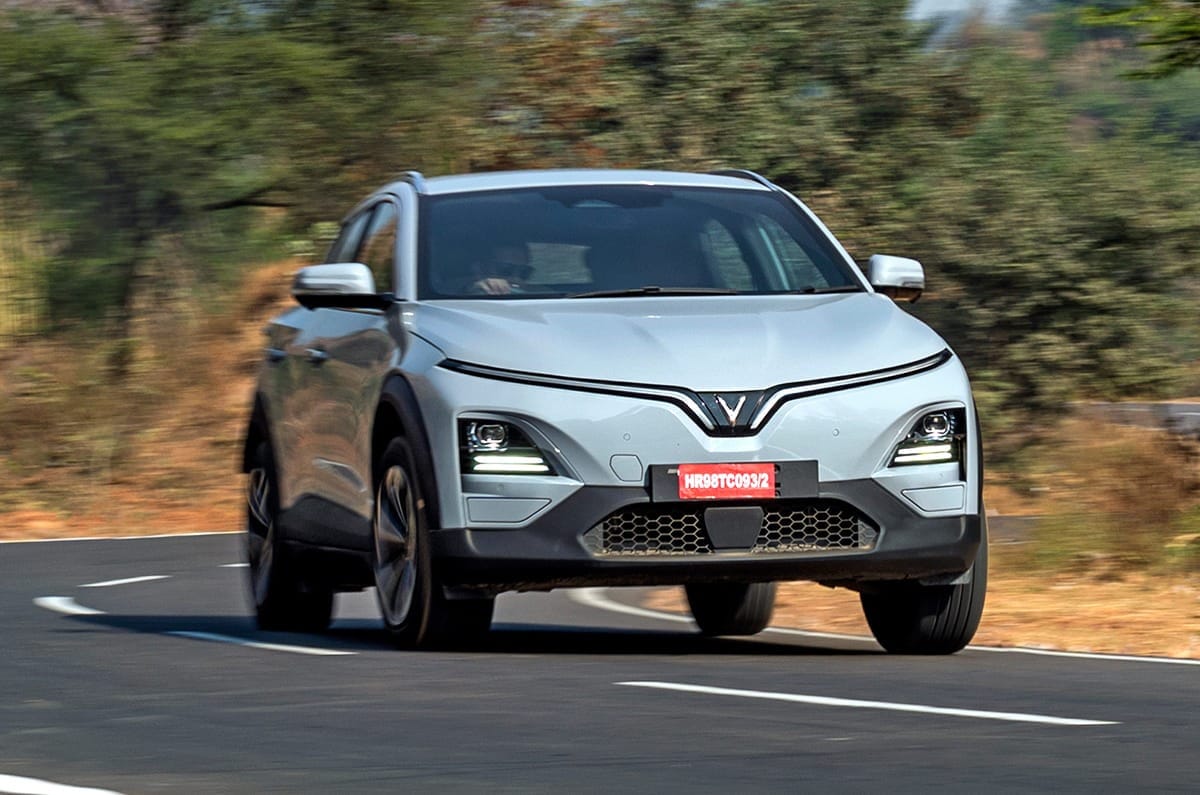
The experience is marred somewhat by road noise, which starts to creep in as you go past 50kph, but it’s not enough to be a deal breaker, and there are others that do it worse. All in all, the suspension does a good job, and gives a feeling of robust engineering.
VF6 Value for Money –
Some hits, some misses, but undoubtedly exceptional value for money.
This is something quite different in the current EV space, because while we’ve gotten used to them being jacks of all trades and masters of few, with the VF6 there are things it absolutely excels at and others it gets quite noticeably wrong. If nothing else, that gives it character, something often lacking in EVs, and things balance out in the end.
It’s certainly a left-field choice; its look alone will tell you that, but for those willing to dig deeper, there’s a lot to like. It feels robustly built, it rides and handles well, its performance is strong – if a little unwieldy, and there are plenty of features to keep up with the Joneses. The execution of some of these features needs improvement and the rear seat feels cramped, but those aside, there’s little to fault here.
If you’ve made it onto the fence, and are considering the Vinfast VF6, what might seal the deal for you is its price. At Rs 16.49 lakh to Rs 18.29 lakh (ex-showroom), it spells excellent value in this segment and is considerably more affordable than other EVs of this size. Moreover, you get a 7-year/1,60,000km warranty on the car and a 10-year/2,00,000km warranty on the battery, which will give some peace of mind. Combine this with specifications that are close to segment best, and this Vietnamese upstart EV certainly becomes hard to ignore.