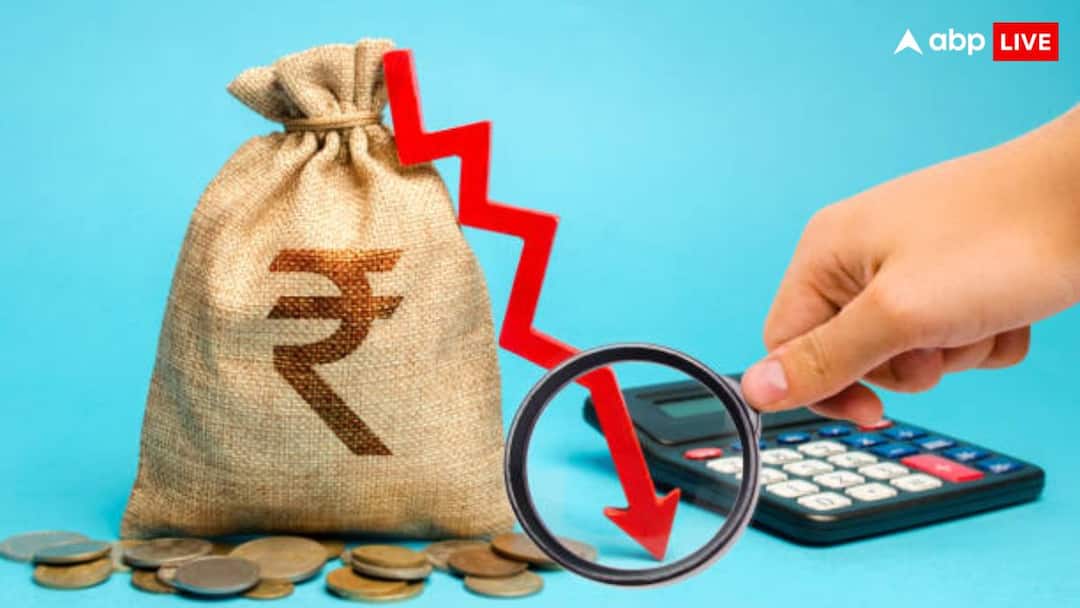

- India’s rupee faces pressure from rising oil prices and global uncertainty.
- RBI considers rate hikes, swaps, and attracting foreign investment.
- Policymakers recall 2013 taper tantrum strategies for currency stabilization.
With the rupee slipping to record lows and global uncertainty intensifying, India’s policymakers are once again looking back at one of the country’s most turbulent currency episodes, the 2013 taper tantrum.
The sharp fall in the rupee, which touched nearly 97 against the US dollar this week, has raised concerns over rising import costs, investor confidence, and the broader stability of capital flows into the Indian economy.
Now, economists and market participants believe the Reserve Bank of India (RBI) may need to dust off parts of its old crisis-management toolkit.
Why the Rupee Is Under Pressure
The current pressure on the rupee comes amid a combination of global and domestic challenges.
Elevated crude oil prices linked to the ongoing West Asia conflict have widened concerns around India’s import bill and current account deficit. At the same time, global investors have increasingly shifted money towards the US dollar and safer assets as risk aversion grows.
The result has been sustained pressure on emerging market currencies, with the rupee among the worst affected in recent weeks.
The currency’s slide has also made imports more expensive, particularly for energy-dependent sectors, while adding to inflation concerns.
Also Read : Melody Mania Hits Dalal Street: Wrong Parle Stock Keeps Hitting Upper Circuit
RBI May Turn to Familiar Crisis Tools
According to a Bloomberg report, the RBI under Governor Sanjay Malhotra is considering a range of measures to stabilise the rupee.
These reportedly include possible interest rate hikes, additional currency swaps and steps aimed at attracting more dollars from overseas investors.
The central bank’s immediate focus is to prevent further depreciation and avoid a self-reinforcing cycle of panic in currency markets.
“It’s important to avoid a self-fulfilling spiral, where a weaker rupee encourages more hedging, which puts more pressure on the currency and encourages even more hedging,” said Sajjid Chinoy, India economist at JPMorgan Chase Bank.
“Capital augmentation is needed to break the cycle and, if done, it should be done in scale to alter expectations in the FX market,” Chinoy added.
Flashback to 2013: The Taper Tantrum Crisis
The comparisons with 2013 are becoming increasingly difficult to ignore.
That year, the US Federal Reserve signalled plans to taper its quantitative easing programme, triggering heavy capital outflows from emerging markets.
The rupee weakened sharply from around 55 against the dollar in May 2013 to nearly 69 by August.
At the time, the RBI, then led by Governor D. Subbarao, responded by tightening liquidity and raising the marginal standing facility (MSF) rate by 200 basis points.
The measures slowed the rupee’s slide temporarily, but the currency remained under pressure until incoming Governor Raghuram Rajan unveiled a foreign-currency non-resident deposit programme in September 2013.
That initiative eventually mobilised more than $30 billion.
Also read : UP Govt Announces 2% DA Hike, 16 Lakh Employees And Pensioners To Benefit
Could India Repeat the Same Strategy?
Economists believe some version of that approach could now return.
One possible option being discussed is encouraging banks to raise dollars through overseas bonds or deposit schemes.
India itself has never issued sovereign foreign-currency debt, but the State Bank of India had previously raised billions through overseas bond issuances after US sanctions imposed following India’s nuclear tests in 1998.
However, analysts caution that global financial conditions today are very different from 2013, reported Reuters.
Interest rates across the world are significantly higher, which means attracting overseas deposits could become much more expensive.
Banks Seek Support From RBI
Bankers have reportedly sought subsidised swap rates from the RBI to make overseas deposit schemes more viable.
People familiar with discussions told Bloomberg that such support could help offset the higher cost of raising foreign currency.
The Debate Around Rate Hikes
While some economists believe interest rate hikes could help support the rupee and slow capital outflows, others remain sceptical.
“A combination of measures, such as limiting import demand and incentivising dollar raising via tools including rate hikes, can help break the negative feedback loop between currency market expectations and the pace of rupee depreciation,” said Anubhuti Sahay, economist at Standard Chartered Plc.
However, not everyone agrees.
“It did not work in 2013; it will not work now,” Arora said, warning that higher interest rates could hurt growth without meaningfully stabilising the currency.
Beyond short-term measures, economists say the larger challenge lies in attracting durable foreign capital.
Foreign investors have already sold Indian equities aggressively this year, with portfolio outflows in 2026 reportedly surpassing last year’s record $19 billion.
That has added pressure not just on the rupee, but also on domestic financial markets.
According to analysts, preventing a prolonged weakening in capital flows will ultimately require deeper structural reforms and stronger investor confidence.