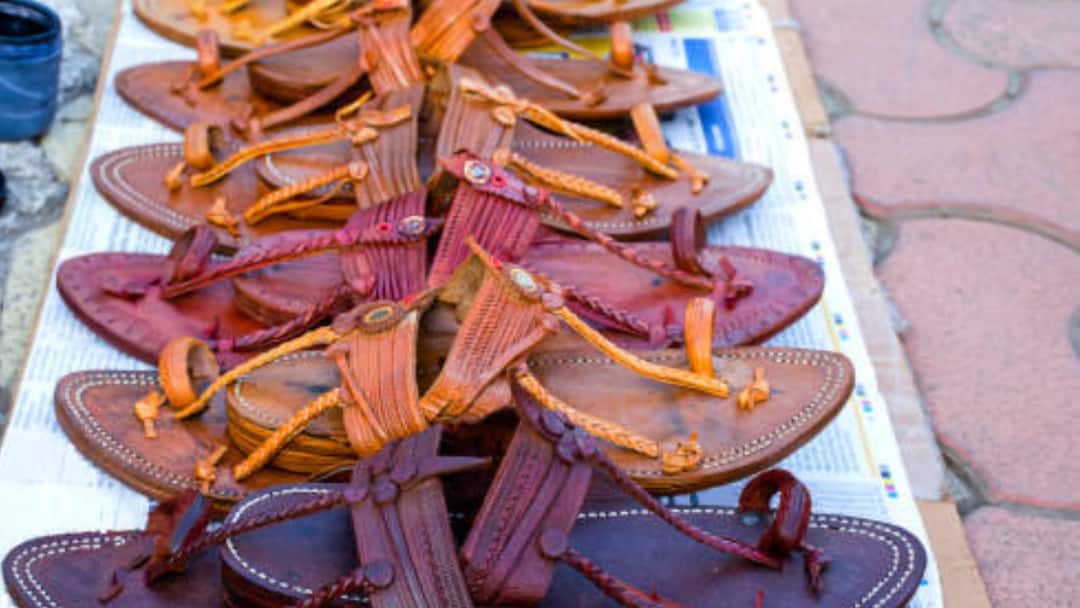

Prada is set to launch a limited-edition collection of traditional Indian footwear after facing a cultural appropriation backlash earlier this year. Each pair will be priced at around ₹83,000 (USD 930), Prada senior executive Lorenzo Bertelli told Reuters, marking a striking shift from controversy to collaboration with local artisans.
The Italian luxury group will manufacture 2,000 pairs of Kolhapuri-style sandals in regions including Kolhapur, Sangli, Satara and Solapur in Maharashtra, and Belagavi, Bagalkot, Dharwad and Bijapur in Karnataka. The initiative is part of a deal with two state-backed bodies and aims to blend Indian craftsmanship with Italian technology and design techniques.
“We’ll mix the original manufacturer’s standard capabilities with our manufacturing techniques,” said Bertelli, Prada’s chief marketing officer and head of corporate social responsibility.
The move follows intense criticism six months ago, when Prada showcased sandals resembling Kolhapuri chappals, a 12th-century Indian design, during a Milan show. Images went viral, prompting outrage from artisans and political leaders. Prada later acknowledged its design drew from ancient Indian styles and began discussions with artisan groups.
The company has since signed agreements with the Sant Rohidas Leather Industries and Charmakar Development Corporation (LIDCOM) and the Dr Babu Jagjivan Ram Leather Industries Development Corporation (LIDKAR), both of which promote India’s leather heritage. “We want to be a multiplier of awareness for these chappals,” Bertelli said.
Artisans Hope Collaboration Will Boost Incomes
The three-year partnership will fund training programmes in India and short-term placements at Prada’s Academy in Italy. Kolhapuris, which originate in Maharashtra and Karnataka, are traditionally handcrafted by marginalised communities and are increasingly threatened by cheap imitations and declining interest among younger generations.
Prerna Deshbhratar, managing director of LIDCOM, said Prada’s endorsement could deliver a much-needed economic boost. “Once Prada endorses this craft as a luxury product, definitely the domino effect will work and result in increasing demand for the craft,” she said.
Bertelli noted the collaboration and training programme will cost “several million euros” and stressed that artisans would receive fair remuneration.
Luxury Market Set to Hit $30 Billion by 2030
Despite the footwear partnership, Prada does not plan to open new retail clothing outlets or factories in India next year. The brand opened its first beauty store in Delhi earlier this year, but Bertelli said further expansion may take three to five years.
“We have not planned yet any store openings in India, but it’s something that we are strongly taking into consideration,” he said, calling India “the real potential new market.”
India’s luxury market was valued at around $7 billion in 2024 and is projected to surge to $30 billion by 2030 as rising incomes and rapid economic growth fuel demand, according to Deloitte. However, it remains significantly smaller than China’s, which generated an estimated 350 billion yuan ($49.56 billion) in 2024.
Most global luxury brands have entered India via partnerships with corporate giants such as Reliance and the Aditya Birla Group, but Bertelli said Prada prefers to enter independently, even if it takes longer.
The collaboration, he added, reflects both a commitment to cultural respect and a long-term belief in India’s luxury potential.