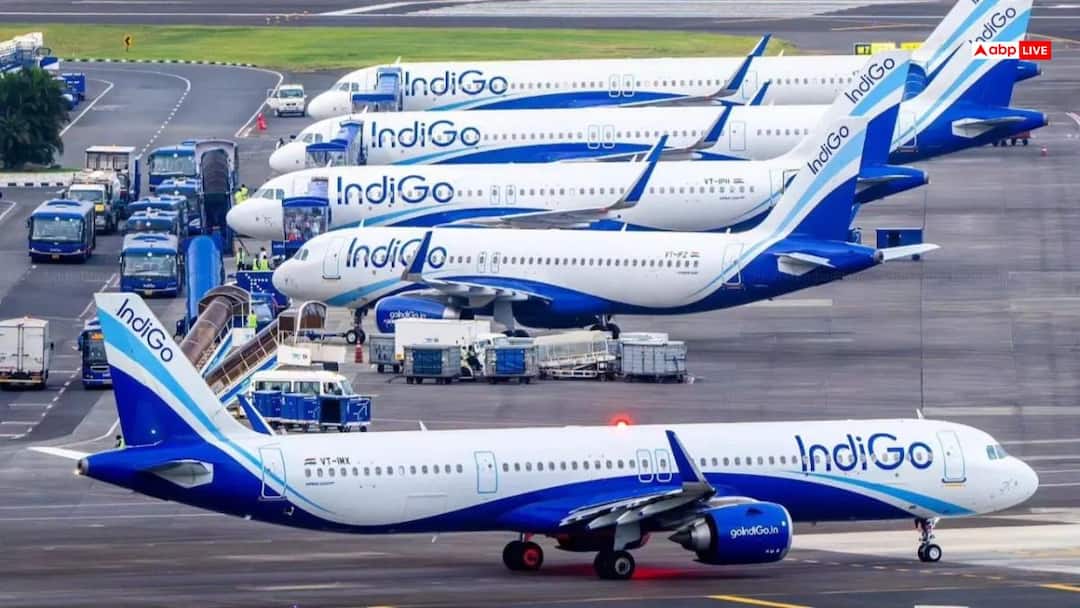

IndiGo faced a turbulent Saturday as the airline cancelled more than 400 flights across major airports, a day after temporarily securing significant relaxations in the second phase of new pilot flight duty and rest period regulations. Passengers were stranded at the airports, waiting in long queues due to the widespread cancellations as the airline struggled to stabilise operations following recent disruptions.
Bengaluru airport was the worst-hit, with 124 cancelled flights, including 63 departures and 61 arrivals. Mumbai airport witnessed 109 cancellations (51 departures and 58 arrivals), while Delhi airport saw 106 flights cancelled, including 54 departures and 52 arrivals.
Hyderabad’s airport recorded 69 cancellations (26 arrivals, 43 departures). Thiruvananthapuram airport cancelled six flights, including three domestic arrivals and three domestic departures. In Ahmedabad, 19 flights were cancelled (seven arrivals and 12 departures).
Pune airport recorded 42 cancellations, including 14 arrivals and 28 departures. Earlier today, Dehradun Airport issued an advisory saying that limited IndiGo flights were under operation and advised passengers to verify flight status before travel.
| Airport | Total Cancellations | Arrivals | Departures |
| Delhi Airport | 106 | 52 | 54 |
| Bengaluru Airport | 124 | 61 | 63 |
| Mumbai Airport | 109 | 58 | 51 |
| Chennai | 48 | – | – |
| Ahmedabad | 19 | 7 | 12 |
| Hyderabad | 69 | 26 | 43 |
| Thiruvananthapuram | 6 | 3 | 3 |
| Pune | 42 | 14 | 28 |
This unrest follows Friday’s massive disruption when IndiGo cancelled over 1,000 flights nationwide. After three days of silence, CEO Pieter Elbers issued a video apology acknowledging the significant inconvenience caused to passengers. He also projected a reduction in cancellations for Saturday, anticipating fewer than 1,000 affected flights.
India’s aviation regulator, the Directorate General of Civil Aviation (DGCA), granted IndiGo temporary relief by rolling back the night duty definition from 12 am–6 am to 12 am–5 am, and increasing allowed night landings from two to six. These changes aimed to ease the airline’s pilot staffing issues.
However, the Airlines’ Pilots Association (ALPA) India strongly criticised the DGCA’s selective relaxations. Calling the move “selective and unsafe,” ALPA said the exemptions not only disrupted regulatory fairness but also “placed millions of passengers at heightened risk.”
Following a meeting with the Ministry of Civil Aviation and multiple pilot associations on December 5, the ministry declared a temporary suspension of the revised Flight Duty Time Limitations (FDTL) rules.
ALPA India sharply condemned this decision, stating, “This step directly contradicts the Court’s directions, which mandate the enforcement of fatigue-mitigation standards rooted in aviation science.” The association warned that postponing FDTL implementation compromises judicial authority and increases safety risks for both crew and travelers.
“We urge the Ministry and the regulator to uphold the Court’s order in both letter and spirit and to prioritise the safety of the pilots and travelling public above all commercial considerations,” ALPA India emphasised.
IndiGo was the first airline to push back against the new FDTL norms introduced in January 2024 with plans for implementation by March. The carrier argued that additional crew resources were needed to meet the requirements. Other airlines, including Tata Group’s Air India, initially opposed the norms but eventually adopted them following directions from the Delhi High Court.
The FDTL rules, designed to enhance pilot rest and reduce fatigue, include extended weekly rest periods to 48 hours, narrower windows for night flights, and a reduction in permitted night landings from six to two. The phased rollout began in July, with the second phase taking effect November 1. Originally slated for March 2024, the implementation faced delays amid industry pushback.
As IndiGo navigates these regulatory hurdles and staffing challenges, passengers continue to experience widespread disruptions across major airports, highlighting ongoing tensions between operational feasibility and aviation safety.