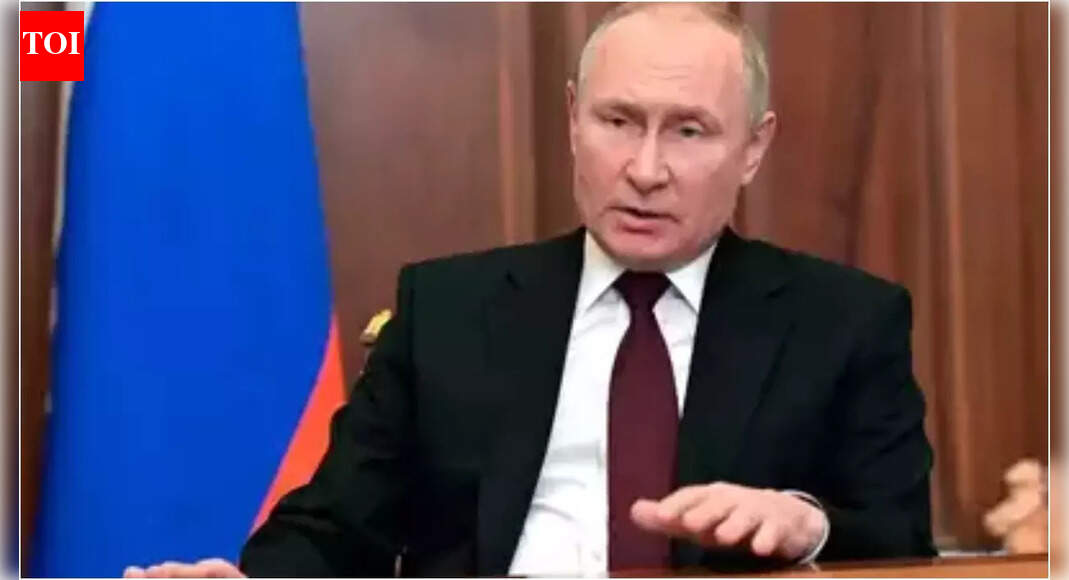

Russian President Vladimir Putin had authorised the Novichok nerve agent attack on Russian double agent Sergei Skripal in Salisbury in March 2018, in a “reckless” display of power that led to the death of an innocent woman, according to the UK public inquiry. About four months later, mother-of-three Dawn Sturgess, 44, died from exposure to the poison after her partner found a counterfeit perfume bottle containing Novichok, which Russian spies had used to smuggle the military-grade nerve agent into the country, the inquiry said.
Skripal and his daughter Yulia were found slumped unconscious on a public bench in the southern English city of Salisbury after Novichok was applied to the front door handle of his nearby home. The Skripals, and a police officer who attended the house, were left critically ill but recovered.
Inquiry findings
In his conclusions, the chair, former UK Supreme Court judge Anthony Hughes, said he was certain a team of GRU military intelligence officers had attempted to murder Skripal, who sold Russian secrets to Britain and moved there after a 2010 spy swap. “I have concluded that the operation to assassinate Sergei Skripal must have been authorised at the highest level, by President Putin,” Hughes said in his report. “The evidence that this was a Russian state attack is overwhelming.””The report concludes that the GRU is responsible for the death of a British national on UK soil after President Putin himself authorised the operation to poison the Skripal’s with deadly nerve agent Novichok. This Novichok was developed and held by Russia in contravention of the Chemical Weapons Convention. This subsequently resulted in the tragic death of Ms Sturgess,” the report read.
Russia’s response
Russia has always denied any involvement, casting the accusations as anti-Russian propaganda. Responding to the report’s findings, the Russian embassy in London said in a statement on the Telegram app that its ambassador had visited Britain’s foreign ministry to “categorically reject baseless and senseless accusations, including those directed” against Putin. The embassy also accused London of seeking to “disrupt the accelerating negotiation process for a peaceful settlement of the conflict around Ukraine.”
How the attack unfolded
Hughes said the two Russians who had smeared Novichok on Skripal’s door had discarded the bottle containing the poison without any regard to the danger it posed to innocent people. The inquiry was told the contaminated perfume bottle had contained enough poison to kill thousands of people. These “astonishingly reckless” actions meant the would-be assassins, their GRU superiors and those who authorised the attack, up to Putin himself, bore moral responsibility for Sturgess’ death, Hughes said.
UK sanctions and diplomatic fallout
British police have already charged in absentia the three suspected members of the Russian hit team. On Thursday the govt announced new sanctions against the GRU intelligence agency and summoned the Russian ambassador over what it called Moscow’s “ongoing campaign of hostile activity.” Prime Minister Keir Starmer said: “The Salisbury poisonings shocked the nation and today’s findings are a grave reminder of the Kremlin’s disregard for innocent lives. Dawn’s needless death was a tragedy and will forever be a reminder of Russia’s reckless aggression. My thoughts are with her family and loved ones.” “The UK will always stand up to Putin’s brutal regime and call out his murderous machine for what it is. Today’s sanctions are the latest step in our unwavering defence of European security, as we continue to squeeze Russia’s finances and strengthen Ukraine’s position at the negotiating table,” he added.
“A public statement”
Hughes said Russia had an “increased risk appetite”, citing the annexation of Crimea and the downing of the Malaysia Airlines passenger jet, both in 2014, and said the attack was expected to stand as a vivid demonstration of Russian power. “The attack on Sergei Skripal by Russia was not, it seems clear, designed simply as revenge against him, but amounted to a public statement, for both international and domestic consumption, that Russia will act decisively in what it regards as its own interests,” the report said.Although Putin had previously denounced Skripal as a traitor, the inquiry said there was nothing to suggest the double agent had been imminently at risk or that more could have been done to protect him. Thursday’s report is the second major investigation to blame Putin for attacks on British soil against his perceived enemies. An inquiry in 2016 concluded that Putin had probably ordered the murder in London of Alexander Litvinenko, a Russian dissident and former agent of the FSB security service, using radioactive polonium-210. Go to Source