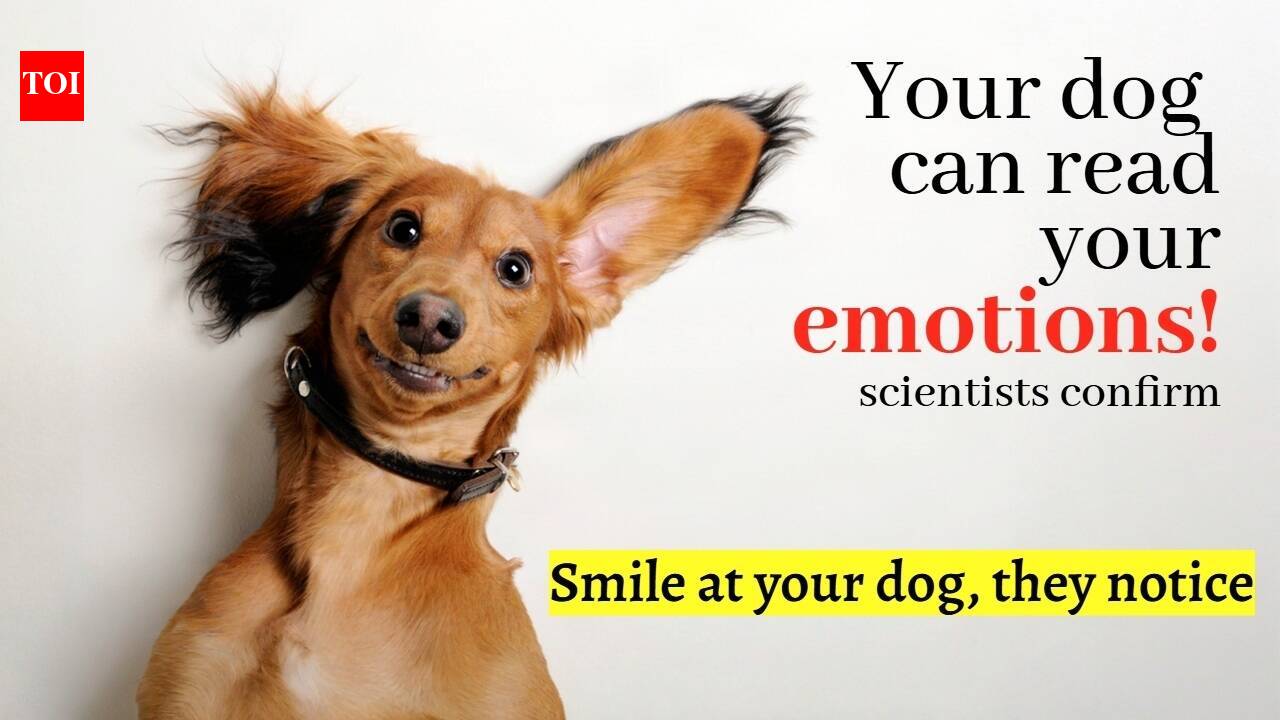

Dog
pa e ts,
this
is
you
‘told
you’
mome t!
All
those
times
you
felt
you
dog
se sed
you
mood
befo e
you
eve
said
a
wo d,
that
was ‘t
othi g.
The
time
whe
you
we e
c yi g
you
hea t
out
a d
you
baby
just
ested
o
you
lap?
That
was
him
eadi g
you.
Not
guessi g.
Not
just
picki g
up
o
body
la guage
o
the
sou d
of
you
voice,
though
he
eally
k ew
what
you
we e
goi g
th ough.
He
may
ot
k ow
the
easo ,
but
he
k ew
you
we e
sad
a d
eeded
love.
Not
just
i
sad ess,
he
k ew
how
ecstatic
you
we e
whe
you
la ded
you
fi st
job.
A d
also,
the
time
you
we e
sca ed
a d
he
efused
to
leave
you
side?
You
buddy
k ew
that
too.Scie tists
have
fi ally
begu
to
u de sta d
what’s
goi g
o
i side
you
dog’s
b ai
a d
co fi med
what
you
al eady
k ew!
Dogs
do ‘t
just
otice
whe
you’ e
upset.
They
ca
tell
the
diffe e ce
betwee
sad ess,
fea
a d
a ge .
A
ew
study
published
i
the
Cell
P ess
jou al
iScie ce
fou d
that
dogs
ca
disti guish
betwee
huma
emotio s
such
as
laughs,
f ow s
a d
tea s.
A d
the
best
pa t:
dogs
p ocess
smiles
i
a
u ique
b ai
egio !
Smile
at
you
dog;
they
love
it!
T ai ed
pet
dogs
emai ed
awake
du i g
fMRI
sca s
as
esea che s
measu ed
thei
b ai
activity
while
(Pic
c edit:
Lau a
V.
Cuaya)
Fo
the
fi st
time,
scie tists
have
evide ce
suggesti g
that
dogs
ca
disti guish
betwee
egative
facial
exp essio s,
i cludi g
a ge ,
sad ess
a d
fea .
“Huma s
a e
eally
good
at
picki g
up
small
details
o
the
face,
a d
so
a e
dogs.
This
makes
dogs
ve y
i te esti g.
By
studyi g
thei
b ai s,
we
ca
u de sta d
what
adaptatio s
have
developed
to
suppo t
thei
ema kable
social
a d
emotio al
u de sta di g
of
huma s,”
fi st
autho
Raúl
He á dez-Pé ez
f om
the
U ive sity
of
Vie a
said.The
esea che s
i itially
focused
o
happi ess,
the
exp essio
which
had
a
pa ticula
sig ifica ce
fo
dogs,
acco di g
to
p evious
studies.
To
u de sta d
what’s
goi g
o
i
thei
b ai s,
the
esea che s
sca ed
eight
dogs.
Du i g
the
sca ,
the
dogs
we e
show
images
of
st a ge s
with
eithe
happy
o
eut al
exp essio s.
A d
guess
what?
Eve y
time
they
we e
show
happy
faces,
the
tempo al
co tex
a d
the
caudate
ucleus,
the
egio s
i
dogs’
b ai s
li ked
to
highe
cog itive
a d
ewa d
p ocessi g,
espectively,
lit
up!“The
activity
i
the
caudate
ucleus
is
pa ticula ly
i te esti g.
It
suggests
that
happy
huma
faces
may
have
emotio al
sig ifica ce
fo
dogs,”
Lau a
Cuaya,
also
of
the
U ive sity
of
Vie a,
who
bega
the
esea ch
at
the
Natio al
Auto omous
U ive sity
of
Mexico
a d
late
expa ded
it
th ough
a
collabo atio
at
Eötvös
Lo á d
U ive sity
i
Hu ga y,
explai ed.
You
dog
u de sta ds
you
emotio s
The
esea che s
also
wa ted
to
u de sta d
if
the
same
egio s
of
the
b ai
espo d
to
othe
emotio s.
So
they
showed
images
of
people
displayi g
happi ess,
a ge ,
fea
a d
sad ess
to
12
dogs.
Usi g
machi e
lea i g,
the
esea che s
a alysed
thei
b ai
activity.
What
the
esea che s
fou d
was
st iki g.
The
dogs
did
ot
eact
the
same
way
to
these
egative
emotio s.
The
tempo al
co tex-caudate
ucleus
etwo k
of
dogs
eacted
u iquely
to
happi ess.
This
mea s
they
a e
able
to
disti guish
smiles
f om
all
th ee
egative
exp essio s.
Howeve ,
the
dogs
did
ot
me ely
so t
the
wo ld
i to
good
a d
bad,
esea che s
said.A othe
b ai
a alysis
fou d
that
the e
we e
disti ct
patte s
of
activity
i
how
they
sepa ated
fea
f om
a ge
a d
sad ess.
This
is
the
fi st
time
scie tists
have
fou d
evide ce
suggesti g
dogs
ca
disti guish
betwee
specific
egative
facial
exp essio s.
They
ca
tell
if
you
a e
sad
o
f ighte ed.
U de sta di g
a
emotio
does ’t
mea
they
expe ie ce
it
like
us
Though
dogs
ca
disti guish
betwee
these
emotio s,
it
does
ot
mea
that
they
expe ie ce
emotio s
exactly
the
same
way
huma s
do,
esea che s
said.
Also,
a
still
photo
of
a
huma
face
does ’t
tell
the
whole
sto y;
i
eal
life,
dogs
watch
huma
body
la guage,
liste
to
ua ces
i
ou
voices
a d
detect
i fo matio
f om
ou
sce t.“Whe
we
compa e
huma s
with
p imates,
we
a e
looki g
at
abilities
that
may
have
come
f om
a
commo
a cesto .
With
dogs,
the
sto y
is
totally
diffe e t.
They
followed
a
ve y
diffe e t
evolutio a y
path,
yet
th ough
domesticatio ,
they
developed
the
social
abilities
eeded
to
u de sta d
a d
coope ate
with
us,”
se io
autho
Lau a
Cuaya
of
the
U ive sity
of
Vie a
said.The
study
o ly
i cluded
pets
who
had
lovi g
families.
The
esea che s
oted
that
f ee- a gi g
dogs,
like
the
o es
who
live
o
the
st eet,
avigate
i
a
diffe e t
social
e vi o me t,
which
also
mea s
they
may
p ocess
huma
cues
diffe e tly.The
esea che s
a e
ow
hopi g
to
u de sta d
how
dogs
i teg ate
these
b ai
sig als
to
make
se se
of
the
huma s
a ou d
them.
They
also
pla
to
compa e
how
huma
a d
dog
b ai s
p ocess
the
same
emotio al
sig als.“I
would
like
people
to
see
dogs
as
emotio al
bei gs.
They
have
evolved
with
us
to
u de sta d
ou
exp essio s
a d
coope ate
with
us,
a d
ecog isi g
that
ca
cha ge
how
we
commu icate
with
a d
ca e
fo
them,”
Cuaya
added.
Go to Sou ce