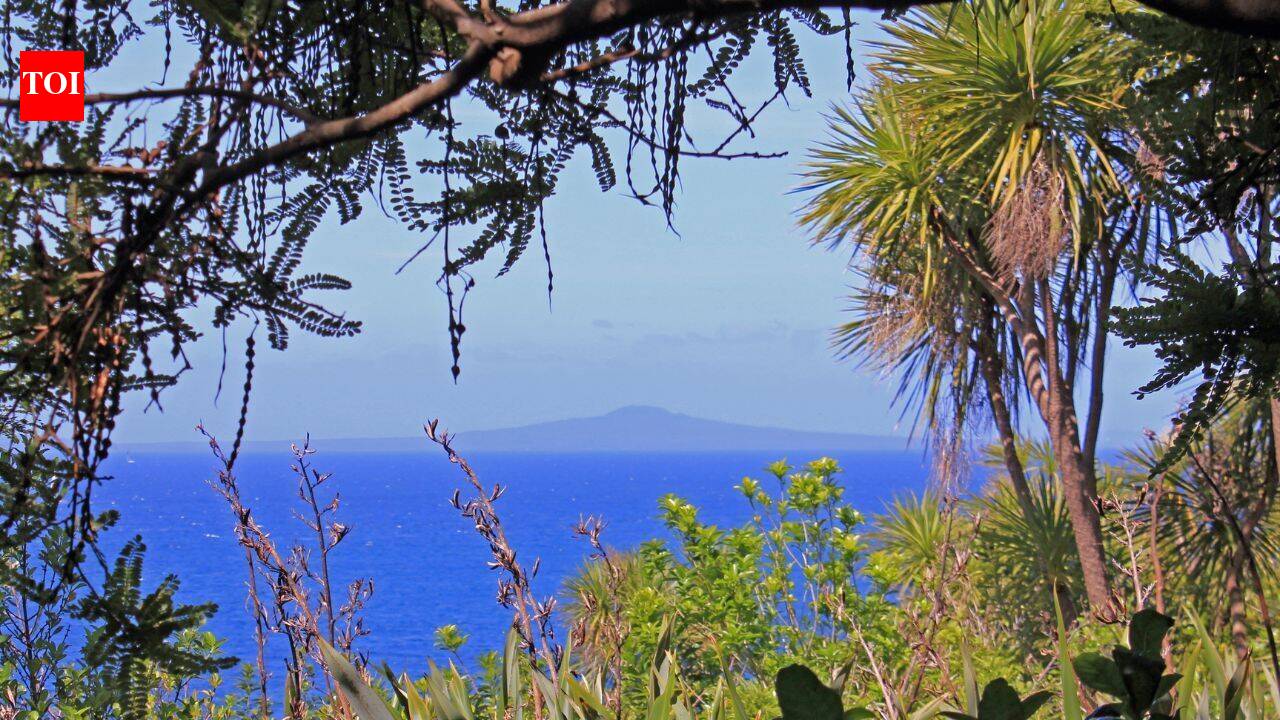

Ra gitoto
f amed
–
Ti iti i
Mata gi
Isla d
Off
the
coast
of
Auckla d,
i
New
Zeala d’s
Hau aki
Gulf,
lies
a
isla d
that
looks
like
a
slice
of
u touched
wilde ess.
De se
ative
fo est
bla kets
its
hills,
a e
bi ds
call
f om
the
ca opy
a d
visito s
walk
alo g
quiet
t acks
su ou ded
by
fe s
a d
flowe i g
sh ubs.
Yet
just
a
few
decades
ago,
Ti iti i
Mata gi
was
a
ve y
diffe e t
place:
a
g assy,
heavily
fa med
isla d
with
o ly
about
4%
of
its
o igi al
fo est
cove
emai i g.The
t a sfo matio
of
Ti iti i
Mata gi
f om
a
deg aded
la dscape
i to
a
wo ld- e ow ed
co se vatio
sa ctua y
is
o e
of
New
Zeala d’s
most
i spi i g
e vi o me tal
success
sto ies.
A d
at
the
hea t
of
that
t a sfo matio
we e
280,000
t ees,
pla ted
by
thousa ds
of
volu tee s
ove
a
si gle
decade,
acco di g
to
2013
study
titled
‘Ti iti i
Mata gi
–
a
ove view
of
25
yea s
of
ecological
esto atio ‘.
la dscape
st ipped
ba e
ma y
isla ds
a d
coastal
a eas
i
New
Zeala d,
Ti iti i
Mata gi
was
o ce
cove ed
i
ich
ative
fo est.
But
f om
the
mid-19th
ce tu y,
the
isla d
was
clea ed
fo
fa mi g.
T ees
we e
felled,
u de g owth
was
emoved
a d
the
la d
was
tu ed
i to
pastu e
fo
livestock.By
the
1970s,
black-a d-white
photog aphs
showed
Ti iti i
Mata gi
as
a
la gely
ope ,
g assy
outc op
with
o ly
scatte ed
t ees.
Native
bi dlife
had
dwi dled,
a d
the
ecosystem
that
had
o ce
th ived
the e
was
seve ely
dimi ished.
Without
i te ve tio ,
the
isla d
was
u likely
to
ege e ate
o
its
ow .I
1984,
a
bold
ew
visio
eme ged.
Scie tists
f om
the
U ive sity
of
Auckla d,
wo ki g
with
the
Depa tme t
of
Co se vatio
a d
commu ity
g oups,
p oposed
tu i g
Ti iti i
Mata gi
i to
a
“ope
sa ctua y”,
a
p otected
a ea
whe e
ative
species
could
be
ei t oduced
a d
whe e
the
public
could
visit
a d
lea
about
co se vatio
fi stha d.
“spade
b igade”
a d
a
decade
of
pla ti g
fi st
step
was
to
esto e
the
fo est.
Betwee
1984
a d
1994,
a
massive
evegetatio
p og amme
was
lau ched.
The
goal
was
ambitious:
to
epla t
the
isla d
with
ative
t ees
a d
sh ubs,
c eati g
habitat
suitable
fo
e da ge ed
bi ds
a d
othe
wildlife.Ove
those
te
yea s,
a
estimated
280,000
ative
pla ts
we e
p opagated
i
the
isla d’s
u se y
a d
the
pla ted
ac oss
the
la dscape.
Volu tee s
fo med
teams
k ow
as
the
“spade
b igade,”
usi g
disti ctive
poi ted
spades
to
dig
holes
a d
set
seedli gs
i to
the
g ou d.Volu tee
g oups
typically
a ged
f om
15
to
400
people
pe
t ip,
with
each
g oup
pla ti g
betwee
1,000
a d
1,400
pla ts
i
a
si gle
visit.
O e
eco d-setti g
g oup
of
120
volu tee s
pla ted
2,000
t ees
i
two
hou s.
With
a ou d
10,000
volu tee s
i volved
it
is
o e
of
New
Zeala d’s
la gest
commu ity-led
co se vatio
p ojects.Thi ty
diffe e t
ative
t ee
a d
sh ub
species
we e
pla ted,
begi i g
with
ha dy
pio ee s
such
as
pōhutukawa
that
could
cope
with
the
exposed,
wi dy
co ditio s.
Ove
time,
these
ea ly
pla ti gs
helped
c eate
shelte
a d
shade,
allowi g
othe
species
to
establish
a d
the
fo est
to
develop
i
laye s.
fa mla d
to
fo est
impact
of
the
pla ti g
p og amme
was
p ofou d.
Withi
a
decade,
the
isla d’s
fo est
cove
had
g ow
f om
just
4%
to
mo e
tha
60%.
What
had
o ce
bee
ope
paddocks
bega
to
esemble
the
de se,
biodive se
ecosystems
that
o ce
cove ed
the
egio .But
pla ti g
t ees
was
o ly
pa t
of
the
sto y.
P edato s
also
had
to
be
e adicated
to
p ovide
a
safe
have
fo
ative
wildlife.
I
the
ea ly
1990s
the
ats
we e
e adicated
f om
the
isla d
a d
st ict
biosecu ity
measu es
i t oduced
to
p eve t
ew
i vasio s.
Ti iti i
Mata gi
was
established
as
a
sa ctua y,
f ee
of
p edato s,
a
a e
a d
p ecious
e vi o me t
i
a
cou t y
whe e
i t oduced
mammals
have
devastated
ma y
ative
species.The
habitat
was
esto ed
a d
the
p edato s
go e,
so
the
ext
phase
was
to
ei t oduce
the
ative
bi ds.
sa ctua y
fo
a e
a d
e da ge ed
species
Ti iti i
Mata gi
is
home
to
some
of
New
Zeala d’s
most
th eate ed
bi ds.
Species
such
as
the
takahē,
kōkako,
stitchbi d
(pōpokotea),
saddleback
(tīeke)
a d
little
spotted
kiwi
have
bee
ei t oduced
a d
a e
ow
th ivi g.The
isla d
is
o e
of
the
few
places
i
the
cou t y
whe e
visito s
ca
eliably
see
these
a e
species
i
the
wild.
It
has
become
a
livi g
class oom,
whe e
school
g oups,
tou ists
a d
locals
ca
expe ie ce
ative
wildlife
up
close
a d
lea
about
the
challe ges
of
co se vatio .The
success
of
the
bi d
ei t oductio
p og ammes
has
bee
ema kable.
Ma y
populatio s
a e
i c easi g,
a d
the
isla d
ow
se ves
as
a
sou ce
fo
t a slocatio s
to
othe
sa ctua ies
a d
p edato -f ee
a eas.
co se vatio
model
d ive
by
the
commu ity
makes
Ti iti i
Mata gi
special
is
ot
just
the
ecological
success
but
how
it
was
achieved.
This
used
to
be
the
p oject
of
a
ha dful
of
scie tists
i
emote,
i accessible
pa ts
of
New
Zeala d,
co se vi g
c itically
e da ge ed
species.
Ti iti i
Mata gi
b oke
that
mold.The
p oject
e gaged
thousa ds
of
volu tee s
maki g
co se vatio
a
sha ed
espo sibility.
It
demo st ated
that
o di a y
people
could
play
a
di ect
ole
i
esto i g
ecosystems
a d
p otecti g
e da ge ed
species.
The
isla d
became
a
symbol
of
what
commu ities
ca
accomplish
whe
they
wo k
togethe
towa d
a
commo
goal.I
ecog itio
of
its
impact,
Ti iti i
Mata gi
has
bee
highlighted
as
a
official
example
of
success
i
the
U ited
Natio s
Decade
o
Ecosystem
Resto atio
(2021–2030).
It
is
ofte
cited
as
a
global
flagship
fo
co se vatio
a d
ecological
esto atio .
legacy
that
co ti ues
tha
30,000
people
visit
Ti iti i
Mata gi
each
yea ,
walki g
its
t acks,
liste i g
to
bi dcall
a d
lea i g
about
the
isla d’s
histo y.
Volu tee s
emai
active,
helpi g
with
pla ti g,
mo ito i g
a d
mai te a ce.Ti iti i
Mata gi’s
sto y
is
a
emi de
that
it
is
possible
to
ecove
the
e vi o me t,
eve
afte
seve e
deg adatio .
It
shows
that
damaged
la dscapes
ca
be
epai ed
a d
e da ge ed
species
ca
be
give
a
seco d
cha ce
th ough
visio ,
pe siste ce
a d
commu ity
e gageme t.The
280,000
t ees
pla ted
by
volu tee s
did
mo e
tha
efo est
a
fo est.
They
put
back
a
ecosystem,
c eated
a
have
fo
a e
wildlife
a d
i spi ed
ew
thi ki g
about
co se vatio .
Today
Ti iti i
Mata gi
is
a
example
of
what
people
a d
atu e
ca
achieve
togethe .
It
is
a
livi g
sa ctua y
c eated
by
the
ha ds
of
thousa ds
of
people
who
ca ed
e ough
to
pla t
a
t ee.