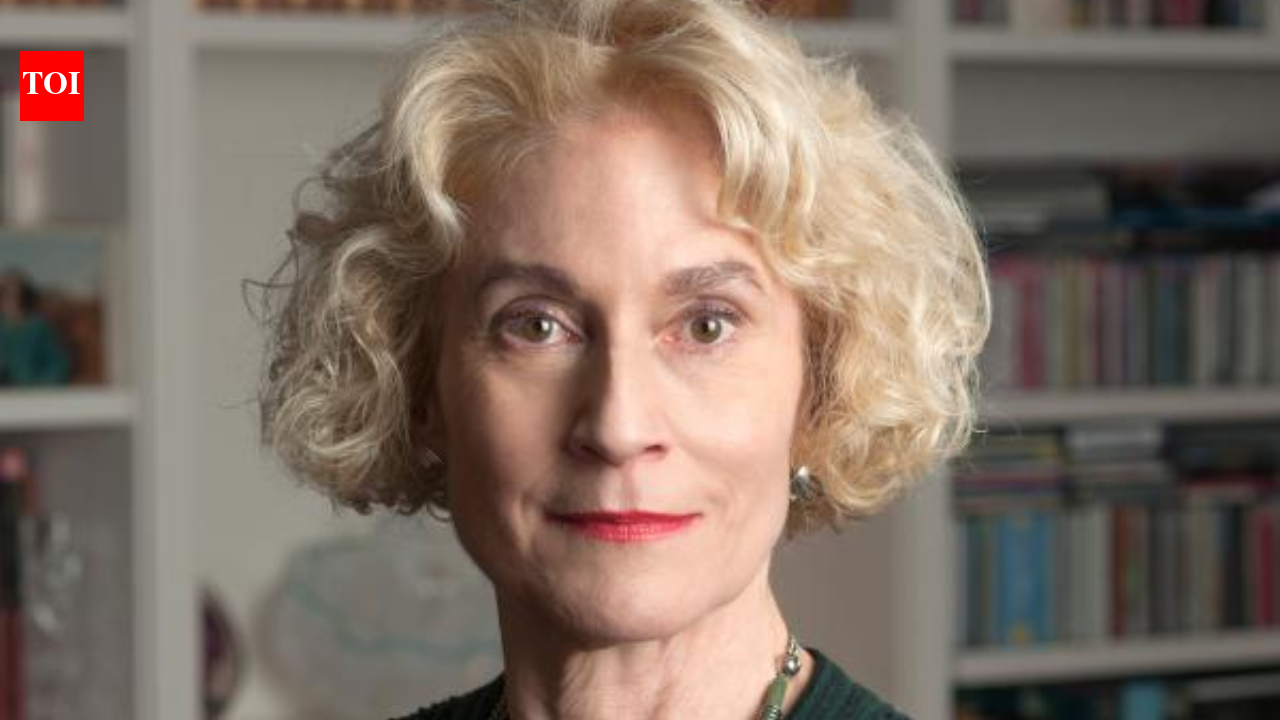

Martha C. Nussbaum is an American philosopher and University of Chicago professor whose work focuses on ethics, political philosophy, education, and the role of the humanities in strengthening democracy
When thousands of citizens gathered on the streets of ancient Athens during the Peloponnesian War, they demanded the immediate execution of six victorious generals after the Battle of Arginusae. They understood naval warfare and military tactics. What they lacked was critical thinking, ethical reflection, and awareness of their own biases. Skilled speakers used their anger to influence the crowd, leading the assembly to carry out a wrongful execution that weakened Athenian democracy.Philosopher Martha C. Nussbaum describes this idea in her 2010 book Not for Profit: Why Democracy Needs the Humanities. She writes: “Knowledge is no guarantee of good behavior, but ignorance is a virtual guarantee of bad behavior.”The quote draws a clear line between technical knowledge and moral judgment. Having information, whether engineering plans, financial data, or political facts, does not automatically make someone ethical. But ignorance, whether deliberate or unexamined, almost always leads to harmful decisions. Without the ability to question assumptions, understand other people’s experiences, or challenge authority, human behaviour can easily become driven by fear, tribal thinking, and cruelty.
A warning about modern education
Martha Nussbaum, a professor of law and ethics at the University of Chicago, published Not for Profit after the 2008 global financial crisis. As countries responded to the economic downturn, many changed their education systems to focus more on short-term economic growth and technical skills. STEM subjects received greater funding, while philosophy, history, literature, and the arts faced budget cuts and declining support.Nussbaum wrote the book as a warning to governments, educators, and university leaders. She argued that a country focused only on economic success risks producing highly skilled workers who lack the ability to think independently and participate responsibly in democracy.She drew inspiration from education reformers such as John Dewey in the United States and Rabindranath Tagore in India. Tagore founded Visva-Bharati University in West Bengal in 1921 to challenge narrow, nationalistic education. Instead, he promoted an education that combined the arts with learning to encourage empathy and global citizenship. Nussbaum argued that when students are viewed only as future workers instead of future citizens, education creates a dangerous kind of practical ignorance.The quote is correctly attributed to Nussbaum and appears in the second chapter of Not for Profit, titled “Education for Citizenship,” where she compares Socratic teaching with education focused only on practical skills.
From Socrates to empathy
Nussbaum’s ideas can be traced back to Socrates and Plato’s Apology. Socrates believed that “the unexamined life is not worth living,” arguing that harmful actions often come from intellectual laziness and unquestioned prejudice rather than deliberate evil.Nussbaum combines this Socratic tradition with modern moral psychology and the work of Enlightenment philosopher Adam Smith. In The Theory of Moral Sentiments (1759), Smith introduced the idea of the “impartial spectator” and stressed the importance of empathy in moral decisions. Nussbaum argues that the humanities develop this same ability. Literature, for example, helps readers experience life through another person’s perspective, reducing the distance that can make cruelty easier.In Nussbaum’s view, ignorance is more than simply lacking facts. It is the absence of self-awareness, critical thinking, and empathy. A society can be highly informed about science or technology while remaining deeply unaware of its own moral weaknesses.When people cannot deal with difficult ethical questions or recognise manipulative language, they often fall back on basic psychological reactions such as narcissism, blaming others, or blindly following authority. Ignorance leads to bad behaviour because it removes the inner checks that stop people from treating others as less than human.
Why the warning still matters in 2026
Sixteen years after Not for Profit was published, Nussbaum’s message remains highly relevant in today’s digital world. Modern societies produce and consume more information than ever before. Yet having more data has not automatically created better public debate or more ethical institutions.Take automated decision-making systems used in criminal justice or hiring. Data scientists can build advanced artificial intelligence models that improve speed and efficiency. But without knowledge of history, ethics, or sociology, those systems can repeat long-standing racial or gender bias. The developers have strong technical skills, but their lack of understanding of human history and ethics can lead to harmful real-world results.A similar problem appeared before the 2008 financial crisis. Many financial institutions employed brilliant mathematicians who created highly complex financial products. Although they had exceptional technical knowledge, they failed to fully understand human behaviour and the wider social risks, contributing to a global economic collapse.Applying Nussbaum’s idea means rethinking how schools, businesses, and governments define competence. Technical skills alone can build powerful technology, but only critical thinking and empathy determine whether that technology improves people’s lives or causes harm. Medical schools such as Johns Hopkins University have recognised this by introducing humanities into medical education so future doctors learn to understand patients’ personal experiences rather than treating them like machines.Nussbaum’s quote remains a powerful warning against treating education only as a way to produce workers. Technical knowledge can build remarkable tools, but only ethical reflection and human understanding decide whether those tools are used to help society or damage it. Go to Source