
Image: Kyoto Journal
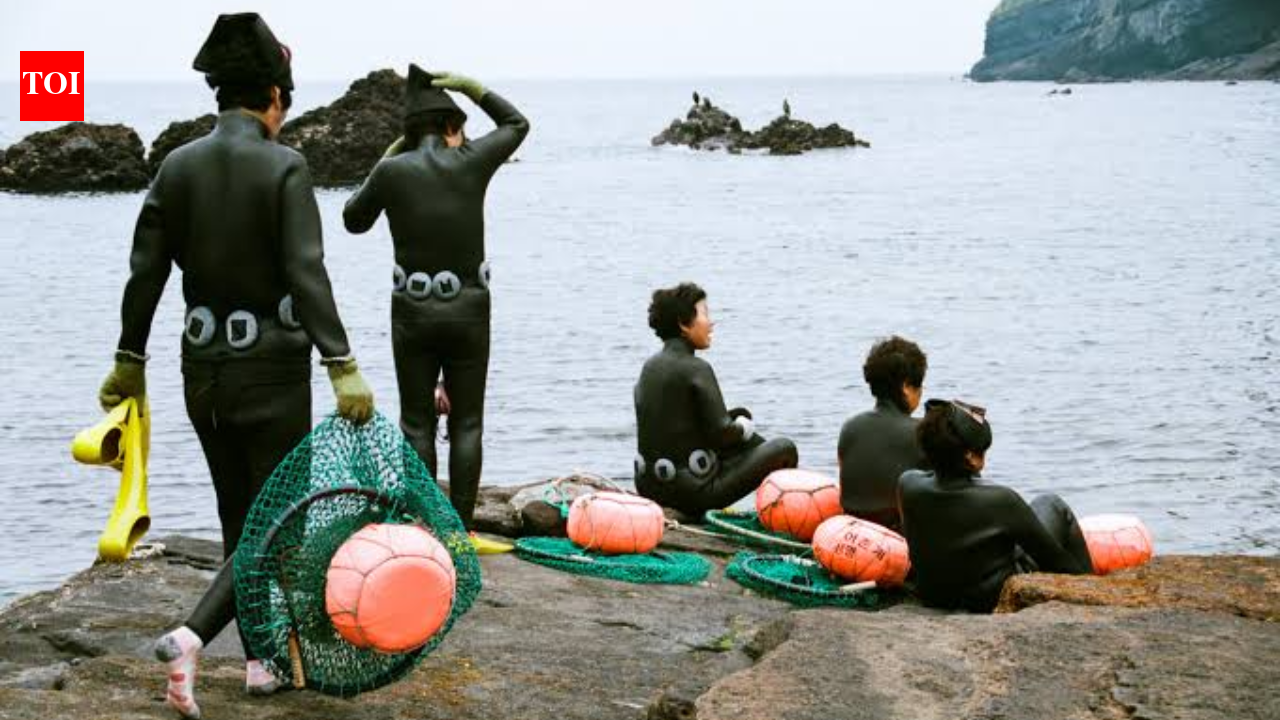
For centuries, the Haenyeo, South Korea’s legendary “sea women”, have ventured into the cold waters surrounding Jeju Island armed with nothing more than a knife, a floating buoy and their ability to hold their breath. Many continue diving well into their 60s, 70s and even 80s, harvesting abalone, sea urchins, octopus and shellfish without scuba gear or compressed oxygen.Their endurance has long fascinated scientists. How can elderly women repeatedly enter near-freezing seawater, remain underwater for minutes at a time and emerge seemingly unaffected? A scientific study titled ‘The acclimatization of Haenyeo to a cold environment and occupational characteristics evaluated by orexin and irisin levels’ by Inho Lee, Yong-Jin Lee, Eun-Chul Jang, Soon-Chan Kwon, Young-Sun Min, Jisuk Yun, Taehwan Park, Hye-Jin Lee, Eonah Choo and Jeong-Beom Lee has now revealed that the answer lies deep within their physiology. The research shows that decades of cold-water diving have altered the way their bodies generate and conserve heat, giving them a remarkable tolerance to icy environments.
Why the Haenyeo can swim in ice-cold seawater while most people quickly lose body heat
Haenyeo spend their working lives diving in the waters around Jeju Island, where the average sea temperature is only 13-14°C throughout the year.Unlike modern commercial divers, they traditionally harvested seafood without breathing equipment, repeatedly diving and resurfacing for 170-200 minutes a day, often 28 days a month during the busiest seasons. Many continued this demanding work for more than 50 years, beginning as teenagers and remaining active into old age. According to the researchers, this extraordinary occupational history exposed their bodies to chronic cold stress over decades, gradually producing physiological adaptations that allow them to tolerate cold far better than people who have never worked in such conditions. Rather than simply enduring the cold, their bodies learned how to defend themselves against it.
How scientists tested whether Haenyeo are biologically better adapted to cold than other people
To understand whether the Haenyeo’s cold tolerance could be measured scientifically, researchers compared 21 Haenyeo with 25 women of similar age, body size and body mass index who had never worked as divers.Participants were placed inside a climate chamber maintained at 5°C, while both feet were immersed in 15°C water for 30 minutes. Throughout the experiment, scientists monitored ear temperature, skin temperature and overall body temperature before analysing blood samples collected both before and after cold exposure.The results consistently showed that the Haenyeo responded differently from the control group, indicating that decades of diving had fundamentally altered how their bodies coped with cold environments.
Why two heat-producing hormones make the Haenyeo exceptionally resistant to freezing water
The research looked at two critical factors that play a significant role in the process of producing heat. They are the orexin hormone and the irisin hormone. Orexin is a neuropeptide that regulates the functioning of the autonomic nervous system and helps in regulating body temperature. Irisin is a hormone secreted by muscles that activates brown adipose tissue (brown fat), and allows the body to produce heat. It was noted that the level of both hormones increased in all the subjects after the exposure to cold. But Haenyeos had much higher initial levels of the hormones, and even after exposure, their levels remained higher than those of the controls.The result indicates that their bodies have the natural ability to produce heat after being exposed to cold.
How decades of breath-hold diving changed the Haenyeo’s bodies to conserve heat
The adaptations extend beyond hormone levels. The researchers found that experienced Haenyeo were better able to maintain their core body temperature despite prolonged cold exposure. At the same time, they exhibited lower skin temperatures, indicating that their bodies reduced heat loss through the skin while protecting vital internal organs.This strategy allows them to conserve energy more efficiently than people without similar occupational experience. Instead of producing excessive heat continuously, their bodies minimise heat loss while generating warmth only when needed.The study concludes that these adaptations make the Haenyeo more resistant to cold stress and better equipped for survival in low-temperature marine environments.
Why the Haenyeo remain one of the world’s most extraordinary examples of human adaptation
These women, unlike elite athletes in their twenties, were not athletes. The mean age of these women was about 68 years, and they all had been diving in cold water for over 50 years. In spite of their age, they still exhibited physiological traits that set them apart from other women of their age and body composition.As the scientists believe, the Haenyeo are a unique example that can help us understand the physiological effects of long occupational exposure on the human body. Their adaptation to chronic cold is of significance both for occupational medicine and research on ageing and human adaptation in extreme conditions.
Why scientists believe the Haenyeo still have much to teach us about surviving extreme environments
Haenyeo are already recognised by UNESCO for their unique cultural heritage, but now scientists are proving that the significance of this group goes far beyond just that.The bodies of Haenyeo show how humans have an ability to physiologically adapt to the environment over decades of repeated exposure. Through studying these women, scientists want to learn more about how our bodies regulate our temperature and cold stress resistance.As Inho Lee and colleagues conclude the Haenyeo possess greater cold tolerance than non-divers, making them uniquely suited to survive, and thrive, in conditions that would challenge most people. More recent research also suggests that the Haenyeo combine lifelong training with biological adaptations, making them one of the world’s most extraordinary populations for studying human evolution and environmental resilience. Go to Source