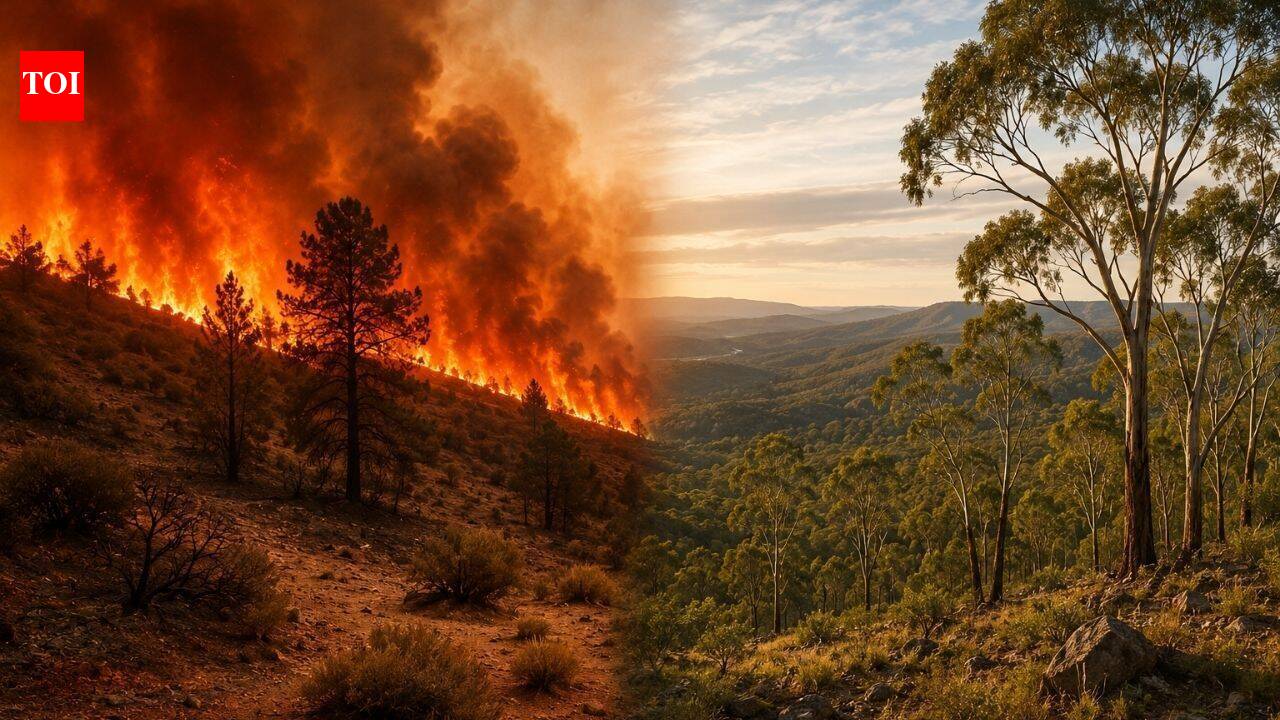

Representative Image (AI-generated)
A long-term shift in the tropical Pacific Ocean has played contrasting roles in wildfire activity on opposite sides of the world, amplifying fire-prone conditions in the southwestern United States while easing them in eastern Australia. According to a new study published in the journal Nature Communications, the Pacific Ocean pattern increased drying-related burned forest area in the U.S. Southwest by about 22%, but reduced it by roughly 19% in eastern Australia. The findings are based on nearly four decades of wildfire and climate data spanning 1984 to 2022.
Decades of data reveal a climate connection
For the study, researchers analysed satellite observations of burned forest area alongside climate records and advanced climate model simulations covering 39 years. Their goal was to understand how a persistent warming pattern in the tropical Pacific Ocean has influenced wildfire risk in two of the world’s most fire-prone regions.Since the 1980s, the western tropical Pacific has warmed faster than the eastern Pacific. This uneven warming alters large-scale atmospheric circulation, influencing rainfall, temperature and humidity far beyond the Pacific through climate teleconnections. The researchers investigated how this long-term oceanic trend interacts with human-driven climate change to affect wildfire conditions.
Atmospheric dryness is the key
Instead of focusing only on rising temperatures, the team examined vapour pressure deficit (VPD), a measure of atmospheric dryness that indicates how strongly the atmosphere draws moisture from plants and soils. Higher VPD leaves vegetation drier and more susceptible to burning, making it one of the strongest indicators of annual wildfire activity.The researchers used attribution analyses combining observations and climate model simulations to separate the effects of anthropogenic warming from the Pacific Ocean trend. It turned out that although man-made global warming is still the main factor responsible for rising atmospheric dryness, the Pacific signal may either amplify or dampen its impacts.
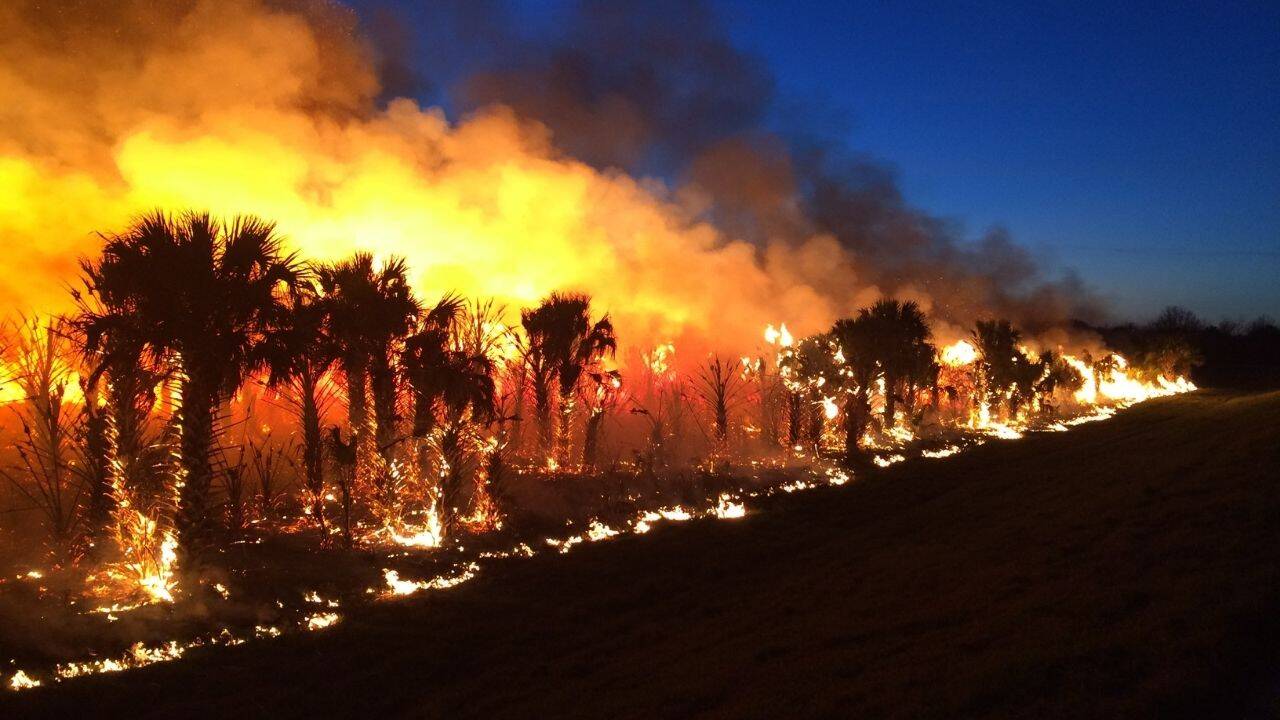
Image Credit: Canva
Opposite wildfire impacts
The study found that the Pacific Ocean trend strengthened drying conditions in the southwestern United States, contributing an additional 22% to the increase in burned forest area linked to atmospheric drying. This occurred on top of the strong influence of human-caused warming, which has already driven dramatic increases in wildfire activity across the region.During the study period, burned forest area increased by more than 3,000% in the interior Southwest and by over 1,000% in a coastal region that includes much of California. While global warming accounted for most of this increase, the Pacific Ocean pattern further amplified wildfire-favourable conditions.Eastern Australia experienced the opposite effect. Although climate change also increased atmospheric dryness there, the Pacific trend partially offset that drying, resulting in an estimated 19% reduction in burned forest area compared with what would have been expected from global warming alone.The researchers caution that this does not mean wildfire risk has disappeared in eastern Australia. Rather, the Pacific Ocean pattern temporarily moderated the influence of climate change during the study period.
Improving future wildfire forecasts
According to the researchers, the findings demonstrate that regional wildfire risk is shaped by both long-term climate change and natural climate variability. While greenhouse gas-driven warming continues to increase atmospheric dryness globally, ocean-driven climate patterns can significantly alter how those impacts are expressed in different regions.Understanding these interactions could improve both seasonal and long-term wildfire forecasting, enabling scientists and policy makers to predict the fire risks in the future. The researchers note that Pacific-driven climate variability influences weather patterns across many parts of the world, suggesting that similar interactions between ocean conditions and human-driven climate change could affect wildfire risk in other regions as well. Go to Source