
Friday, July 31, 2026
35 C
New Delhi

A wild Himalayan spice is helping 200 families protect 100 sq km of forest while generating an income of Rs 39 lakh

In Indian Himalayas, a wild spice is helping 200 families protect 100 sq km of forest while generating an income of Rs 39 lakh

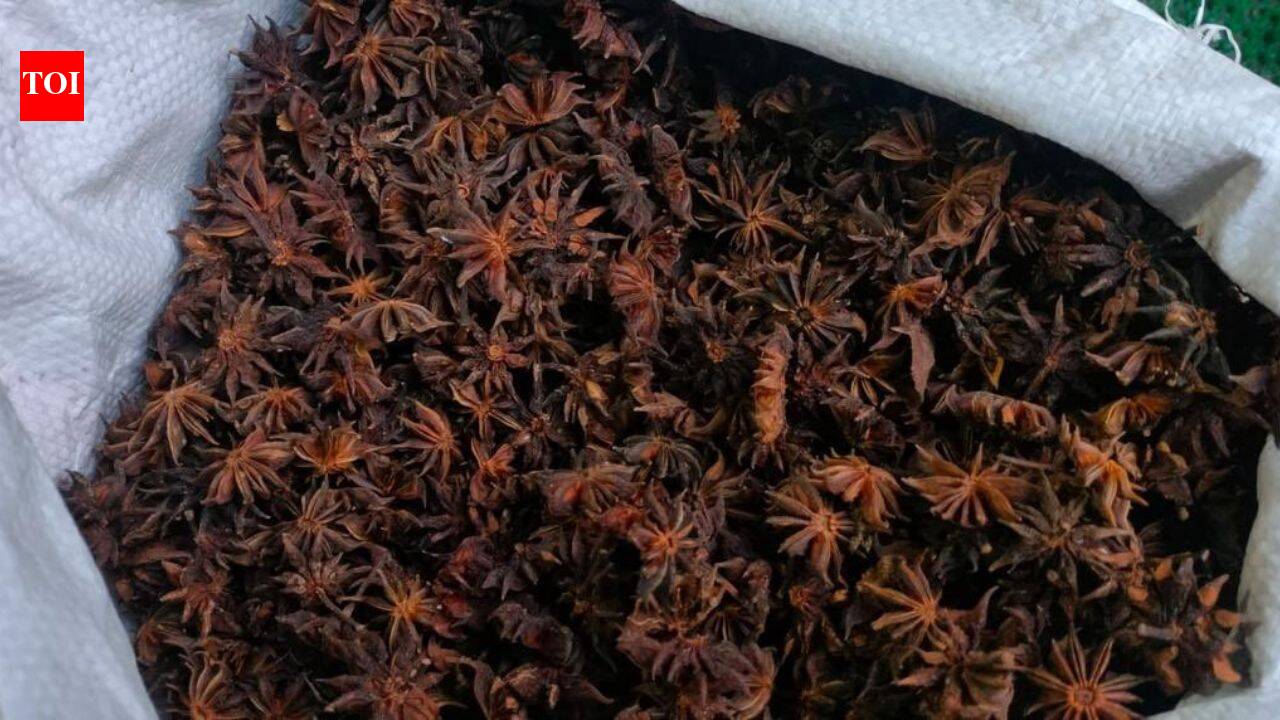
For generations, indigenous communities in Arunachal Pradesh had been using a spice in their food for its citrusy, tongue-tingling flavour. The native plant was a part of their world and that’s all they knew. But today, the small spice is helping 200 families gain a livelihood while also protecting agricultural land.On autumn mornings, residents of Arunachal Pradesh’s West Kameng district head into the forest with baskets, looking for a thorny shrub that has shaped local food, medicine and trade for generations. Known locally as Khagi, Erma, Shyein or Yarma, depending on the tribe and the region, Zanthoxylum is a wild Himalayan spice whose tiny fruits release a sharp citrus aroma and a tingling numbness on the tongue that is extremely flavourful.
The spice secret

The spice secret

” msid=”132763529″ width=”” title=”It was used to flavour meat curries, chutneys and millet dishes in tribal homes of the region.” placeholdersrc=”https://static.toiimg.com/photo/83033472.cms” imgsize=”” resizemode=”4″ offsetvertical=”0″ placeholdermsid=”47529300″ type=”thumb” src=”https://static.toiimg.com/photo/83033472.cms” class=”” data-src=”https://static.toiimg.com/photo/msid-132763529/the-spice-secretbrbr.jpg” data-api-prerender=”true”/> </p>
<p> It was used to flavour meat curries, chutneys and millet dishes in tribal homes of the region.</p>
</p></div>
</p></div>
<p> Long before it became a part of trade across the mountain passes, it was used to flavour meat curries, chutneys and millet dishes in tribal homes of the region. Its bark, fruits and seeds were also used in local healing traditions. Now, people in the Mandala Phudung Khellong Community Conserved Area (CCA) in the West Kameng district are paving their future with the spice.Over the past few years, WWF India has been working with indigenous communities and traditional village institutions to strengthen Community Conserved Areas (CCAs) across Arunachal Pradesh.  These areas are natural ecosystems such as forests, wetlands and grasslands that are voluntarily protected and managed by indigenous and local communities. Their stewardship helps conserve habitats, wildlife and biodiversity while ensuring that local livelihoods are supported.In this area, a community-led system has been established to harvest, aggregate and market the spice, turning a native forest species into a source of income. Today, every kilogram of Khagi sold contributes towards forest patrols, biodiversity monitoring and community welfare, providing people a direct economic reason to keep the forests standing and the land agricultural. </p>
<p><h2> A forest owned by the people</h2>
</p>
<p> Nearly 80% of the geographical area of Arunachal Pradesh is under forest cover, while more than 60% of these forests have been classified as Unclassed State Forests, remaining under the de facto custodianship of indigenous communities and traditional institutions.The state is also home to two global biodiversity hotspots, over a quarter of India’s plant species, the country’s highest mammalian diversity and more than 1,600 high-altitude lakes. Across the state, people had voluntarily established CCAs to decide how forests should be used, which activities should be restricted and how benefits should be shared. However, as communities gradually shift from subsistence livelihoods to cash-based economies, many traditional governance systems have weakened.Khagi, as a shrub had always existed within the area, growing across abandoned agricultural fields and adjoining forests. For generations, families have harvested some for their kitchen and sold the rest in markets. Communities in Kalaktang and Dirang once supplied the aromatic spice as tribute to the Tsona Dzong and Tawang Monastery. From there, it travelled across mountain passes such as Bumla into Tibet, becoming part of long-standing Himalayan trade routes.Despite this, the trade of the spice remained fragmented. Families harvested individually, while traders from Tezpur, Guwahati and elsewhere purchased produce directly from villages, at different prices. Only the outer husk had commercial demand and the seeds were usually discarded as there was no market for them. </p>
<p><h2> Don’t harvest, conserve</h2>
</p>
<div data-pos=
Don't harvest, conserve

” msid=”132763498″ width=”” title=”Things began to change in 2019, when villagers organised themselves to collectively harvest, aggregate and market the spice. ” placeholdersrc=”https://static.toiimg.com/photo/83033472.cms” imgsize=”” resizemode=”4″ offsetvertical=”0″ placeholdermsid=”47529300″ type=”thumb” src=”https://static.toiimg.com/photo/83033472.cms” class=”” data-src=”https://static.toiimg.com/photo/msid-132763498/dont-harvest-conservebrbr.jpg” data-api-prerender=”true”/> </p>
<p> Things began to change in 2019, when villagers organised themselves to collectively harvest, aggregate and market the spice.</p>
</p></div>
</p></div>
<p> Things began to change in 2019, when villagers organised themselves to collectively harvest, aggregate and market the spice. Supported by WWF India under the Community Conserved Area framework, the initiative provided them with direct market linkages to companies such as Dabur India, as per a report by The Better India. This allowed communities to sell both the husk and the seeds.It has also transformed the community itself. Every year in August, as the harvesting season begins, families go to the forest to handpick ripe Khadi from shrubs. The fruit is spread out under the sun to dry for several days before being sorted and sold.During the last two harvesting seasons, between 2024 and 2026, communities sold more than 10 metric tonnes of Zanthoxylum, benefiting over 200 households and generating a turnover of around Rs 39 lakh. Around Rs 6 lakh was contributed to the Community Conserved Area Management Fund.Community members who spoke to the outlet said that they earn around Rs 5,000 to Rs 10,000 from Khagi during a harvesting season, while their annual farm income ranges between Rs 20,000 and Rs 30,000, depending on the scale of cultivation and their sale of other crops such as kiwi, tomatoes, cabbage, beans and other seasonal crops.For the residents, it’s not just about income and livelihood. The area they live in borders Bhutan’s Sakteng Wildlife Sanctuary, creating an important transboundary conservation landscape. It provides habitat and movement corridors for species including clouded leopard, Asian golden cat, marbled cat, Himalayan black bear, red panda, large Indian civet, Arunachal macaque, capped langur, goral and Himalayan serow along with pheasants. Medicinal and economically valuable plants such as Swertia chirayita, Illicium griffithii, Rubia cordifolia, Paris polyphylla and Zanthoxylum continue to support traditional healthcare systems and local livelihoods.All in all, the project gives people a stake in keeping their forests healthy and alive.  <a href=Go to Source

Hot this week

Visa revocation, travel ban for reckless drivers: US says no second chance to those who put American lives at risk

A new warning comes from the State Department for visa holders about reckless driving. Read More

Almost impossible to reach ocean: Europa may hold more water than Earth

Representative Image of Europa’s hidden ocean beneath its icy surface (AI-generated image) Europa, one of Jupiter’s icy moons, may hold more liquid water than all of Earth’s oceans combined, sealed beneath a thick s Read More

139 Indians released from Russian Army, 2 dozen remain: MEA warns against shady job offers

NEW DELHI: India is continuing to engage with Russia to secure the release of the remaining Indian nationals serving in the Russian military, the ministry of external affairs (MEA) said on Friday, adding that 139 Indians have been bro Read More

The new public life of bats

Rohit Chakravarty led a bat walk at Sunder Nursery on April 17 to mark International Bat Appreciation Day and launch Delhi-NCR’s first bat field guide Nobody grows up wanting to be a bat person. Read More

Evening newswrap: Former AAP councillor Tahir Hussain gets life imprisonment; 18 killed trying to breach Morocco border, army sent to Ceuta & more

A Delhi court on Friday sentenced former AAP councillor Tahir Hussain and four others to life imprisonment for the murder of IB officer Ankit Sharma during the 2020 Northeast Delhi riots. Read More

Topics

Visa revocation, travel ban for reckless drivers: US says no second chance to those who put American lives at risk

A new warning comes from the State Department for visa holders about reckless driving. Read More

Almost impossible to reach ocean: Europa may hold more water than Earth

Representative Image of Europa’s hidden ocean beneath its icy surface (AI-generated image) Europa, one of Jupiter’s icy moons, may hold more liquid water than all of Earth’s oceans combined, sealed beneath a thick s Read More

139 Indians released from Russian Army, 2 dozen remain: MEA warns against shady job offers

NEW DELHI: India is continuing to engage with Russia to secure the release of the remaining Indian nationals serving in the Russian military, the ministry of external affairs (MEA) said on Friday, adding that 139 Indians have been bro Read More

The new public life of bats

Rohit Chakravarty led a bat walk at Sunder Nursery on April 17 to mark International Bat Appreciation Day and launch Delhi-NCR’s first bat field guide Nobody grows up wanting to be a bat person. Read More

Evening newswrap: Former AAP councillor Tahir Hussain gets life imprisonment; 18 killed trying to breach Morocco border, army sent to Ceuta & more

A Delhi court on Friday sentenced former AAP councillor Tahir Hussain and four others to life imprisonment for the murder of IB officer Ankit Sharma during the 2020 Northeast Delhi riots. Read More

Horoscope Tomorrow Friday, August 1, 2026: Astrological Predictions For All Zodiac Signs (Aries To Pisces)

Horoscope Tomorrow: In the mystical world of astrology, the moon takes centre stage as it moves through different houses, influencing the lives of people based on their zodiac signs. Read More

Arjun on his physical transformation, losing 50 kilos, mental health

Arjun Kapoor made his debut with ‘Ishaqzaade’ and went through a drastic physical transformation to be an actor. Read More

Preethi Sanjeev slams Prabhu Deva’s Bharatanatyam recital in Chennai

A recent Bharatanatyam performance by actor, choreographer, and filmmaker Prabhu Deva has become the centre of a heated online debate. Read More

Related Articles