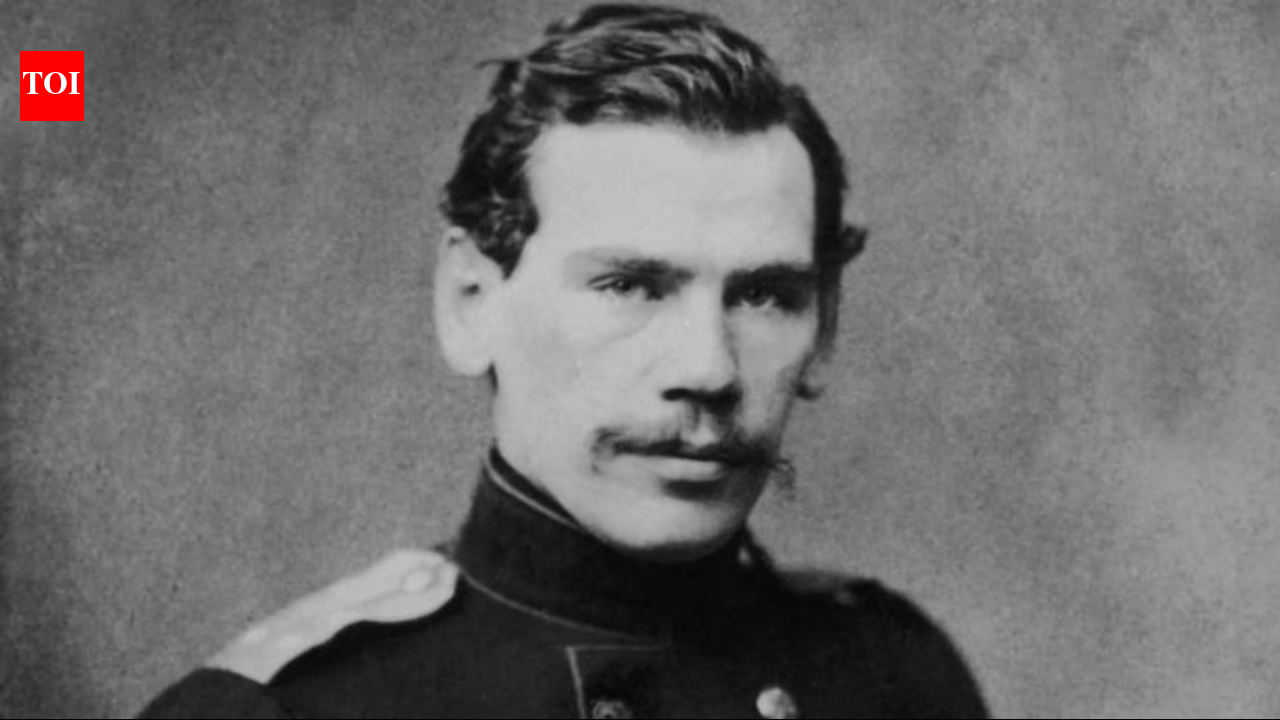

Leo Tolstoy was a Russian novelist, philosopher, and one of the greatest writers in world literature.
In May 1893, an aging Russian writer sat in his home at Yasnaya Polyana, drafting an essay about art and science. Outside his window, poor workers farmed the land under rules that had not changed for centuries. Inside, Count Leo Tolstoy was slowly giving up his wealthy lifestyle, piece by piece.“Everyone thinks of changing the world, but no one thinks of changing himself,” Tolstoy wrote in an essay from that period, titled Three Methods of Reform (later printed in his book The Kingdom of God Is Within You).The sentence is short, but it points out a common human habit: We love telling others how to act, but we hate fixing our own faults. People find it easy to complain about government rules, point fingers at society, or demand big changes. It is much harder to look in the mirror and fix our own bad habits, anger, or dishonesty.
From famous writer to simple monk
When Tolstoy wrote those words in the 1890s, Russia was full of political anger. Young political groups believed that killing government officials and tearing down the ruling system was the only way to get justice. Writers and thinkers spent hours debating big theories to fix the country.Tolstoy understood that world well. He had served as a soldier in the Crimean War, lived as a rich landowner, and wrote famous books like War and Peace (1869) and Anna Karenina (1878). But by the late 1870s, he felt deeply unhappy with his life, a struggle he wrote about in his 1882 book A Confession. He decided that his comfortable life, funded by farm workers and book sales, was wrong. He turned away from the official Russian Orthodox Church, chose complete non-violence, gave up the rights to his later books, tried to give away his land, and even learned to make his own shoes.Tolstoy saw political fighters as people who wanted to change society’s rules without fixing their own pride, greed, or violence. To Tolstoy, a society made of selfish people will always remain unfair, no matter who runs the government. His message was aimed directly at reformers who thought structural changes could replace personal honesty.
Looking Inside before fixing outside
Tolstoy’s idea connects directly to ancient philosophies that focus on personal choices rather than outside events.Ancient Greek Stoic thinkers like Epictetus drew a clear line between things we can control (our own thoughts and actions) and things we cannot control (other people’s behavior and government rules). Epictetus wrote in his Enchiridion that trying to fix outside events while ignoring your own character leads to failure and constant frustration.In modern psychology, Tolstoy pointed to a habit called an external locus of control. It feels comfortable to blame our problems on corrupt systems, political enemies, or bad luck. Trying to fix the whole world gives us an easy excuse to ignore our own bad habits. Turning that attention inward forces us to face our own weaknesses, which takes real effort and humility.Tolstoy’s idea influenced famous leaders in the 1900s. Mahatma Gandhi read Tolstoy’s The Kingdom of God Is Within You in South Africa in 1894. The book led to a long exchange of letters between the two men and helped shape Gandhi’s belief in Satyagraha (truth-force)—the idea that personal honesty and non-violence were necessary steps before winning political freedom for India. Martin Luther King Jr later used those same ideas during the American Civil Rights Movement, insisting that protest movements must maintain strict moral standards.
Why this idea matters today
Tolstoy’s words fit modern life, where internet platforms make complaining about others quick and easy.Social media apps reward users for calling out others and arguing online. Anyone can post angry comments, share petition links, or demand changes from a phone in seconds. This creates a false feeling of active involvement in fixing the world, even if the person makes zero effort to improve their own daily habits or treat their neighbors kindly.In business, leaders often rewrite company rules, change policies, or fire staff to fix bad work environments, while ignoring their own poor management habits and short tempers. Management expert Peter Drucker noted that organizational culture matters far more than formal strategies. When company leaders refuse to change their own habits, new rules rarely improve the workplace.In family therapy, counselors notice that patients often spend entire sessions complaining about their partners or family members instead of working on their own behavior. Family research shows that relationships get better only when individuals stop trying to control others and focus on managing their own actions and reactions.
The reality of personal change
Focusing on personal change does not mean ignoring real problems in society. Laws, courts, schools, and hospitals all need repair when they fail people. But Tolstoy argued that these systems are built and run by ordinary human beings. If the people running an institution are greedy, lazy, or dishonest, the institution will eventually act the same way.When a society focuses entirely on external fixes, it spends endless time and money creating new rules to catch bad behavior. Yet people quickly find loopholes if their personal values have not changed. Real progress happens when personal honesty and structural reform work together, starting with the choices individuals make each day.In October 1910, at 82 years old, Tolstoy left his family home in the middle of the night to live a simple, quiet life aligned with his beliefs. He caught a cold on the journey and died ten days later at a small train station in Astapovo, still trying to live by the words he wrote. Go to Source