
- Nuclear plants confirmed safe, tsunami threat eased, power disrupted.
Edited by: Dmytro Hubenko and Rana Taha
A powerful 7.1-magnitude earthquake struck Kumamoto Prefecture on Japan’s southern island of Kyushu on Tuesday afternoon, triggering emergency warnings and prompting authorities to assess the extent of the damage.
On Wednesday, Japanese Prime Minister Sanae Takaichi said 13 people have been found dead since the earthquake struck. She added that many other people were still missing, suggesting the death toll was not final.
What Do We Know About The Rescue Efforts?
By Wednesday, over 9,000 people were in evacuation centers amid the rescue efforts.
“We have received reports of seven people with serious injuries and 29 with minor injuries. Furthermore, as of 7:00 am today (2200 GMT Tuesday), 9,186 people have sought refuge in 506 evacuation centers across five prefectures, including Kumamoto and Fukuoka,” government spokesman Minoru Kihara said.
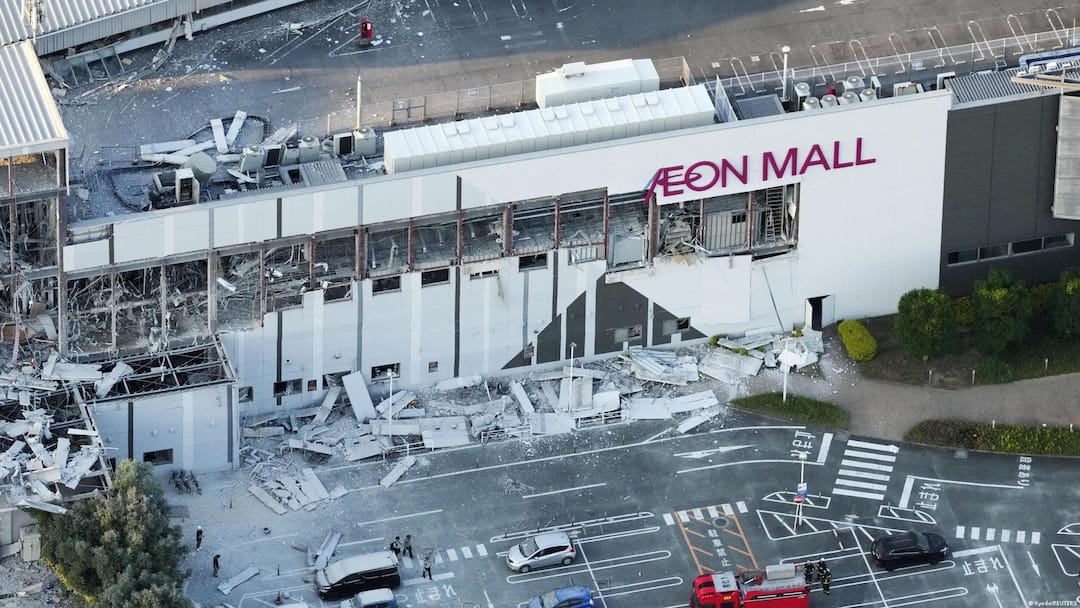
At least two of the victims died in a shopping mall in Kashima and the third died in a building collapse in a town near the epicenter.
ALSO READ | Green Card Relief For Indians? New US Bill Could Cut 15-Year Wait For H-1B Visa Holders
Japan’s public broadcaster, NHK, reported that “many people” were trapped inside the shopping mall damaged by the earthquake.
Several people were rescued from the mall, including a person who was reported to be in cardiopulmonary arrest.
The collapse of the mall followed an explosion likely triggered by a gas leak, NHK reported.
“Even now, there are people waiting to be rescued, and this is a race against time. We will marshal all available resources on the ground to save and rescue as many people as possible,” Takaichi told reporters at her office in Tokyo a day after the quake struck.
Authorities Assess Damage As Tsunami Threat Eases
Prime Minister Takaichi also said initial reports indicated multiple injuries, damage to civilian infrastructure, and fires in several affected areas.
“We are still assessing the extent of injuries and property damage, but I have been informed that there have already been several injuries,” Takaichi said.
“Power outages and fires are happening in some areas, and roads and bridges have been damaged and buildings collapsed,” she added.
Although the earthquake caused widespread disruption and temporarily raised fears of a tsunami, officials later confirmed that the threat had subsided and that Japan’s coastline was no longer in danger.
“This earthquake occurred inland, and no tsunami activity has been observed so far,” a spokesperson for the Japan Meteorological Agency (JMA) said. “For this reason, we hope to lift the tsunami advisory at a relatively early stage, depending on future sea level conditions.”
Power And Nuclear Facilities Remain Safe
Japan’s Nuclear Regulation Authority reported that no abnormalities were detected at three nearby nuclear power plants, providing reassurance in a country still sensitive to nuclear safety concerns following the 2011 Fukushima disaster.
However, the earthquake disrupted electricity supplies across the region. According to Kyushu Electric Power, approximately 45,000 households and facilities in Kumamoto temporarily lost power following the tremor.
Several major industrial facilities are located near the earthquake zone, including operations belonging to Sony and the Taiwan Semiconductor Manufacturing Company (TSMC), the world’s largest contract chipmaker. Sony stated that it was evaluating conditions at its facilities, while TSMC did not immediately respond to requests for comment.
Japan’s Long History Of Major Earthquakes
Kumamoto is no stranger to devastating seismic events.
In 2016, the region was struck by two major earthquakes, first a magnitude 6.5 quake and then a magnitude 7.3 tremor two days later. The disaster claimed 273 lives, injured more than 2,800 people. Thousands of buildings were either damaged or destroyed, making it one of Japan’s most destructive recent earthquake disasters.
More recently, a magnitude 7.2 earthquake struck northern Japan on June 25, causing little damage and no fatalities. Earlier this year, on April 20, a magnitude 7.7 earthquake in northern Japan injured at least ten people and shook high-rise buildings as far away as Tokyo, prompting authorities to issue a temporary advisory warning of an increased risk of even stronger earthquakes. That advisory was lifted a week later.
ALSO READ | 13 Indian Sailors Trapped In Ukraine Port As Drone, Missile Attacks Intensify
One Of The World’s Most Earthquake-Prone Nations
Japan sits along the western edge of the Pacific “Ring of Fire,” one of the most active seismic zones on Earth where four major tectonic plates meet.
Home to approximately 125 million people, the country experiences hundreds of earthquakes every year and accounts for roughly 18% of the world’s seismic activity.
While most tremors are relatively minor, Japan remains haunted by memories of the catastrophic magnitude 9.0 earthquake and tsunami that struck the country’s northeast coast in March 2011. The disaster killed or left missing around 18,500 people and triggered the Fukushima nuclear crisis.
Tuesday’s earthquake demonstrated the country’s preparedness systems, emergency response capabilities, and monitoring of critical infrastructure.
As authorities continue to assess the impact of the Kumamoto quake, residents are being urged to stay alert for potential aftershocks and follow official safety guidance.
(Disclaimer: This report first appeared on Deutsche Welle, and has been republished on ABP Live as part of a special arrangement. Apart from the headline, no changes have been made in the report by ABP Live.)