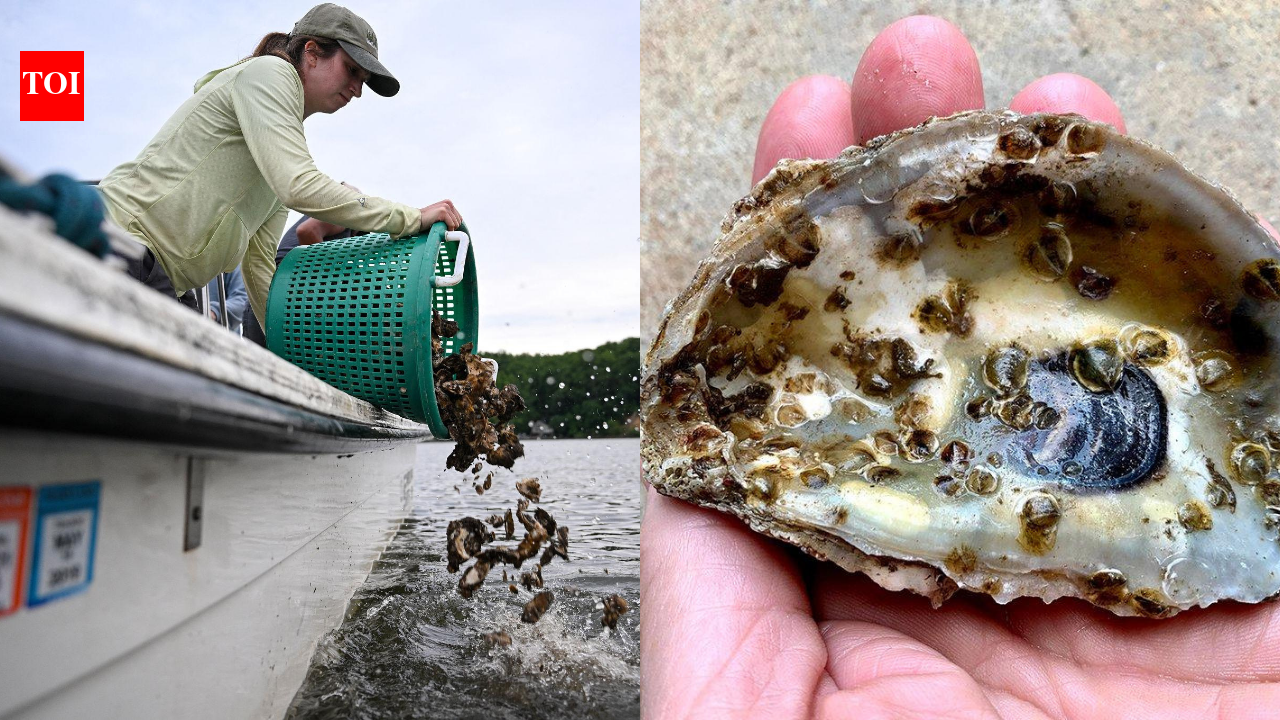

Millions of tiny oysters are being returned to the Chesapeake Bay in an ambitious conservation effort that scientists hope will transform one of the United States’ most important estuaries. The Chesapeake Bay Foundation (CBF), in partnership with the Severn River Association, recently planted three million juvenile oysters in a protected sanctuary reef in Maryland’s Severn River, bringing the total planted under the project to 19 million. The organisations aim to reach 30 million oysters by the end of 2026 as part of a three-year restoration initiative. The project is designed to improve water quality, rebuild marine habitats and strengthen the bay’s natural resilience after decades of environmental decline.
Why are scientists planting 30 million oysters in the Chesapeake Bay?
The latest planting took place on 23 July 2026, when conservationists released around three million baby oysters, known as spat, into a sanctuary reef near the mouth of the Severn River in Anne Arundel County, Maryland. The effort is being led by the Chesapeake Bay Foundation and the Severn River Association, with financial support from the National Fish and Wildlife Foundation.So far, the project has reached 19 million oysters, and the partners remain on track to achieve their goal of planting 30 million oysters by the end of 2026. The restored reefs are expected to improve water quality, support marine biodiversity and help create a healthier ecosystem throughout the Severn River and the wider Chesapeake Bay.
Why oysters are essential to the Chesapeake Bay
The eastern oyster is often described as an “ecosystem engineer” because of the many environmental benefits it provides. Adult oysters naturally filter water by removing algae, sediment and excess nutrients, helping to improve water clarity. Under favourable conditions, a single adult oyster can filter up to about 50 gallons of water each day, making large oyster reefs an important natural water treatment system.Oysters also create complex reef structures that provide habitat for fish, blue crabs, shrimp, worms and many other aquatic species. These reefs increase biodiversity while offering shelter and breeding grounds for marine life that depends on healthy estuarine ecosystems.
What are oyster spat and sanctuary reefs?
The oysters being planted are called spat, which are juvenile oysters that have settled onto recycled oyster shells after being raised in hatcheries. These shell-covered clusters are transported by specialised restoration vessels and carefully placed onto underwater reefs where they can continue growing.The reefs used in the project are designated sanctuary reefs, meaning commercial harvesting is prohibited. Protecting these areas allows oysters to reach maturity, reproduce naturally and release millions of larvae into surrounding waters, helping nearby oyster populations recover over time.
How oyster reefs help fight pollution and climate change
Beyond filtering water, oyster reefs provide several important environmental services. Their natural structures absorb wave energy, reducing shoreline erosion and helping protect nearby communities from storm surges. This makes restored reefs an increasingly valuable nature-based solution as sea levels continue to rise and coastal storms become more intense.Healthier oyster populations also encourage the growth of underwater grasses by improving water clarity. These grasses absorb carbon, stabilise sediments and provide nursery habitats for numerous fish species, creating a chain reaction of ecological benefits throughout the bay.
A larger effort to restore the Chesapeake Bay
The Severn River initiative forms part of a much broader restoration programme across the Chesapeake Bay watershed. In recent years, restoration partners announced that oyster habitat had been successfully restored in 11 Chesapeake Bay tributaries, surpassing the original Chesapeake Bay Agreement target of restoring 10 tributaries by 2025.Building on that progress, conservation organisations and government agencies have adopted new goals that include restoring an additional 2,000 acres of oyster reef habitat by 2040. These efforts aim to rebuild self-sustaining oyster populations capable of supporting healthier ecosystems for decades to come.
Why Chesapeake Bay lost so many oysters
The Chesapeake Bay once supported one of the world’s largest native oyster populations. However, decades of overharvesting, habitat destruction, pollution and diseases such as MSX and Dermo caused oyster numbers to collapse during the twentieth century. Scientists estimate that today’s population represents only a small fraction of its historic abundance.Because oysters reproduce by releasing larvae into the water, declining populations made natural recovery increasingly difficult. Restoration projects now focus on rebuilding large, protected reefs where oysters can reproduce successfully and restore ecological balance.Scientists consider oyster restoration one of the most effective ways to improve the long-term health of the Chesapeake Bay. Unlike many conservation measures that address only one environmental issue, oysters simultaneously filter polluted water, support marine biodiversity, strengthen shorelines and improve habitats for commercially and ecologically important species.If the Chesapeake Bay Foundation and its partners meet their goal of planting 30 million oysters by the end of 2026, the project will mark another significant milestone in one of America’s largest and most ambitious marine ecosystem restoration efforts, offering hope for the continued recovery of the nation’s largest estuary. Go to Source