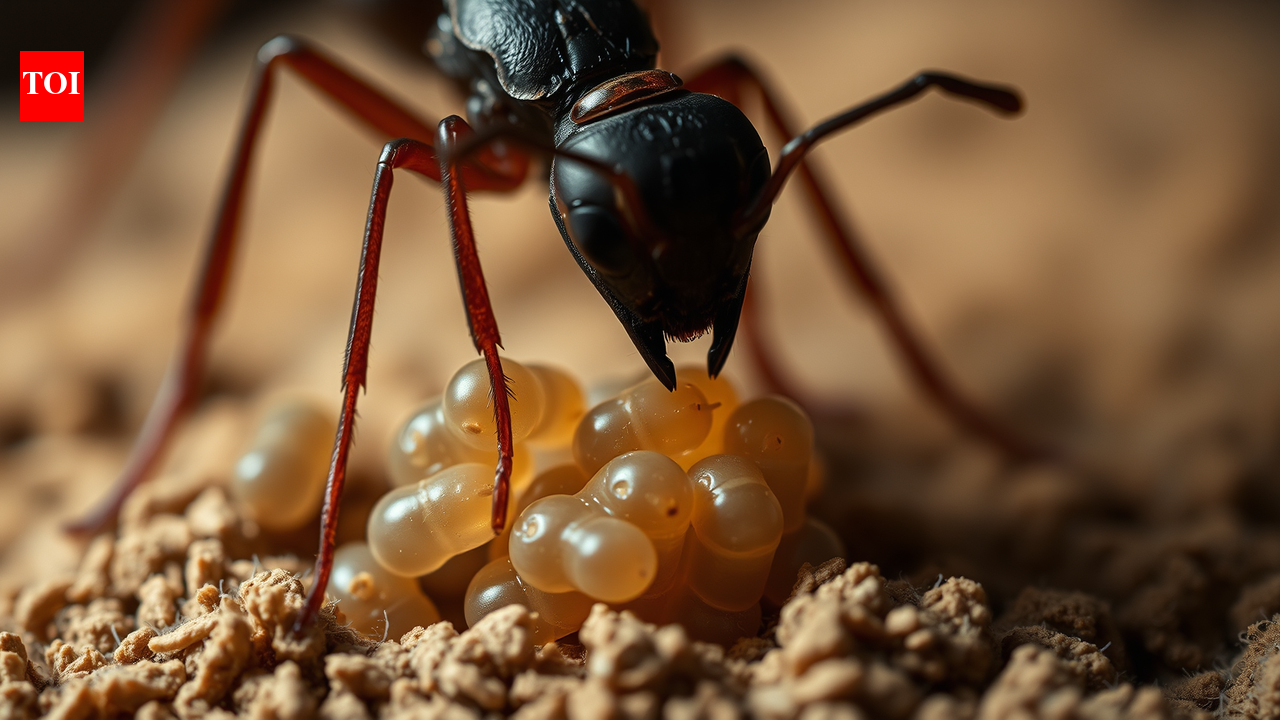

Scientists studying ants have found that the brain circuits that caregiving behaviour may have evolved from far older circuits that originally controlled hunger. The research, carried out on clonal raider ants at Rockefeller University and published in the journal Nature, shows that two chemical signals in the ant brain, known as neuropeptide F and allatostatin A, control whether an individual ant acts as a caregiver to larvae or leaves the nest to forage for food. Since ant colonies naturally shift young workers from caregiving duties to foraging as they age, the findings offer a rare window into how nurturing behaviour may have first emerged from ancient systems built simply to regulate feeding.
How researchers tested ant brain chemistry and caregiving
According to Rockefeller University, the team built a behavioural system that placed individual ants with individual larvae, allowing them to automatically track hundreds of caregiving interactions at once. Researchers then identified and produced many of the chemical signalling molecules found in ant brains and tested each one to see how it affected caregiving behaviour.The team chose clonal raider ants for a specific reason. Every worker in a colony is genetically identical, so any difference in how individual ants behave toward larvae comes from changes happening inside the brain rather than from genetic differences between ants. This made it possible to study brain chemistry and behaviour in a very clean, controlled way, something that is far harder to do in mammals.
What neuropeptide F and allatostatin A do in the ant brain
Thestudy published in Nature titled Ancient feeding-related neuropeptides regulate alloparenting in ants, found that neuropeptide F, or NPF, increased caregiving behaviour in ants, while allatostatin A, or AstA, had the opposite effect and encouraged ants to leave larvae behind and begin foraging instead. Young ants naturally had higher levels of NPF and lower levels of AstA in key brain regions, while older ants showed the reverse pattern, matching the ants’ natural shift from nursing duties to food gathering as they age.Researchers confirmed the importance of these two molecules by directly increasing or decreasing their activity in the ant brain, which reliably changed how much time ants spent caring for larvae versus foraging. This gave the team strong evidence that these two signals were not simply linked to caregiving by coincidence but were actually driving the behaviour.
Why hunger and caregiving appear to share the same brain circuits
Both NPF and AstA are ancient molecules already known to regulate hunger and feeding across many animal species, and the study found they still respond to hunger in ants today. Starved ants showed increased NPF and reduced AstA, which pushed them toward caregiving behaviour, while well-fed ants showed the opposite balance and were more likely to leave larvae and start foraging.Daniel Kronauer, who leads the Laboratory of Social Evolution and Behaviour at Rockefeller University, said the findings reflect a broader pattern seen throughout evolution, where existing biological systems are repurposed rather than built from scratch. Since a central part of parenting in many species involves making sure offspring get enough food, researchers said it makes sense that the same circuits controlling an animal’s own hunger would also end up controlling how it feeds and cares for its young.
Why ants could help scientists understand caregiving and brain ageing in general
The researchers noted that similar neuropeptides appear to be involved in caregiving behaviour in mammals as well, suggesting that this connection between hunger circuits and caregiving may be a shared strategy across much of the animal kingdom rather than something unique to ants. With an ant brain containing around 60,000 cells compared to roughly 100 million in a mouse brain, the team says ants offer a simpler and faster system for studying these mechanisms in detail before comparing them to more complex animals.Because ant colonies naturally shift individual workers from caregiving to foraging roles as they age, researchers also see potential value in using ants to study how brains change over a normal lifespan rather than only during disease. According to the team, most research funding currently focuses on late-stage neurodegenerative conditions, while comparatively little is known about how healthy brains change with age, an area where the clear, age-linked behavioural shifts seen in ant colonies could offer useful clues that may eventually apply to research on human brain ageing as well. Go to Source