
Monday, July 27, 2026
38.1 C
New Delhi

Rock shelter in Spain preserves the stories from hunting to farming around 8,000 years ago

This ancient rock shelter in Spain preserves the story of how people moved from hunting to farming around 8,000 years ago

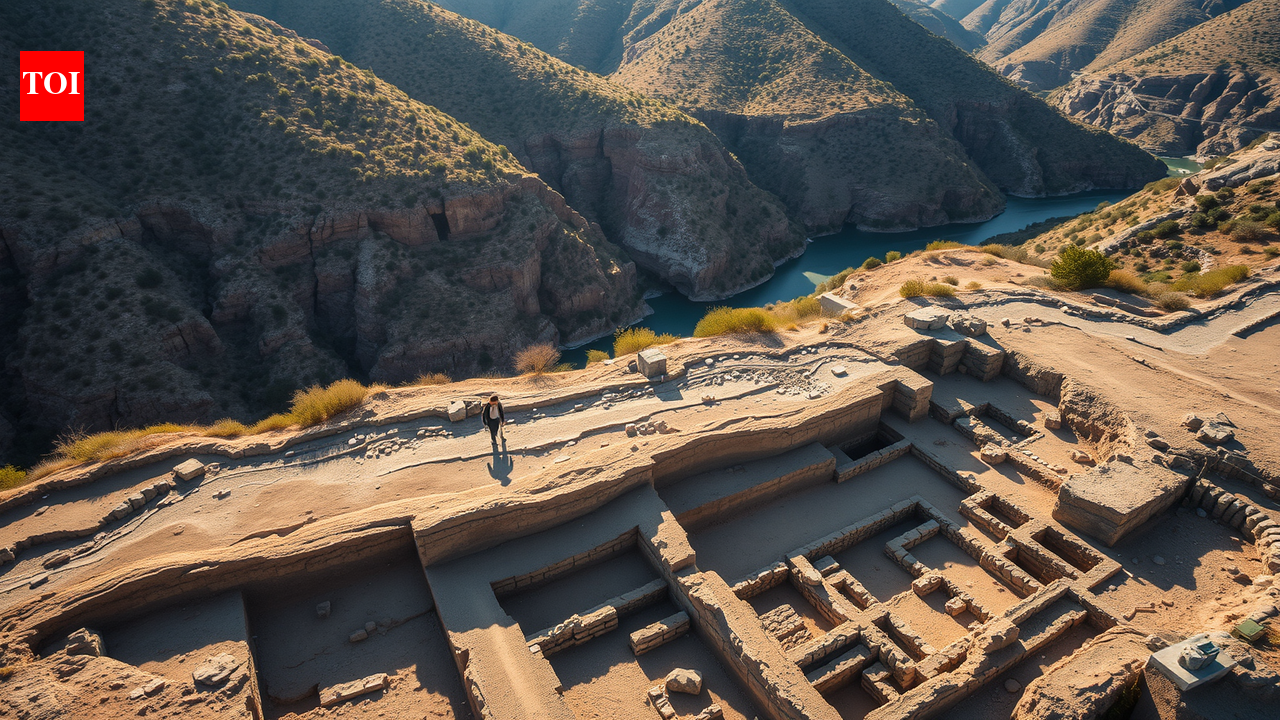
A rock shelter in northeastern Spain is giving archaeologists a rare and clear look at one of the biggest changes in human history, the shift from hunting and gathering to farming. The site, called Coves del Fem, sits above the Montsant River in Catalonia and has been dug up since 2013. A new round of digging in the summer of 2026 found well-kept layers from both hunter-gatherer groups and early farming communities living at the same spot. This kind of clean, layered record is rare to find, and it helps researchers understand how people in this part of Spain slowly gave up hunting and began growing food instead.

What archaeologists found at the Coves del Fem rock shelter

The dig ran for four weeks, from May 30 to June 28, 2026. According to the Universitat Autonoma de Barcelona, the work was led by researchers from the university’s Department of Prehistory along with the Milà i Fontanals Institution for Research in the Humanities, part of Spain’s national research council. Twenty-five people took part, including teachers, researchers and archaeology students who used the dig for their hands-on training.The team found two hearths and eight pits dug into the ground. These pits were first used as storage silos, likely for grain or other food, before later being filled with household waste. That waste layer turned out to be full of useful clues, including pieces of decorated pottery, flint tools, leftover bits from making stone tools, animal bones from meals, and seeds and fruits that had been burnt and preserved over thousands of years.

Why the Mesolithic layers found this year matter so much

One of the most exciting parts of the 2026 dig was the discovery of two very well-preserved layers from the Mesolithic period, the age of the last hunter-gatherers before farming arrived in the region. Earlier digs at the site had not turned up layers this well kept. Inside these older layers, researchers found three hearths, along with flint tools, animal bones and a large amount of preserved plant material.These plant remains matter because they can help scientists understand what these final hunter-gatherer groups were eating and how they used the land around them, just before farming took hold in the area. According to the university, this shift from hunting to farming, known as neolithization, is still not well understood in this part of Spain, which makes finds like these especially valuable.

How one shelter can hold thousands of years of history

Coves del Fem is a large rock shelter, covering about 300 square metres, and people appear to have returned to it again and again over a very long stretch of time. Digging carried out over recent years shows that people lived there almost continuously from the Late Mesolithic, around 6000 BC, through to the Early Neolithic, around 4500 BC. Researchers have also found smaller traces that may go back even further, to the end of the Upper Palaeolithic, as well as later material from the end of the Neolithic and the start of the Metal Age.This kind of long, unbroken record is unusual for a site in Catalonia. Most rock shelters only preserve small pieces of one time period, but Coves del Fem seems to hold a much fuller story, making it an important place for tracing how people’s tools, food and daily lives changed as farming slowly replaced hunting in the area.

What this discovery could mean for understanding early farming in Spain

The excavation is part of a larger four-year research project titled Coves del Fem: Land Use and Exploitation in the Upper Montsant Basin, running from 2026 to 2029 and led by the university. The goal of the project is to better understand how the ancient communities living in this valley used the land around them, found food and shaped their environment over thousands of years.Researchers say that studying the newly found materials in more detail could reveal how these early people moved across the landscape, what resources they relied on, and how their society changed as farming and herding became a normal part of life. Because so few sites in the region preserve such a long and clear sequence of human activity, Coves del Fem gives scientists an unusually good chance to fill in gaps in the story of how farming first spread through this corner of Europe. The dig itself was only possible thanks to the Borrull family, who own the land where Coves del Fem sits, allowing researchers continued access to one of Catalonia’s most important prehistoric sites. Go to Source

Hot this week

Six orphaned rhinos give birth after mothers were killed by poachers

Rescued rhinos defy the odds, give birth after returning to the wild Six rhinos left for dead by poachers in South Africa when they were just young calves have all given birth naturally in the wild, marking a big win for wildlife rec Read More

518 million years ago, one tiny sea creature may have started the evolution of the fangs

Scientists have identified the earliest known evidence of spider fangs in a 518 million-year-old fossil recovered from southern China, tracing the origin of one of the animal kingdom’s most feared biological tools back to a small Read More

Around 1200 BCE, major Mediterranean civilisations began collapsing; scientists have now reconstructed the climate conditions surrounding the crisis

Representative Image (AI-generated) Around 1200 BCE, several of the eastern Mediterranean’s most powerful civilisations, including the Mycenaean kingdoms, the Hittite Empire, Canaanite city-states and parts of New Kingdom Egypt Read More

One of the world’s largest rodents was imported for fur farming in North America; today it’s devastating wetlands and riverbanks across US

Two hundred years ago, you wouldn’t have been able to find them outside of South America. But since then, Nutria, one of the world’s largest rodents, has taken over US. Read More

200 years after the first dinosaur, scientists use brain scans on a 100-million-year-old snake fossil from Brazil

image AI generated Two centuries ago, a British geologist gave the world its first named dinosaur. Megalosaurus, described from a handful of fossilised bones, marked the birth of an entire scientific field. Read More

Topics

Six orphaned rhinos give birth after mothers were killed by poachers

Rescued rhinos defy the odds, give birth after returning to the wild Six rhinos left for dead by poachers in South Africa when they were just young calves have all given birth naturally in the wild, marking a big win for wildlife rec Read More

518 million years ago, one tiny sea creature may have started the evolution of the fangs

Scientists have identified the earliest known evidence of spider fangs in a 518 million-year-old fossil recovered from southern China, tracing the origin of one of the animal kingdom’s most feared biological tools back to a small Read More

Around 1200 BCE, major Mediterranean civilisations began collapsing; scientists have now reconstructed the climate conditions surrounding the crisis

Representative Image (AI-generated) Around 1200 BCE, several of the eastern Mediterranean’s most powerful civilisations, including the Mycenaean kingdoms, the Hittite Empire, Canaanite city-states and parts of New Kingdom Egypt Read More

One of the world’s largest rodents was imported for fur farming in North America; today it’s devastating wetlands and riverbanks across US

Two hundred years ago, you wouldn’t have been able to find them outside of South America. But since then, Nutria, one of the world’s largest rodents, has taken over US. Read More

200 years after the first dinosaur, scientists use brain scans on a 100-million-year-old snake fossil from Brazil

image AI generated Two centuries ago, a British geologist gave the world its first named dinosaur. Megalosaurus, described from a handful of fossilised bones, marked the birth of an entire scientific field. Read More

‘Police showed respect for accused Sena corporator’: Bombay HC on probe into doctors’ assault case

Accused Shiv Sena corporator Ramesh Mhatre NEW DELHI: The Bombay high court on Monday remarked that the local police had shown “favourable treatment” to Shiv Sena corporator Ramesh Mhatre, who is accused of assaulting d Read More

Kourtney Kardashian pays tribute to her grandmother

Kourtney Kardashian wishes her grandmother on her heavenly birthday. (Image Credits: Instagram) Kourtney Kardashian shared a poignant post on Instagram as a tribute to her grandmother, Mary Jo ‘MJ’ Shannon. Read More

Timothée Chalamet’s mother pays tribute to Kris Jenner’s mother

Nicole Flender shares tribute to Kris Jenner’s mother, MJ. (Iimage Credits: Instagram) Timothée Chalamet’s mother, Nicole Flender, paid tribute to Kris Jenner’s late mother, who passed away earlier this month. Read More

Related Articles