
PC: BBC
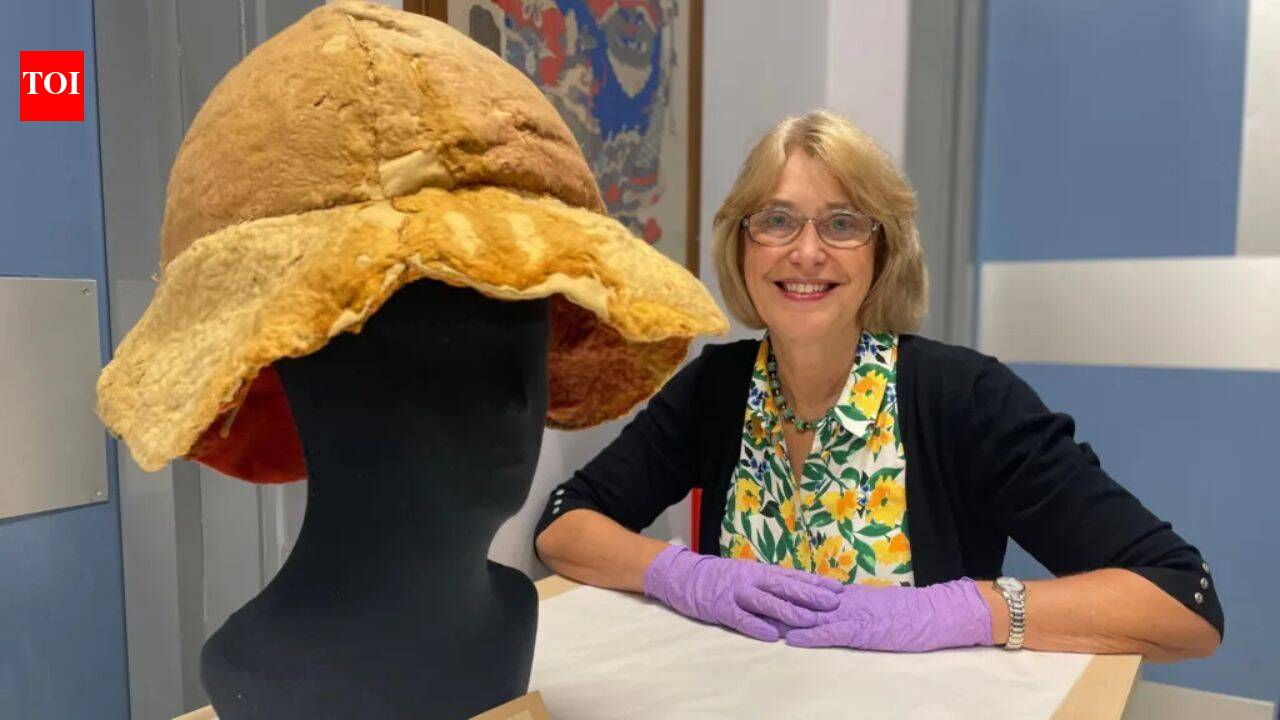
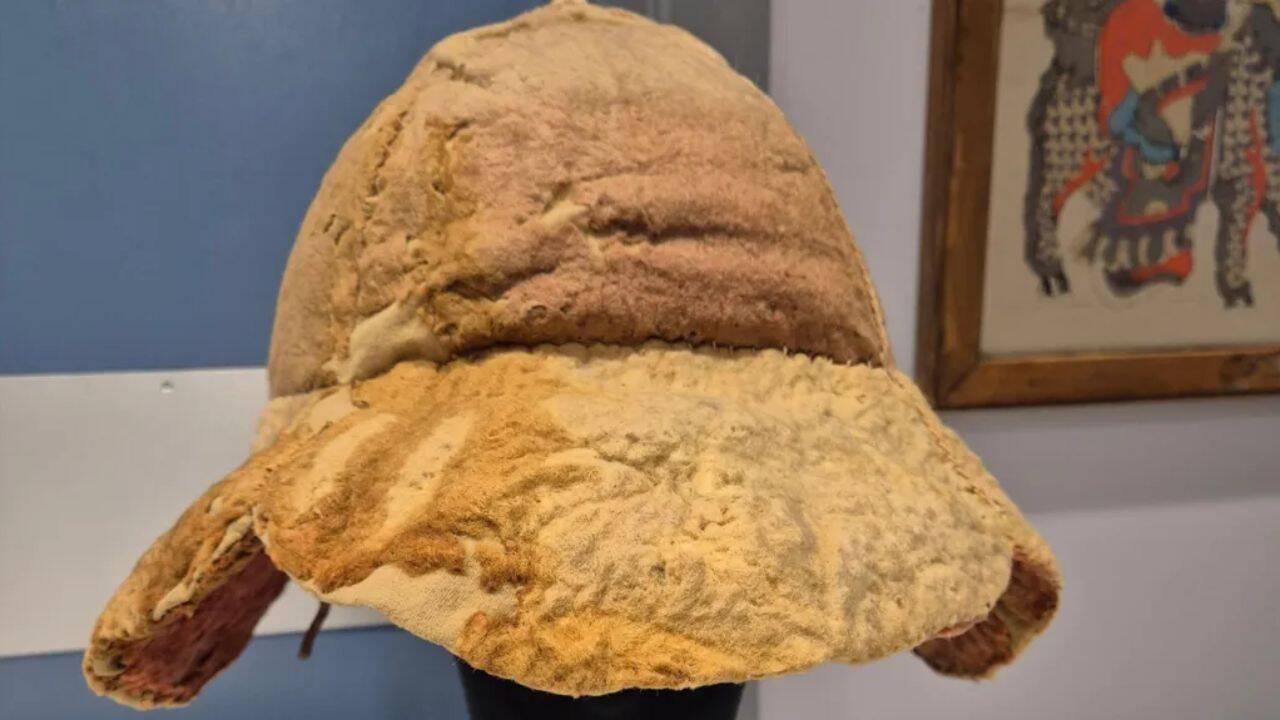
For more than a hundred years, a small but remarkable piece of ancient clothing sat away from public view inside Bolton Museum’s collections. Few visitors knew it existed, and even fewer had the chance to see its fragile wool fibres, shaped by hands nearly two millennia ago.Now, after a careful conservation project, the Egyptian head covering has been brought back into the light. The rare object, believed to date from the Roman period in Egypt, is being displayed for the first time in its history at the museum. Made from felted wool and preserved in unusually good condition after treatment, the hat offers a glimpse into everyday life during a period when Roman influence was spreading across Egypt.
The 2,000-year-old Egyptian hat revealing secrets of Roman Egypt
As reported by Bolton Council in 2025, the hat is thought to have been created sometime after Egypt became part of the Roman Empire following the death of Queen Cleopatra in 30 BC. While its exact owner remains unknown, experts believe it may have belonged to someone connected with the Roman military.Its design shares similarities with head coverings worn elsewhere across the Roman world around 200 CE. However, its construction appears to have been adjusted for the demanding conditions of Egypt, where strong sunlight, heat and blowing sand shaped the practical needs of those living and working there. Unlike many surviving objects made from stone, metal or pottery, this piece was created from an organic material that was far more vulnerable to decay. Wool can be easily affected by insects, moisture changes and long periods of storage, meaning its survival over two thousand years is unusual.Reportedly, the other known examples are held by the Whitworth Art Gallery in Manchester and a museum in Florence, Italy. Following conservation work, Bolton’s example is considered the most complete and best-preserved of the three.
PC: BBC
The century-long journey of a rare Egyptian artefact
The Bolton Council reported that the hat entered Bolton’s collection in 1911 after being donated by Sir William Matthew Flinders Petrie, one of the most influential archaeologists of the late 19th and early 20th centuries.Petrie, whose excavations helped shape modern Egyptology, contributed many important objects to museum collections across Britain. The hat became part of the holdings of the Chadwick Museum, Bolton’s first museum, located in Queen’s Park.For decades, however, the object remained out of public view. Like many delicate archaeological discoveries, it required specialist attention before it could safely be displayed.
Conservation process that saved a 2,000-year-old garment
The conservation work was carried out by textile specialist Jacqui Hyman, who has spent almost five decades working with historic fabrics and objects held by museums and collections around the world.Rather than attempting to make the hat look new, the process focused on preserving what remained and supporting damaged areas. Missing sections were carefully reinforced using similarly coloured hand-dyed fabric, helping restore the original shape while keeping evidence of the object’s age.The treatment revealed details that had been difficult to appreciate while the hat was in storage. What had once appeared as a flattened and fragile piece of material could again be understood as something designed to be worn. Hyman described the project as a rare opportunity to examine the construction of an ancient garment and consider the unknown story behind it.The questions surrounding the hat remain. Who produced it? Who wore it? And what journey brought it from Roman Egypt to a museum collection in England? The object cannot answer, but further study may reveal more about its origins.
Local support behind the restoration
The conservation project was made possible through funding from Ritherdon & Co. Ltd., a Darwen-based company known for manufacturing electrical enclosures. The firm, which has operated for more than a century, supported the work as part of its contribution to preserving local heritage.The Director of Ben Ritherdon, Director of Ritherdon & Co. Ltd, said: “It was so exciting to learn that we had such a rare and fascinating object right here on our doorstep, in Bolton Museum, and it was a privilege for us to be able to contribute to its conservation.“With so many worthy causes for small businesses to support, it’s important not to forget that regional educational and cultural organisations, like our local museums, also rely on businesses in their community.”The company’s involvement was recognised by the Bolton Archaeology and Egyptology Society, which presented it with the Lotus Chalice Award. Created in 2024, the award celebrates contributions that help protect and promote Bolton’s Egyptology collections.Ben Ritherdon, director of Ritherdon & Co. Ltd., said the company was surprised to discover such a rare historical object was held locally and welcomed the opportunity to support its preservation.He said museums and cultural organisations often depend on support from their surrounding communities, alongside larger public funding.
The ancient hat inside Bolton Museum
As reported by the Bolton Council, Cllr Nadeem Ayub, Bolton Council’s Executive Cabinet Member for Culture said,“It’s an incredible moment for Bolton to display such a rare and well-preserved item from ancient Egypt.“The generosity of local businesses like Ritherdon & Co. Ltd. demonstrates how culture and community go hand-in-hand.“This remarkable object not only tells a global story, but it also reminds us of the power our museums have to inspire future generations, right here in Bolton.” Go to Source